
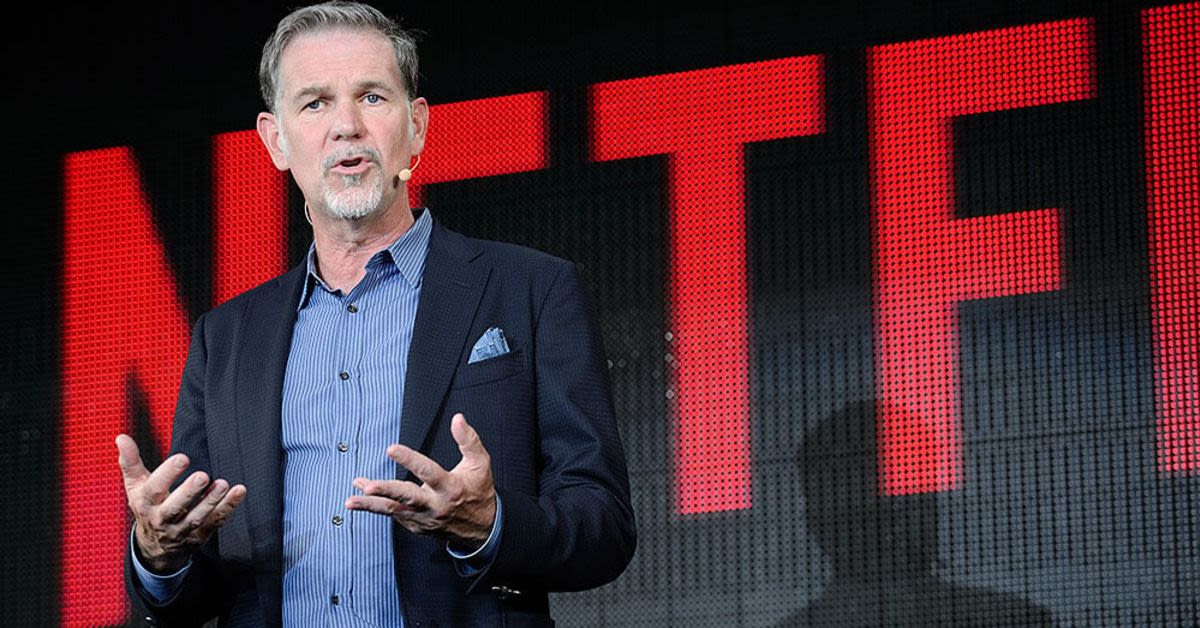
Netflix cofounder and chairman Reed Hastings is preparing to exit the companys board after more than a quarter-century at the center of the streaming giants rise and its recent corporate setbacks.
The move was disclosed in a letter to shareholders, which noted that Hastings "has informed us that he will not stand for re-election to our Board when his current term expires at the Annual Meeting in June, in order to focus on his philanthropy and other pursuits," according to The Post Millennial. His departure comes on the heels of Netflixs failed effort to acquire Warner Bros Discovery, a high-stakes bid that collapsed as rival Paramount pushed through a hostile takeover.
Hastings, who helped transform Netflix from a DVD-by-mail service into a global streaming powerhouse, framed his exit as the natural next step after decades of leadership. In a statement, he reflected, "Netflix changed my life in so many ways, and my all?time favorite memory was January 2016, when we enabled nearly the entire planet to enjoy our service."
He emphasized that his legacy was less about any single corporate maneuver and more about the culture he helped build inside the company. "My real contribution at Netflix wasnt a single decision; it was a focus on member joy, building a culture that others could inherit and improve, and building a company that could be both beloved by members and wildly successful for generations to come," Hastings said, adding, "A special thanks to Greg and Ted, whose commitment to Netflixs greatness is so strong that I can now focus on new things."
Hastings served as Netflixs chief executive officer until 2023, having taken over the role from fellow cofounder Marc Randolph in the late 1990s and steering the company through the streaming revolution. His long tenure coincided with the rise of Big Techs cultural influence, a trend that has increasingly drawn scrutiny from conservatives concerned about ideological bias and the concentration of power in left-leaning corporate hubs.
The shareholder letter announcing his planned exit was the first since Netflixs attempt to acquire Warner Bros Discovery was derailed, with Paramounts aggressive bid ultimately prevailing. The company acknowledged the setback but maintained its financial discipline, stating, "Warner Bros. would have been a nice accelerant for our strategy, but only at the right price."
Markets reacted sharply to the news and the failed takeover, with Netflix shares sliding nearly 9 percent in after-hours trading to $98.32, according to the Associated Press. The selloff continued into Friday morning, with the stock trading below $97 as investors reassessed the companys growth prospects in an increasingly crowded media landscape.
Warner Bros Discovery had agreed in late February to be purchased by Paramount, shutting Netflix out of a legacy Hollywood asset that could have bolstered its content library and bargaining power. At the time, Netflix CEO Greg Peters defended the companys decision not to overpay, saying, "The transaction we negotiated would have created shareholder value with a clear path to regulatory approval. However, we've always been disciplined, and at the price required to match Paramount Skydance's latest offer, the deal is no longer financially attractive, so we are declining to match the Paramount Skydance bid."
Peters also stressed Netflixs respect for Warner Bros Discoverys leadership and the broader implications for the industry and American jobs. "Warner Bros. is a world-class organization, and we want to thank David Zaslav, Gunnar Wiedenfels, Bruce Campbell, Brad Singer and the WBD Board for running a fair and rigorous process," he said, adding, "We believe we would have been strong stewards of Warner Bros.' iconic brands, and that our deal would have strengthened the entertainment industry and preserved and created more production jobs in the US. But this transaction was always a 'nice to have' at the right price, not a 'must have' at any price."
For conservatives who favor market discipline over corporate empire-building, Netflixs refusal to chase a politically influential media asset at any cost underscores the importance of shareholder value over prestige. As President Trumps second administration continues to press for fair competition and American job creation, the streaming giants next chapterwithout Hastings on the boardwill test whether it can balance cultural influence, financial restraint, and a media environment still dominated by progressive narratives.
Login