
When Americans hand over a substantial share of their hard-earned income to government at every level, they are entitled to expect that money to be used for its most basic and legitimate purpose: safeguarding their liberty and property rather than feeding a sprawling culture of fraud and abuse.
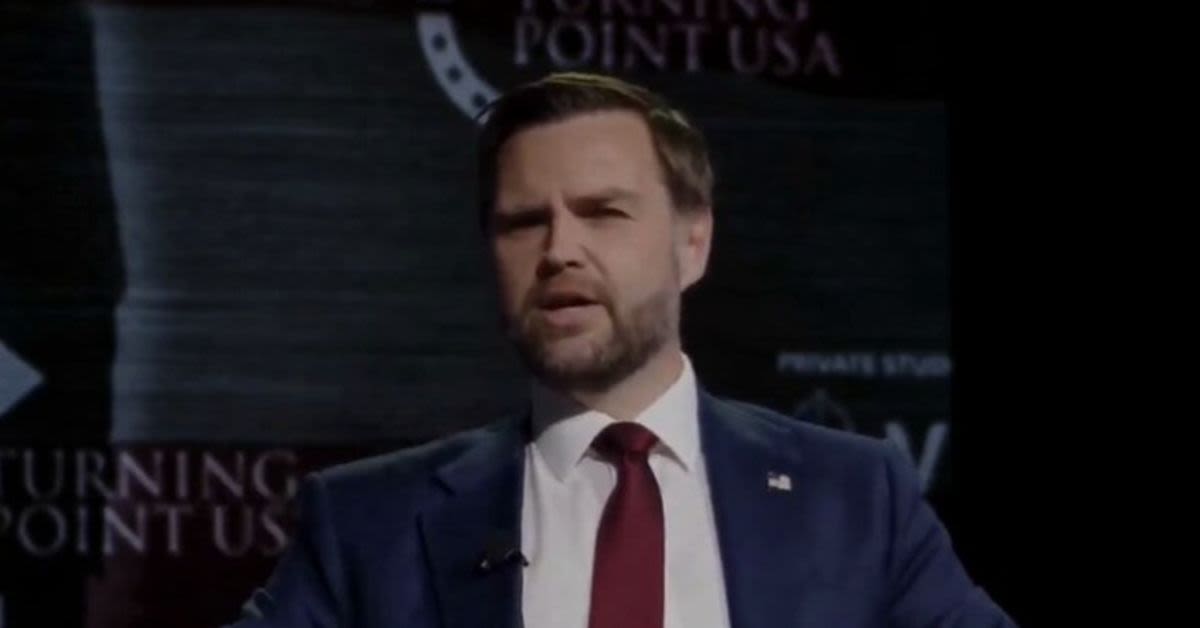
According to RedState, that expectation has been badly betrayed for years, particularly in the vast and often opaque world of government-funded health care. Yet there are now signs that the tide may finally be turning, thanks to the early work of Vice President JD Vances newly launched anti-fraud task force. A recent First on Fox report from Fox News Digital details the first wave of enforcement actions, and the numbers are striking.
The task force, led by Vance, has moved to suspend 447 hospices and 23 home health agencies in the Los Angeles area alone, all suspected of engaging in large-scale fraud schemes. The estimated value of the alleged fraud tied to these entities exceeds $600 million, a staggering figure that underscores how deeply taxpayer-funded programs have been exploited.
The scope of the crackdown has expanded rapidly, reflecting a far more aggressive posture than Americans have grown used to seeing from Washington. The number of suspensions represents roughly a 539 percent increase from the 70 cases Fox News Digital reported at the beginning of April, suggesting that once serious investigators started looking, they found plenty to pursue.
"Where there is fraud, the task force will find it," a spokesperson for Vance told Fox News Digital. "We will not stop until every hard-earned taxpayer dollar goes toward the honest Americans who deserve them." That kind of language is a welcome departure from the bureaucratic shrug that has too often greeted revelations of waste and abuse in massive entitlement programs.
Conservatives have long warned that when government spending balloons and oversight weakens, fraud is not a bug but an inevitability. The reality is that this latest sweep is almost certainly just a glimpse of a much larger problem, one that ranges from petty scams worth a few hundred dollars to elaborate operations siphoning off millions, perhaps billions, from programs like Medicare and Medicaid.
For those who have worked inside the health care industry, the revelations are hardly surprising. One former medical devices and biotech executive recalls that in the early 2000s, while running a company that manufactured specialty hospital beds and leased medical equipment to hospitals and care centers, the amount of fraudulent Medicare and Medicaid reporting we saw was shocking; my partner and I fired two sales reps for indulging in such fraud. The vice presidents task force is right to start by targeting the biggest, most brazen schemes first, where the potential savings to taxpayers are greatest.
A White House official has reinforced the administrations message that this is not a symbolic effort but a sustained campaign. "To all fraudsters: good luck trying to hide from the Vice President's task force," the official told Fox News Digital, adding that "[The anti-fraud task force is] reviewing and pursuing every possible lead. These suspension numbers, and the dollar values saved, are only going to increase."
The crackdown in Los Angeles builds on earlier actions that signaled the administrations intent to confront entrenched abuse in federal health programs. The rising numbers add to the $259.5 million in Medicaid funds to Minnesota that Vance and CMS Administrator Dr. Mehmet Oz announced plans to block in February, a move that rattled a political establishment long accustomed to looking the other way.
This is what we might call "a good start." It has already had political repercussions, including the delightful shamed withdrawal of Minnesota Governor Tim Walz from his re-election campaign, a reminder that serious oversight can expose not only corrupt operators but also the politicians who preside over permissive systems.
The deeper question, however, is what happens after 2028, when the current administrations mandate ends. All of this fraud investigation and shutdown is happening for one reason: President Donald Trump ordered it, breaking with a bipartisan pattern of indifference in which Democrat administrations seemed perfectly content to let this go on and prior Republican administrations showed little urgency even as fraud exploded in recent years.
Whether any future Democratic president would maintain this level of scrutiny is, to put it mildly, doubtful. When many of the beneficiaries of lax enforcement and easy government money are among their most reliable voters, the political incentives run in exactly the wrong direction, and as the author notes bluntly, Color me skeptical.
Login