
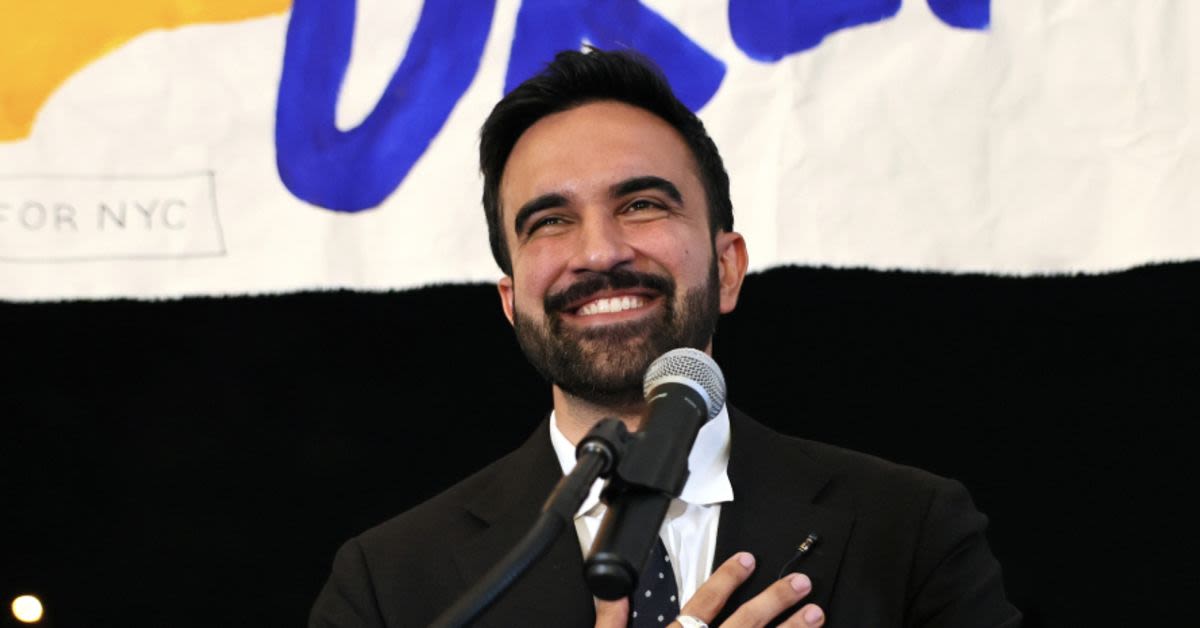
New York City Mayor Zohran Mamdani is under fire after acknowledging that his marquee campaign promise to make city buses free will not be realized this year due to funding obstacles.
According to Fox News, the controversy erupted after Mamdani conceded in a Politico interview that his administration lacks the necessary support in Albany to move forward immediately on one of his most prominent progressive pledges. Conservatives swiftly seized on the admission as evidence that the mayors left-wing agenda is detached from fiscal reality and basic governance, arguing that New Yorkers were misled by lofty promises that were never grounded in serious budgeting or legislative strategy.
"It wont ever happen. It was a high-profile promise that wont ever happen. It wasnt really meant to," wrote conservative media host Jason Rantz on X, capturing the skepticism that has spread across right-leaning circles. "Turns out socialist slogans dont survive contact with reality," National Republican Congressional Committee Press Secretary Mike Marinella posted on X, framing the stalled proposal as a textbook example of progressive rhetoric collapsing under real-world constraints.
"Hahahahahahahahahaha. You got played, NYC," wrote Amy Curtis, a conservative writer, on X, mocking voters who embraced Mamdanis sweeping transit pledge. "Mamdani lied about free buses and basically everything else in his campaign," wrote Tim Young, a media fellow at The Heritage Foundation, on X. "And the idiots of New York fell for it," he added, sharpening the criticism into a broader indictment of the citys embrace of left-wing governance.
"Socialism is like a toxic ex: big promises upfront, disappointment later," conservative media outlet Prager U posted on X. "Just ask New York about those free buses." While progressives insist the mayor is still working toward his goal, critics on the right argue that this episode illustrates why expansive government giveaways are unsustainable and ultimately corrosive to public trust when they inevitably collide with budgetary limits.
Others, however, defended the effort, pointing to the complexities of funding major transit changes and praising the administration for continuing negotiations. Supporters contend that transforming a massive system like New Yorks bus network requires time, coordination with state leaders, and a willingness to rethink how transit is financed, even as skeptics warn that taxpayers will be left holding the bill.
Mamdani's office said in a statement to Fox News Digital that the mayor remains committed to the plan, adding that his administration is working with state officials to make fare-free buses a reality before the end of his term. "Mayor Mamdani is committed to delivering fast and free buses by the time he leaves office, full stop," a spokesperson said, noting ongoing discussions with N.Y. Governor Kathy Hochul's office.
"In the meantime, the Mamdani administration will continue to work with our partners at the state and local level to make commutes faster and our transit system more affordable for all New Yorkers." The mayors team is attempting to reassure residents that, despite the delay, the broader vision of cheaper and more efficient public transportation remains intact, even as questions mount over how such a program would be paid for without deepening the citys fiscal vulnerabilities.
Mamdani never explicitly pledged to fulfill the campaign platform in the first year but said he intended to accomplish the goal by the end of his first four-year term. "Making buses fast and free, the fast thing we're already getting started on," Mamdani said in January. "And what I've said is that by the time I'm finished being mayor, they're going to be free. What we have to deliver, however, in this very year, required by law, but also required just by being a good mayor, a balanced budget for this fiscal year [and for] the next fiscal year."
As an assembly member, Mamdani launched a free bus pilot program in Queens that he has touted as highly successful citing increased ridership by more than 30% and showing a nearly 40% drop in assaults on bus operators. Even so, critics argue that scaling a limited pilot to the entire New York City system is a different matter entirely, warning that the cost of free buses is fiscally risky, logistically flawed, and likely to degrade the very service it claims to enhance.
The debate comes as Mamdani advances a broader affordability agenda built on campaign promises such as city-owned grocery stores and rent freezes, proposals that have rattled Wall Street and drawn sharp criticism. The clash underscores a widening divide between progressive ambitions for the city and the financial sector that has long powered its economy, highlighting a fundamental question for New Yorkers: whether expansive socialist-style experiments can coexist with the fiscal discipline and market stability on which the citys prosperity depends.
Login