
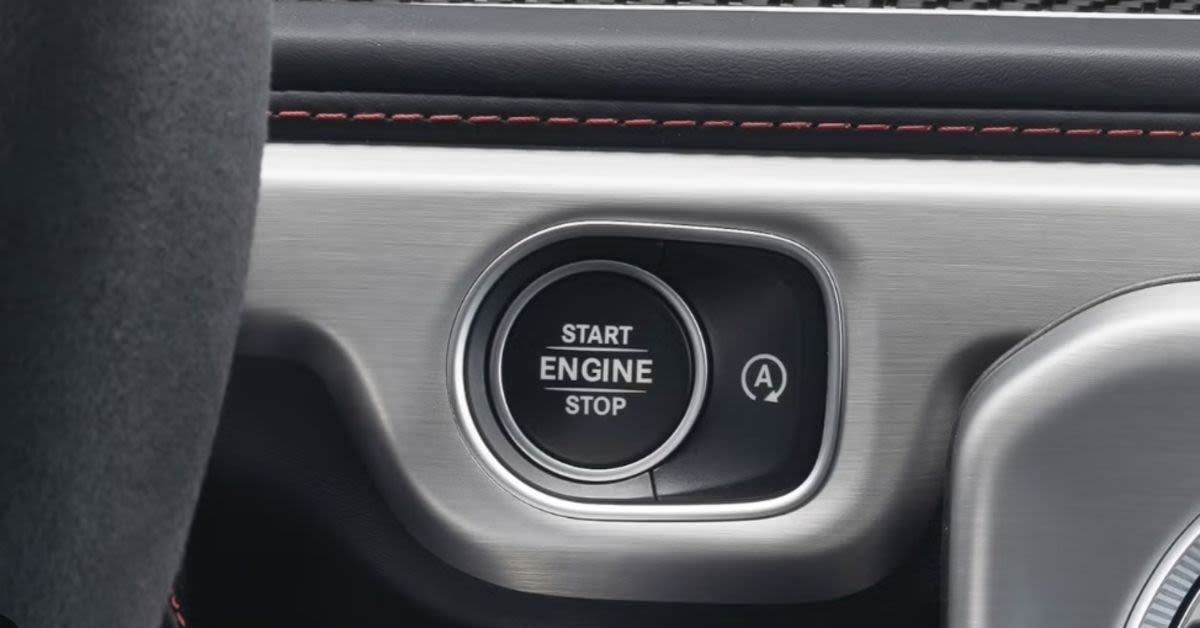
The Trump administration has moved to scrap Obama-era regulatory incentives that pushed automakers to install automatic start-stop systems, effectively ending what many motorists regard as one of the most aggravating green gimmicks ever forced under the hood.
According to RedState, EPA Administrator Lee Zeldin announced the policy shift on Wednesday, framing it as a follow-on victory to the February repeal of the 2009 Endangerment Finding. He shared a Wall Street Journal report that described drivers cheering the demise of the most hated feature in their cars, underscoring how deeply unpopular the technology has become among everyday Americans.
Zeldin did not mince words in his assessment of the Obama-era scheme, deriding it as a climate activist participation trophy masquerading as serious policy. The start/stop concept in vehicles is almost universally DESPISED. So, the Trump EPA has now REMOVED the ridiculous climate participation trophy the Obama Admin created to get this hated feature installed, he wrote on X, adding pointedly, The incentives for manufacturers to make your car die at every red light and stop sign have now been ELIMINATED!
The Wall Street Journal noted that by 2024, 58 percent of new gasoline non-hybrid vehicles came equipped with these systems, a testament not to consumer demand but to federal pressure. Automakers, eager to rack up regulatory credits, dutifully embedded the feature in model after model, even as drivers fumed at the constant stalling and restarting.
For many owners, the start-stop function has been less an innovation than an embarrassment. The system is, hands down, an abomination, one F-150 owner observed, describing how the trucks engine cutting out at every red light brings shame to my family and me as the air conditioning sputters and the vehicle hesitates before moving again.
That experience, familiar to millions, turns a symbol of American engineering into something more suited to progressive sensibilities than to working families. As the owner put it, the once-proud pickup begins to resemble a contraption one imagines David Hogg and his string-bean arms would design when conceptualizing a vehicle.
Good riddance, he added, capturing the sentiment of drivers who never asked for this feature and resented being conscripted into a climate experiment every time they hit the brakes. The White Houses own messaging, ironically, has helped illustrate the absurdity of the system, with one clip so accurately portraying the awkward silence at intersections that Sometimes, I half expect to look in the rear-view mirror at a red light and see my salt-and-pepper hair turn blue.
Keeping cool while Making America Hot Again. ?? Auto start-stop is officially dead, the administration declared in a celebratory post, leaning into the culture-war symbolism of rolling back a hallmark of Obama-era environmental policy. The message was clear: Washington would no longer force drivers to sacrifice comfort and reliability for marginal, theoretical gains in fuel economy.
The roots of this regulatory mess trace back to October 2012, when the Obama EPA finalized the 2017 and Later Model Year Light-Duty Vehicle Greenhouse Gas Emissions and Corporate Average Fuel Economy Standards rule. Buried in that package was the creation of off-cycle credits, a mechanism that allowed automakers to earn compliance points toward ever-tighter greenhouse gas standards by adding certain fuel-saving technologies, with automatic start-stop systems explicitly listed as eligible.
Once those credits took effect, industry adoption surged, jumping from less than 1 percent of new gasoline non-hybrid models in 2012 to 58 percent by 2024. The market was not responding to consumer preference but to Washingtons heavy hand, as manufacturers scrambled to satisfy bureaucrats rather than buyers.
All of this regulatory engineering came despite the fact that real-world fuel savings were modest and inconsistent at best. Many studies found only marginal improvements in typical driving conditions, especially once irritated owners either disabled the feature when possible or simply endured the constant, jarring restarts.
Back in 2011, the Obama White House had boasted that its fuel economy push would spur manufacturers to increasingly explore electric technologies such as start/stop, hybrids, plug-in hybrids, and electric vehicles. That exploration, however, quickly morphed into coercion, with drivers treated as test subjects for policies they never voted on and did not want.
They should have explored it, realized nobody liked it, and killed it with fire, the F-150 owner remarked, voicing a frustration that has simmered for more than a decade. Fortunately, Zeldin and the EPA are doing just that. Figuratively, of course.
By dismantling these off-cycle credits, the Trump administration is signaling a broader shift away from technocratic social engineering and back toward consumer choice and automotive freedom. No more forcing gimmicks on the public under the guise of environmental virtue, and no more treating American drivers as mere instruments for advancing a progressive climate agenda.
Login