
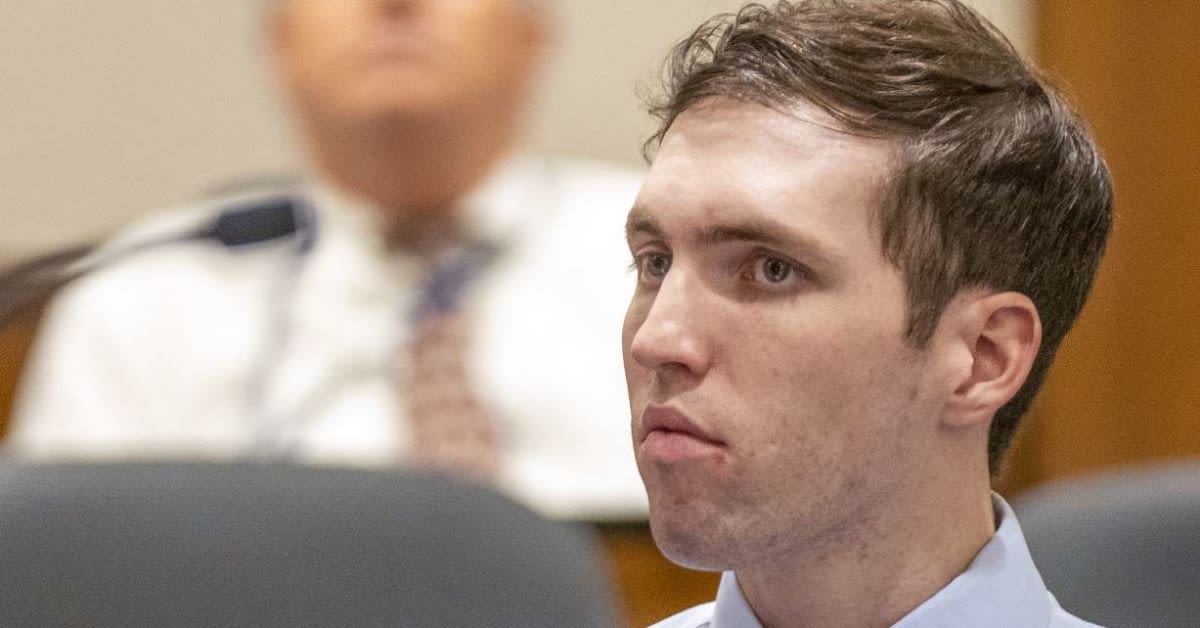
The defense team for accused assassin Tyler Robinson is turning to a high-profile jury consultant with a track record of challenging media-saturated trials as it prepares for a pivotal hearing over cameras in the courtroom.
According to The Post Millennial, attorneys for Robinson, who is charged with killing Turning Point USA founder Charlie Kirk, disclosed in a court filing that they intend to call Dr. Bryan Edelman as an expert witness at an April 17 evidentiary hearing. Edelman, a co-founder of the trial consulting firm Trial Innovations, previously played a central role in securing a change of venue in the closely watched Bryan Kohberger murder case, arguing that relentless media coverage had poisoned the local jury pool.
The filing states that Edelman will offer expert testimony on polling data related to the Robinson case, the demographic makeup of the adult population in Utah County from which jurors would be drawn, and his professional views on "social media coverage of notorious criminal cases." His analysis is expected to focus on whether a fair and impartial jury can realistically be seated in a community where digital news feeds and social platforms relentlessly push crime stories into residents daily lives.
Defense attorneys highlighted Edelmans conclusion that "the modern internet and social media ecosystemespecially algorithmic curation and personalizationhas fundamentally altered how news is consumed and makes local, high-profile publicity substantially harder to avoid for residents of the locality where the events giving rise to the case occurred and the case is being tried." They argue that this environment, driven by opaque algorithms rather than individual choice, undermines the traditional assumption that jurors can simply avoid prejudicial coverage by turning off the television or skipping the local paper.
The motion further contends that residents no longer need to actively seek out local news because it is pushed to them through "feeds, recommended modules, and notifications, as well as through social sharing within local networks," a dynamic the defense says makes "sustained avoidance during trial more difficult than in legacy media environments." In other words, the very structure of modern information platforms may be working against the defendants constitutional right to an impartial jury by saturating the community with emotionally charged narratives before a single piece of evidence is presented in court.
Defense lawyers also warned that online spaces "frequently include large volumes of user-generated commentary that may be less moderated than print or broadcast channels." Citing research, they noted that "empirical research shows that exposure to uncivil or hostile online commentary can shift perceptions and intensify reactions to the underlying information," a phenomenon that can be especially dangerous when the accused is a politically polarizing figure and the alleged victim is a prominent conservative leader.
Such negative pretrial publicity, the filing continued, "can bias juror judgments, increase the likelihood of guilty verdicts in experimental settings, and contribute to memory and source-monitoring errors, including misattributing pretrial information as trial evidence." From a due-process standpoint, the defense is effectively warning that a jury steeped in social media outrage may walk into the courtroom already convinced of Robinsons guilt, blurring the line between what they read online and what they actually hear under oath.
Edelmans credibility in making these arguments stems in part from his role in the Bryan Kohberger case, where he testified that an impartial jury could not be seated in Latah County, Idaho, after the murders of four University of Idaho students. He told the court that the case had been "seared into the communitys consciousness," and that many residents had some personal or emotional connection to the events, making neutrality nearly impossible.
"People here have demonstrated they would experience fear, stress, panic in this community. Theres significant rumors and misinformation that have been spread and people have been exposed to in this community. Theres a feeling of pressure to convict," he said, describing a climate of anxiety and expectation that threatened the presumption of innocence. His testimony helped persuade the court to move the trial to Ada County, where his firms surveys suggested residents were less emotionally invested in the outcome.
Trial Innovations had conducted polling in four Idaho counties, including Ada and Latah, and a filing in that case noted that respondents in Latah County would have been outraged if Kohberger were not convicted, while respondents in Ada County would "take it well." That contrast underscored Edelmans broader point: when a community is whipped into a frenzy by nonstop coverage and online speculation, the pressure to convict can become overwhelming, regardless of the actual evidence.
On Trial Innovations website, Edelman is described as having been "retained as an expert witness to evaluate the impact of pretrial publicity on the jury pool and the potential need for a change of venue" in multiple high-profile matters. As the Robinson case moves forward, his testimony will test whether courts are willing to acknowledge that todays algorithm-driven media environmentdominated by social platforms often hostile to conservative figuresposes a serious threat to the right of defendants, including those tied to the political right, to be judged by a truly impartial jury rather than by an online mob.
Login