
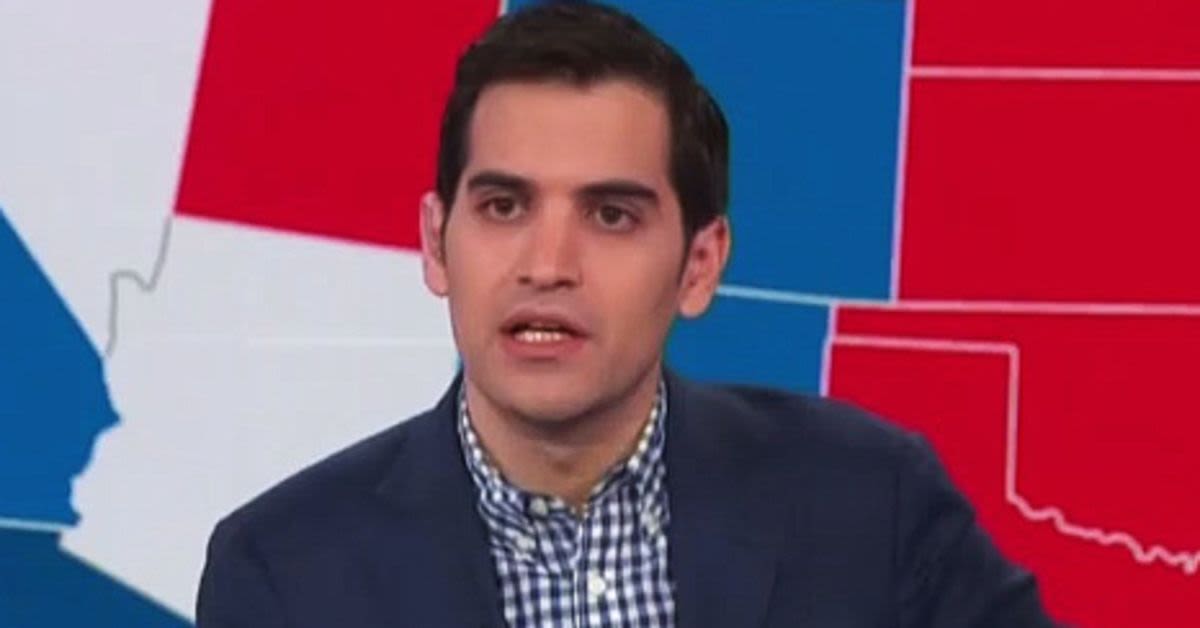
CNN data analyst Harry Enten is warning Democrats that, based on current polling, their chances of reclaiming the U.S. Senate this November appear slim, even as a narrow path remains for retaking the House of Representatives.
According to Western Journal, Enten grounded his assessment in the latest averages of generic ballot polling, which measure whether voters prefer a Democrat or a Republican for Congress without naming specific candidates. He reminded viewers that in 2006, when Democrats swept into power in the House during George W. Bushs presidency, they had a plus-11 advantage on the generic ballot, a commanding lead that translated into a wave election.
He further noted that during Donald Trumps first term, Democrats enjoyed a plus-8 edge on the generic ballot, which again was sufficient to flip the House. By contrast, this cycles numbers are far less impressive for the left, with the Democratic edge only plus-5, a margin that historically has not guaranteed a change in control.
Yeah, Democrats are ahead, but theyre only ahead by five with a president whose net approval rating is bordering on minus-20 to minus-30, depending on what polls you look at, Enten said, underscoring how weak the environment is for the party in power. Youd make the argument Democrats should be way ahead, and theyre just only sort of slightly ahead, he added, suggesting that President Joe Bidens unpopularity is dragging down Democratic prospects.
Even Entens characterization of Trumps standing appears overstated when compared with broader polling aggregates. Real Clear Pollings average places the president at about minus-16, while Rasmussen Reports which more accurately forecast Trumps victory in 2016 has him at minus-12, indicating a less dire picture than Enten implied.
On the House side, Entens co-host observed that Five points might be enough for them to retake the House, given Republicans currently hold only a three-seat majority. Enten responded that such a slim advantage is highly volatile, arguing that a modest shift in public sentiment could easily push the outcome in either partys favor.
Where Enten expressed far more confidence was in the GOPs prospects for holding the Senate. With only one-third of Senate seats up for election in any given cycle and Republicans currently enjoying a 53-47 majority, the map itself favors the right, especially in states that lean heavily toward Trump.
The national environment suggests GOP holding the Senate, he posted on social media, summarizing his view of the broader landscape. Running through a scenario analysis, he argued that if Republican Senate candidates win every state Trump carried by more than 10 percentage points in 2024 such as Texas and Alaska and Democrats flip only those states he carried by less or lost, like Maine or North Carolina, the result would still be a Republican-controlled Senate at 51-49.
Enten emphasized that this pattern is not hypothetical but rooted in recent history. He pointed out that no Senate candidate from the opposing party has managed to win in a state the sitting president carried by more than 10 percentage points in the previous election going back five cycles to 2016, reinforcing how difficult it is for Democrats to overcome the structural advantage Republicans currently hold.
Historical favorability data further highlight how far Democrats have fallen from their previous high-water marks. In 2006, Democrats enjoyed a net favorability advantage over Republicans of plus-18, and in 2018 they held a plus-12 edge, whereas today Republican lawmakers are viewed more favorably than Democrats by plus-5, a reversal that undercuts the lefts claim to moral and political momentum.
So Democrats are just simply put running behind their previous benchmarks, and they need to be running well ahead of them if they want to take back the United States Senate, given that map, Enten concluded, effectively conceding that the Senate battlefield is stacked against them. For conservatives, that assessment underscores the resilience of the GOPs Senate majority and the failure of Democrats to capitalize on what should be, by their own standards, a more favorable national climate.
If the economy continues to improve and gas prices ease, Trumps and congressional Republicans approval ratings may strengthen further, tightening the GOPs grip on both chambers. Republicans will be able to argue that if Democrats are this unpopular now, while unable to govern as the minority in the Senate and House, how much worse will it be if they take back the House and go into full resistance and harassment mode? a question many voters may answer by deciding that Democrats are more interested in obstruction than in governing, and by choosing to keep Republicans in charge of both the Senate and the House.
Login