
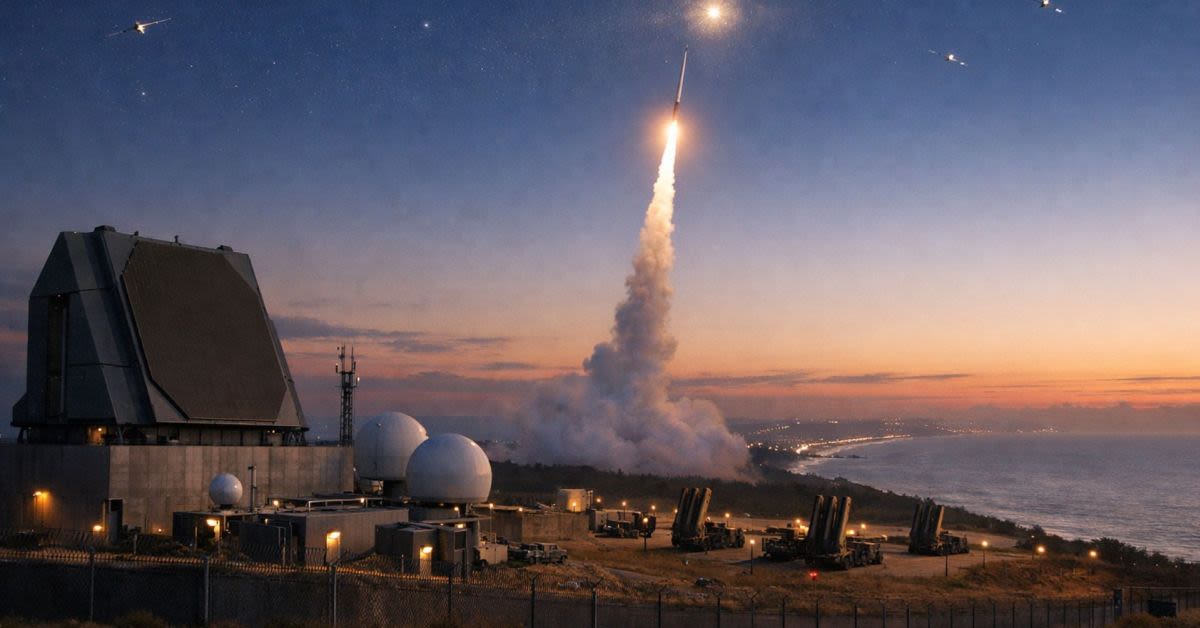
America is entering an era when the threats to the homeland are evolving faster than the public conversation meant to confront them.
One of the most consequential national security efforts of this decade a program known as Golden Dome remains largely unfamiliar to the very citizens whose backing will determine whether it succeeds, according to WND. Congress is already pressing for answers, private industry is uncertain what to design and build, and the broader public has scarcely heard the name, creating a dangerous vacuum in which confusion, speculation, and adversary narratives can define a program intended to shield the nation rather than leave it exposed.
Golden Dome is not some shadowy mystery but a modernization initiative aimed squarely at defending the United States against advanced 21st?century threats that move faster, fly farther, and strike with greater precision than anything we faced in the past. Its architecture is designed to integrate sensing, tracking, command and control, and layered defensive capabilities across multiple domains, forming in practical terms a shield: a system designed to strengthen deterrence, reduce vulnerability, and give national leaders more time and options in a crisis.
Yet even the most sophisticated shield is only as strong as the public trust that undergirds it. And right now, that trust is at risk, in no small part because Washingtons political class and the permanent bureaucracy have been slow to explain to taxpayers what is being built in their name and with their money.
Golden Dome fits squarely within the nations core strategic frameworks, reinforcing the National Security Strategys mandate to protect the homeland and bolster deterrence. It advances the National Defense Strategys emphasis on countering advanced adversary capabilities and complements U.S. nuclear policy by reinforcing the stability and resilience of the strategic environmentwithout altering nuclear doctrine.
But alignment with strategy documents and classified briefings is not enough in a constitutional republic that rightly demands transparency and accountability. Congress, industry, allies, and the American people all need to understand what Golden Dome is and why it matters, or the initiative will become yet another target for partisan friction, budget?cutting skepticism, and misinterpretation abroad.
Lawmakers in both chambers have already begun signaling frustration, demanding clearer information about Golden Domes architecture, cost, schedule, and oversight mechanisms. In the absence of a coherent narrative, critics will fill the void, a result that is not a theoretical risk it is the predictable outcome of silence.
Industry, meanwhile, is being asked to innovate at speed without a full understanding of what the government actually requires, a recipe for waste and delay that conservatives have long warned against. Golden Dome requires rapid prototyping, open architectures, and competition, but companies cannot posture themselves effectively without clearer guidance, producing hesitation at precisely the moment when urgency is essential.
Then there is the American public, which has been largely left out of the conversation despite footing the bill and living under the threat. Most citizens have no idea what Golden Dome is, what threats it addresses, or why it is stabilizing rather than escalatory, and in an age of disinformation, that vacuum is dangerous because if the public does not understand the purpose of a major national security initiative, adversaries will happily define it for them.
Golden Dome is not merely a domestic procurement issue but a signal to friends and foes alike about American resolve. Allies and partners want reassurance that the United States is strengtheningnot retreating fromcollective defense commitments and need to know that Golden Dome complements existing security architectures rather than replacing them or shifting burdens.
Adversaries are also watching closely, probing for weakness, division, or confusion they can exploit in their propaganda and planning. Clear, consistent messaging is essential to avoid misinterpretation and to reinforce deterrence, because in the unforgiving world of great?power competition, ambiguity invites miscalculations.
To date, Golden Dome has been discussed mostly at defense and military conferences, where officials speak to already?informed insiders. Those speeches were necessary and well receivedbut they reach only specialized audiences, meaning they do not shape public understanding, they do not provide Congress with a bipartisan narrative, they do not give industry the clarity it needs, and they do not reassure allies or counter adversary messaging.
A national initiative of this magnitude demands a national conversation, not a closed?door seminar. The proposed remedy is straightforward and rooted in common sense: a deliberate, public?facing communications campaign anchored by a major national speech.
Armed Forces DayMay 16, 2026offers the ideal moment, both symbolically and substantively, to launch such an effort. A speech delivered at the American Legion Mall in Indianapolis would reach veterans, military families, policymakers, and civic leaders, and would also signal that Golden Dome is not a niche technical program but a national commitment to homeland protection.
A full rollout should include a sustained explanation of the threat environment, the programs defensive nature, its cost discipline, and its compatibility with constitutional limits and congressional oversight. This approach builds bipartisan confidence, provides industry with direction, reassures the American people, and strengthens allied cohesion, and most importantly, it ensures that Golden Dome is defined by its strategic purposenot by speculation or misinformation.
Golden Dome is a prudent, stabilizing investment in Americas security, the kind of forward?leaning defense posture conservatives have long argued is cheaper and safer than reacting after disaster strikes. But even the best ideas can falter without public understanding, and the United States has reached a point where silence is no longer strategic because the stakes are too high, the threats too real, and the consequences of miscommunication too severe.
A national security initiative of this scale deserves a national conversation, one that treats citizens as partners rather than bystanders. Golden Dome must be explained, not whispered about, it must be understood, not assumed, and it must be introduced to the American people with the clarity, confidence, and transparency that the moment demands.
Armed Forces Day is approaching, and the country is ready to listen. Now is the time to speak, General Guetlein, Secretary Hegseth and President Trump.
Login