
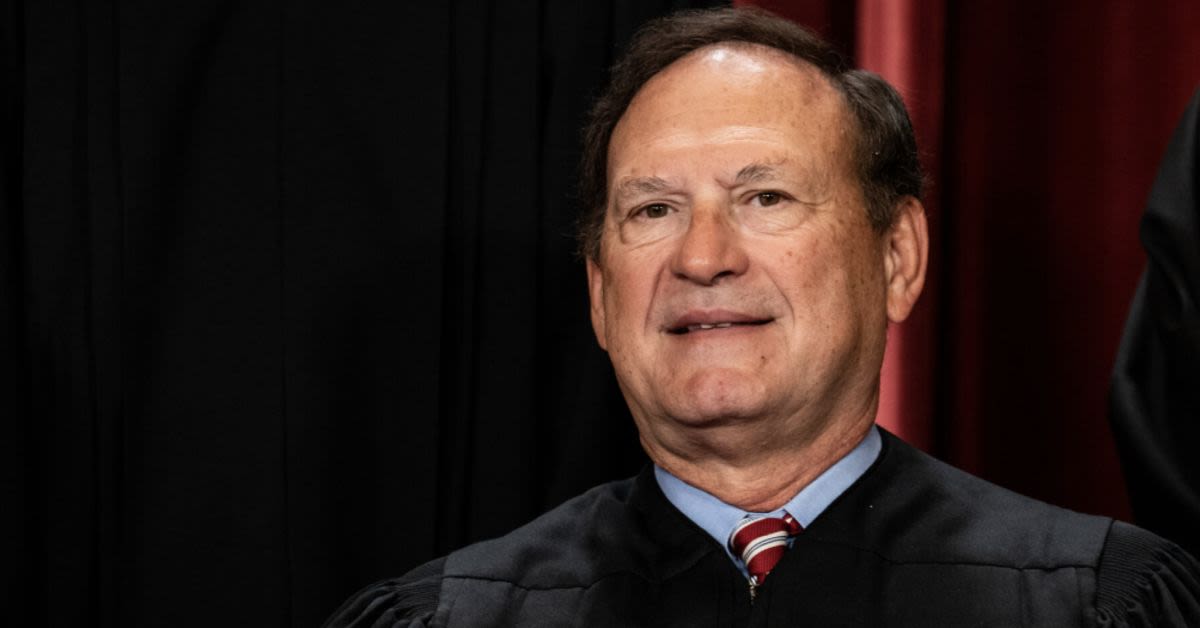
Justice Samuel Alito, a stalwart originalist on the Supreme Court and a key figure in President Trumps constitutionalist judicial legacy, quietly visited a hospital for dehydration before returning home the same night.
The brief medical episode on March 20 went undisclosed to the public at the time, a fact that has prompted questions about transparency surrounding the health of one of the courts most influential justices, according to WND. Reports indicate Alito was taken from a Federalist Society dinner to a hospital, where he was evaluated, given fluids for dehydration, and then released to return to his Virginia residence. Since then, he has been present for oral arguments and has appeared fully engaged in the customary sharp exchanges with attorneys at the lectern.
At 76, Alito is routinely the subject of retirement speculation, a parlor game in Washington that intensifies whenever the balance of the court is at stake. Left-wing activists, however, have a different timeline in mind, openly hoping he remains on the bench only until a Democrat president can replace him with another progressive jurist in the mold of Joe Bidens nominee, Ketanji Jackson.
Jackson, now seated on the high court, famously was unable to define the word woman during her confirmation hearings, a moment that crystallized for many conservatives the radical gender ideology now embedded in the lefts legal agenda. Since joining the court, she frequently has delivered off-topic rants during oral arguments, discussing Japan and wallet during birthright citizenship arguments, and ranting for pages and pages in her dissents that are so far off topic that even other liberals on the bench disavow her agenda.
Rather than focusing on a disciplined constitutional jurisprudence, Shes instead taken part in a Broadway production, a move critics see as emblematic of a justice more interested in cultural signaling than legal rigor. By contrast, Alito has consistently declined to indulge in speculation about his own retirement, signaling his intention to continue serving as long as he is able. He was attending the Federalist Society event when he began feeling lightheaded, prompting his security detail to urge immediate medical evaluation.
Out of an abundance of caution, he agreed with his security details recommendation to see a physician before the three-hour drive home, the Supreme Court said in a statement. After receiving treatment, He then did, in fact, return to his home, resuming his duties without interruption. Alito was nominated to the Supreme Court in 2005 by President George W. Bush and confirmed in 2006, making him the second-oldest justice after Clarence Thomas, 77.
The current court typically divides 6-3 along conservative-liberal lines, a configuration that has allowed the constitutionalist majority to correct some of the most egregious activist precedents of past decades. The majority was successful in striking down the failed Roe v. Wade creation of a federal right to abortion, restoring the issue to the states and the people rather than unelected judges. Another long-criticized ruling now squarely in the crosshairs is the decision that imposed same-sex marriage nationwide, a judgment rooted in politics rather than any clear constitutional text.
For conservatives, Alitos continued presence on the bench is central to preserving a court that respects the Constitution as written rather than as imagined by progressive elites. With President Trumps second administration reinforcing a judiciary grounded in original meaning and limited government, the health and tenure of justices like Alito and Thomas remain pivotal to safeguarding individual liberty, religious freedom, and the rule of law against an increasingly aggressive left-wing legal movement.
Login