
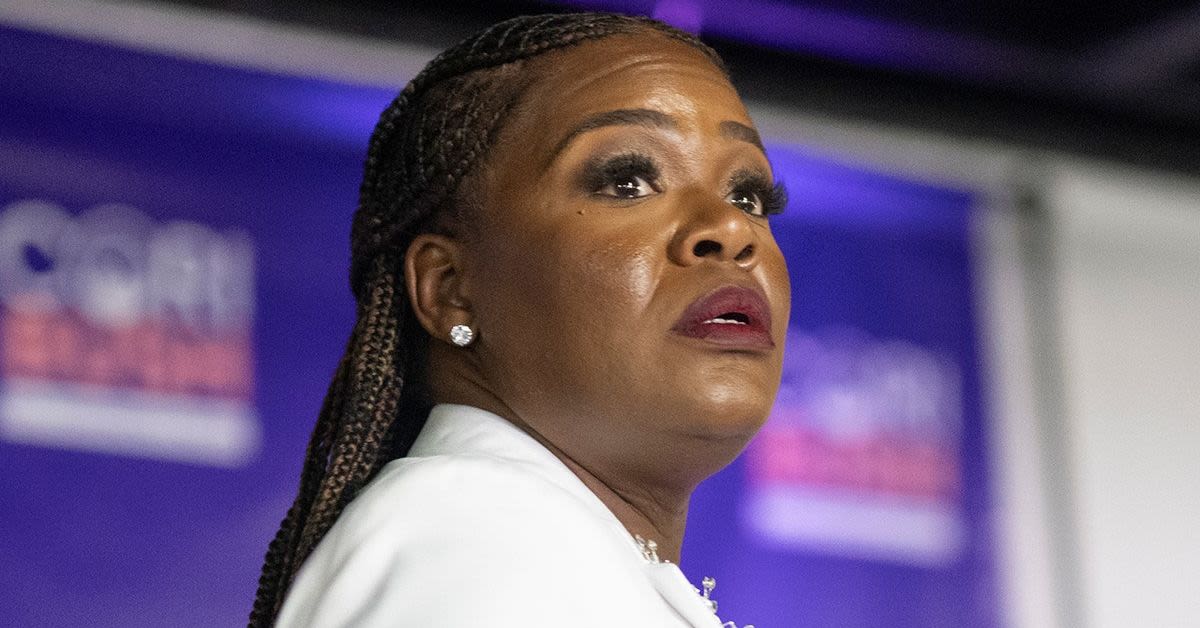
Two years after a stinging primary loss that rattled the progressive Squad and delighted moderates, former Rep.
Cori Bush is mounting a bid to return to Congress and reclaim her old seat in Missouris 1st District.
According to Politico, Bushs comeback attempt unfolds against a dramatically altered Democratic landscape, where internal warfare over Israel, Iran, and the broader Middle East has deepened since she left Washington. The activist-turned-lawmaker is betting that this ideological shift inside the party particularly the growing hostility on the left toward Israel and its supporters will transform what was once a liability into a potential asset. She is also seeking to recast her 2024 defeat not as a verdict on her performance, but as the product of what she calls a flood of outside money determined to silence her brand of radical activism.
I need to go back. I didnt finish the work that I was doing, Bush said in a recent interview, framing her loss as an interruption rather than a repudiation. It was interrupted by big money. It was interrupted by AIPAC and their allies who made the decision that they didnt want this activist, this advocate, who had been speaking out against war and imperialism, that had been speaking out against a genocide in Gaza at the hands of the Israeli government.
The American Israel Public Affairs Committee and its political arm have become central villains in Bushs narrative, as she aligns herself with a growing faction of Democrats who openly attack the pro-Israel lobby. The fight over AIPACs role in Democratic primaries has reached a boiling point this cycle, with an increasing number of Democrats denouncing the groups influence and some would-be 2028 presidential hopefuls pledging to refuse its money. For the progressive left, AIPAC has become shorthand for what they see as corporate, establishment control of the party a framing that conveniently obscures the fact that many of AIPACs targets, like Bush, also struggled with basic legislative effectiveness.
Missouris 1st District, a plurality-Black seat anchored in St. Louis, was one of the marquee battlegrounds in this intra-party war two years ago. The primary unfolded as activists on the left were pressuring then-candidate Joe Biden over his handling of the Israel-Hamas conflict in Gaza, turning the race into a proxy fight over whether Democrats would stand firmly with a key U.S. ally or drift toward the anti-Israel rhetoric of the far left. For many voters, the contest was less about foreign policy nuance and more about whether their representative would focus on local needs or national ideological crusades.
In that race, thencounty prosecutor Wesley Bell, a more pragmatic Democrat, defeated Bush by roughly five points in the primary, buoyed by more than $8.5 million in outside spending from the AIPAC-affiliated United Democracy Project. Bell went on to cruise to victory in the general election, underscoring that Bushs brand of protest politics had worn thin with a critical mass of Democratic voters in the district. AIPACs political arm has not yet spent in the district this cycle, but it has already endorsed Bell for 2026, signaling that the group still views Bush as a dangerous standard-bearer for the partys anti-Israel fringe.
Cori Bush was a disastrously ineffective Member of Congress who didnt deliver for her constituents, Patrick Dorton, a spokesperson for AIPACs United Democracy Project, said in a statement that encapsulated the establishment critique of Bush. When voters are reminded of that record of non-accomplishment, they will be no more likely to elect Cori Bush to Congress than they were to re-elect her two years ago. She was a terrible Member of Congress that didnt [do] anything for St. Louis.
Progressive activists, however, are eager to turn Bells association with AIPAC into a political liability rather than an asset. Usamah Andrabi of Justice Democrats, the left-wing group that backed Bush in her previous race and is supporting her again, argued that Bells history of accepting AIPAC support could now become a major vulnerability. For organizations like Justice Democrats, the goal is not merely to elect candidates, but to reshape the Democratic Party into a vehicle for aggressive, movement-style politics that often sits uneasily with traditional American support for Israel.
Voters are waking up to [AIPACs] influence, and that is why you are now seeing AIPACs endorsement becoming, I think, a death for so many candidates and incumbents across the country, said Andrabi, insisting that the political winds have shifted since Bushs defeat. His claim reflects a broader progressive strategy: to stigmatize pro-Israel support as inherently corrupt or out of touch, even as many rank-and-file Democrats remain more concerned with inflation, crime, and economic opportunity than with the internal politics of foreign policy lobbies.
AIPACs record in Democratic primaries this year has been mixed, with notable setbacks in places like New Jersey and a split outcome in Illinois. Progressive candidates have become more explicit in their attacks on the organization, hoping to turn it into a symbol of everything they oppose about the party establishment. Yet the uneven results suggest that while the lefts anti-Israel message resonates in some deep-blue enclaves, it is far from a universal winner and often collides with voters desire for competence and tangible results.
Dorton, speaking for United Democracy Project, has been blunt about why he believes Bush lost and why she remains vulnerable. He highlighted her missed votes and her opposition to President Bidens infrastructure bill as key factors that soured voters on her performance, painting a picture of a lawmaker more interested in symbolic protest than in governing. For his part, Bell has brushed off concerns that AIPACs past support could damage his reelection prospects, dismissing it as little more than a talking point for Bush and her allies.
Folks in my district, money in politics doesnt impact whether they can get gas in their car and pay for food and the price of eggs and bringing jobs into our district, Bell said in an interview, emphasizing kitchen-table concerns over ideological purity tests. And so that is a headline that my opponent likes to play into.
Veteran Democratic strategist Antjuan Seawright, who has advised top party committees, echoed Bells skepticism that AIPAC will be a decisive issue for most primary voters. He argued that while activists and online commentators obsess over who takes money from which group, ordinary voters are more interested in whether their representative is delivering concrete benefits. That perspective aligns more closely with a traditional, results-oriented view of public service than with the performative politics that have come to define much of the progressive left.
I know there are some in and outside of our party who want to make the conversations about the type of money folks may or may not receive, but I tend to think its more important about the type of services we provide, Seawright said. As long as the people feel like youre representing them, then why should the race be about the type of money instead of about the services you provide to the district?
The ideological rift inside the Democratic Party over Israel has only widened since Bushs 2024 defeat, particularly amid the war in Iran launched by President Donald Trump and Israeli leaders. That conflict has scrambled traditional partisan lines, with many Democrats moving sharply away from the longstanding bipartisan consensus that the United States should stand firmly with Israel against hostile regimes like Tehran. For conservatives, this drift is alarming, signaling a party increasingly captive to an activist base that views Americas allies with suspicion and its enemies with undue sympathy.
Polling underscores the extent of the shift. Sixty-seven percent of registered Democrats told NBC News this month that they sympathized more with Palestinians than with Israelis in the Middle East situation, a dramatic departure from the partys historical posture. A recent Quinnipiac survey found that 53 percent of voters including a staggering 89 percent of Democrats oppose U.S.-Israel military action against Iran, suggesting that the partys base is now deeply uncomfortable with robust support for Israels security.
A similar, though more limited, division is emerging among Republicans, even as most self-described MAGA voters strongly back the presidents actions in Iran. Prominent conservative figures like Tucker Carlson have criticized the conflict, and Joe Kent, who was serving in a senior intelligence role, resigned from the administration over it. Still, the GOP remains far more united than Democrats in its support for Israel and its recognition of Iran as a dangerous adversary, highlighting a stark contrast between the parties on foreign policy seriousness and moral clarity.
Without a doubt, the fact that Wesley Bell is historically one of the largest recipients of AIPAC money ever is a massive albatross around his neck that should be hit on consistently, Andrabi said, underscoring the lefts determination to make AIPAC a central issue in the race. In his view, the Democratic base is increasingly inclined to reward candidates who defy party leadership and challenge longstanding alliances, even when doing so undermines U.S. interests abroad. That approach may play well on social media, but it risks alienating moderates and independents who still expect their leaders to support key allies and oppose terror-sponsoring regimes.
Voters are looking for leaders who are willing to call out their own party when they are failing communities, call out their own party when they are too beholden to corporate lobbies like AIPAC, Andrabi added. Cori has done that her entire time [in Congress].
Two years ago, AIPAC-backed groups largely avoided making Israel the centerpiece of their messaging in Democratic primaries, including in Bushs race. Instead, they focused on her vote against Bidens signature infrastructure package and her pattern of missed House votes a line of attack they have continued in early primaries this year and one that Bell eagerly amplified. That strategy reflects a recognition that, for many voters, questions of diligence and effectiveness are more salient than ideological skirmishes over foreign policy.
I dont want to hear about someone who claims to fight but wont show up to do the job, Bell said, drawing a sharp contrast between his own record of engagement and Bushs more performative style. Bush was one of just six progressive Democrats who opposed the infrastructure bill, arguing that it was incomplete without the separate Build Back Better Act. That stance may have endeared her to some on the far left, but it also positioned her against a major investment in roads, bridges, and broadband that many working-class voters saw as a tangible benefit.
Bush, for her part, insists that her activism including her willingness to push party leaders from the left now reflects where the Democratic base truly is. She portrays herself as a political trailblazer whose once-fringe positions have become mainstream within the partys activist class. Whether that activist class actually represents the broader electorate in St. Louis is another question, one that will be tested again if she secures a rematch with Bell.
The thing is, people are moving toward the things that I was speaking about, Bush said. I called it a genocide before many others did. I spoke up for Medicare For All before others did. I pushed for the Equal Rights Amendment in a way that hadnt been done in a very long time, and I created a caucus to stand for the Equal Rights Amendment.
The personal relationship between Bell and Bush has also deteriorated sharply, adding a layer of bitterness to an already fraught contest. Bush says the two were once friends, but that Bell launched his 2024 campaign against her without warning, a move she clearly views as a betrayal. She now admits she extended him the same courtesy or lack thereof when she decided to challenge him this cycle.
According to Bush, the pair have not spoken since Bell entered the race against her two years ago. She said she did not inform him of her decision to run this year the same way he didnt reach out to me to tell me he was going to run against me. That mutual silence underscores how personal and ideological grievances have fused in this contest, turning what might have been a standard primary challenge into a grudge match over the future direction of the Democratic Party.
Bell, however, enters the race with clear structural advantages. As the incumbent, he enjoys the visibility and institutional support that come with holding office, and he has already secured the endorsement of the Congressional Black Caucus PAC, one of the most influential Black political organizations in the country. Financially, he is also in a far stronger position, with nearly $850,000 in cash on hand at the end of 2025, compared with just over $200,000 for Bush, according to campaign finance filings.
Bell has cast himself as a pragmatic problem-solver, arguing that many of the national issues Bush champions simply are not top of mind for most voters in the district. She wasnt present in St. Louis. She didnt meet with stakeholders; she didnt meet with constituents, he said, pointing to the federal dollars he has steered to local businesses over the past two years as evidence of his focus on tangible results. The MO in Missouri does not stand for Middle East. It stands for Missouri.
Bush, by contrast, appears determined to double down on the same progressive activism that made her a star on the left but a polarizing figure at home. She has signaled that she will lean heavily on her ties to the Squad, saying she remains in regular contact with Democratic Reps. Ayanna Pressley, Alexandria Ocasio-Cortez, Rashida Tlaib and Ilhan Omar. None of those members responded to requests for comment, but their continued association with Bush underscores the ideological stakes of the race for the partys left flank.
Seawright, the Democratic strategist, suggested that the clash between Bell and Bush reflects the broader growing pains of a party struggling to reconcile its activist base with its governing responsibilities. The primaries, hopefully, will do what theyre supposed to do and settle whatever differences and disputes we may appear to have, but also change the direction of how we move forward, he said. No matter the differences we may appear to have amongst each other, they do not compare to the differences we have with the other side.
For conservatives watching from the outside, the BushBell rematch offers a revealing window into a Democratic Party increasingly torn between traditional liberalism and a more radical, movement-driven politics that is skeptical of American power, hostile to key allies like Israel, and often dismissive of bread-and-butter governance. Whether voters in St. Louis choose the activist who called it a genocide before many others did or the incumbent who insists The MO in Missouri does not stand for Middle East. It stands for Missouri will say much about which vision is ascendant and whether Democrats intend to prioritize ideological purity or practical results in the years ahead.
Login