
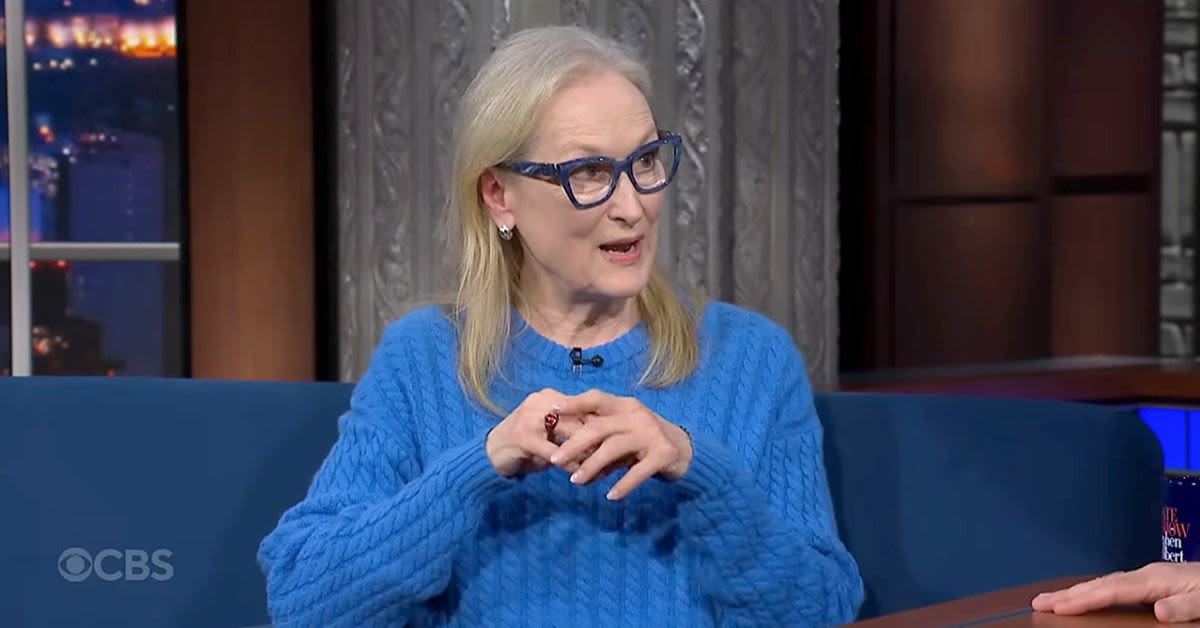
Meryl Streeps latest foray into politics on The Late Show with Stephen Colbert offered a textbook case of why Hollywood celebrities might be wise to steer clear of policy debates they plainly have not read.
According to Gateway Pundit, the Oscar-winning actress used her appearance to sound the alarm over the SAVE America Act, a Republican-backed bill designed to safeguard U.S. elections by requiring proof of citizenship to register and valid identification to vote. Rather than engage with the legislations actual text, Streep resorted to a familiar progressive tactic: portraying basic election security as an attack on women and a threat to democracy itself.
Colbert teed up the exchange with a broad, open-ended question, asking Streep, Is there anything that I did not ask you that you would like to touch upon having to do with the world of entertainment or movies or the world in general? Seizing the opportunity to pivot from film to fear, Streep replied, Oh, well, yes, I hope that the Save America Act, if that passes, all the married women that have changed their names are going to have to go to the registrar and prove that they are who they are. In other words, to your voting registrar.
She went on to claim, This is what I understand. Otherwise, when you get to the voting booth in November, you might be disqualified because your name doesnt on your birth certificate doesnt match your name on the voting rolls. Streep then doubled down on the supposed burden, adding, So everybody has to get And you and this is such a pain in the neck because you have to go, but do it, because otherwise youll be turned away. And I think that women need to be heard, especially in the film.
Her comments framed the SAVE America Act as a bureaucratic trap aimed at married women, as though the federal government were suddenly demanding they prove they exist before being allowed to vote. Yet the bills core purpose is straightforward: it requires every American to show ID to cast a ballot and requires proof of citizenship BEFORE registering to vote, measures that most conservatives view as common-sense protections of election integrity. Rather than address those goals, Streep implied that women are uniquely incapable of navigating paperwork that millions already handle in other areas of life.
Streeps assertion that you might be disqualified when you get to the voting booth in November is, at best, a distortion. The Act does not primarily rewrite the rules for showing up on Election Day, which are largely governed by existing state voter ID laws that already vary widely and often accept drivers licenses or affidavits to resolve minor discrepancies.
Nor do name mismatches automatically disqualify anyone, despite the ominous picture painted on late-night television. The bill explicitly contemplates name changes due to marriage, divorce, etc., and directs states to create procedures for additional documentationsuch as marriage certificatesor to accept an affidavit attesting that the name on the citizenship document is a prior legal name.
The supposed hurdle Streep highlights is one that women routinely clear in ordinary life, often multiple times through marriage, divorce, and remarriage. Updating names and records is already standard for passports, Real ID-compliant licenses, Social Security, banking, employment paperwork, and medical records, none of which Hollywood progressives typically describe as an assault on womens rights.
Her prove who you are rhetoric ignores the reality that Americans must verify their identity constantlywhen obtaining a drivers license or passport, opening a bank account, boarding a plane, picking up children from school, checking into a hospital, or starting a new job. If these requirements are not considered voter suppression in every other context, it is difficult to see why they suddenly become oppressive when applied to the ballot box.
What the SAVE America Act actually tightens is the citizenship component of voter registration, a concern that resonates strongly with conservatives who worry about noncitizen voting and lax verification systems. Framing this as married women being forced to prove they are who they are recasts a targeted citizenship check into a melodramatic narrative of mass disenfranchisement, a storyline that plays well on television but bears little resemblance to the legislative text.
This episode underscores how celebrity commentary can flatten complex legislation into emotional talking points, hyping hypothetical downsides while ignoring the bills stated purpose of protecting the integrity of the vote. Critics have made similar claims about voter ID laws for years, yet states with stricter identification rules continue to record robust turnout, suggesting that American voterswomen very much includedare more than capable of meeting basic standards to ensure that elections remain secure and reserved for citizens.
Login