
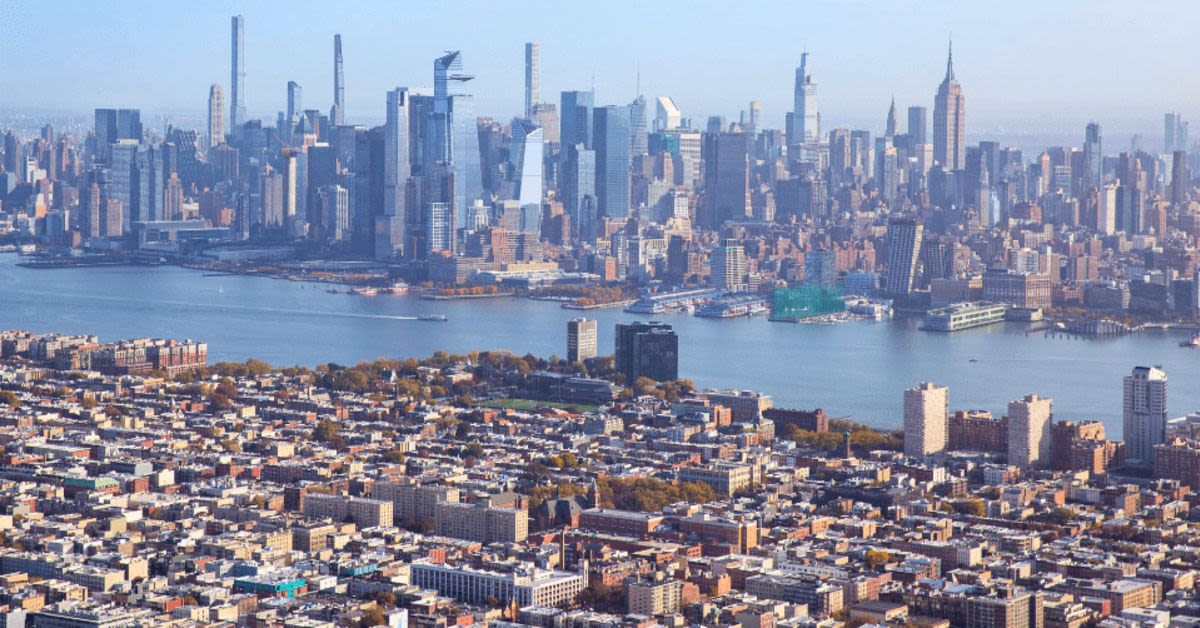
Something strange is rattling the quiet nights along New Jerseys Gold Coast, where residents say an unseen boom box somewhere across the Hudson is turning sleep into a luxury.
According to Fox News, people living in Edgewater, Fort Lee and Cliffside Park communities perched on the New Jersey Palisades directly opposite Harlem report being jolted awake on weekends by pounding music that seems to roll in from Manhattan between 11:30 p.m. and 5 a.m. Local officials say the disturbance reached a breaking point in February, when Edgewater police logged hundreds of complaints in a matter of weeks.
"The source of the noise was determined to be coming from across the Hudson River, in Harlem, New York," the Edgewater Police Department told Fox News Digital. "We contacted the NYPD precinct regarding the noise complaint. In the warmer months, we typically get some complaints when party boats travel past Edgewater on the Hudson River."
That uncertainty has fueled a fierce debate online, where frustrated residents are trying to do the detective work government has so far failed to complete. Many insist the culprit is a Harlem nightclub, while others including Edgewaters mayor suspect the real offenders are party boats that treat the river like a floating nightclub, exporting New York Citys nightlife to unwilling New Jersey taxpayers.
Michael J. McPartland, mayor of Edgewater, told Fox News Digital that the town has battled noisy party boats for years. "Normally in the summer, boats will do charters or booze cruises with loud music," McPartland told Fox News Digital.
He recalled that "five, six, seven years ago," he reached out to the NYPD to address the problem, and "They usually accommodate us," he said. He added that "condos along the river in Edgewater" bear the brunt of the noise, with residents paying premium prices for waterfront views but getting sleepless nights instead.
McPartland noted that parks in Upper Manhattan can also become hotspots for late-night revelry. "Sometimes they allow late-night parties there," he said, suggesting that permissive policies on the New York side may be amplifying the problem for families across the river.
When asked if he was aware of the most recent wave of complaints, McPartland said he was not, underscoring a communication gap that has only deepened local frustration. Many members of the "Edgewater, NJ and Fort Lee, NJ and Cliffside Park, NJ" Facebook group remain outraged, arguing that officials on both sides of the river have been slow to respond.
They are convinced the music is coming from a restaurant and club in Harlem with an outdoor lounge and a sweeping view of the Manhattan skyline. Other residents are skeptical, pointing out that the specific restaurant being blamed actually shut its doors two years ago, raising questions about whether social media anger is being misdirected.
Some members of the Facebook group said the noise was so loud it felt like it was in their backyard, an intrusion that turns private property into an unwilling extension of someone elses party. Some called it a thumping sound that vibrates, while others said music blasts all night long, a description that suggests industrial-strength speakers rather than a casual gathering.
"Sound will carry more over water than in the woods or over a grass field," Bennett Brooks, president of Brooks Acoustics Corporation, a company based in Connecticut and Florida, told Fox News Digital. "However, a moderate wind up or down the river will disrupt the sound," he added, complicating efforts to pinpoint the exact source.
Brooks is not convinced the noise is coming from Harlem and believes the origin could be closer to home. He also noted that it is harder to enforce regulations when two states are involved instead of one, a familiar problem whenever cross-border issues collide with bureaucratic boundaries.
New York Citys noise code is supposed to balance the citys nightlife with the rights of residents, according to the NYC Department of Environmental Protection (DEP). Updated in 2007, the rules focus on limiting "excessive and unreasonable" noise that could impact health and safety, with enforcement shared by the DEP and NYPD.
The citys own guide concedes that background noise in busy areas can make violations harder to assess, giving regulators wide discretion and, critics would argue, plenty of room to look the other way. If the noise is coming from Harlem, then "New Jersey and New York would have to reach an agreement," Brooks said, adding that if the source can be identified conclusively, civil legal action could be necessary.
Specific limits apply to common sources like construction, traffic, animals, air conditioners, food vendors, garbage trucks and amplified music, but those rules mean little to families who feel abandoned while agencies pass responsibility back and forth. For venues that play music, sound cannot exceed 42 decibels inside homes, and between 10 p.m. and 7 a.m., it must stay within 7 decibels above the surrounding ambient noise on the street.
"In an urban setting, sound bounces around between buildings, making the true direction difficult to determine," Brooks said. For New Jersey residents who simply want a quiet nights sleep, the technical complexities and interstate wrangling only highlight a deeper concern: that their quality of life is being sacrificed to protect New Yorks nightlife and a permissive regulatory culture that too often favors entertainment over everyday families.
Login