
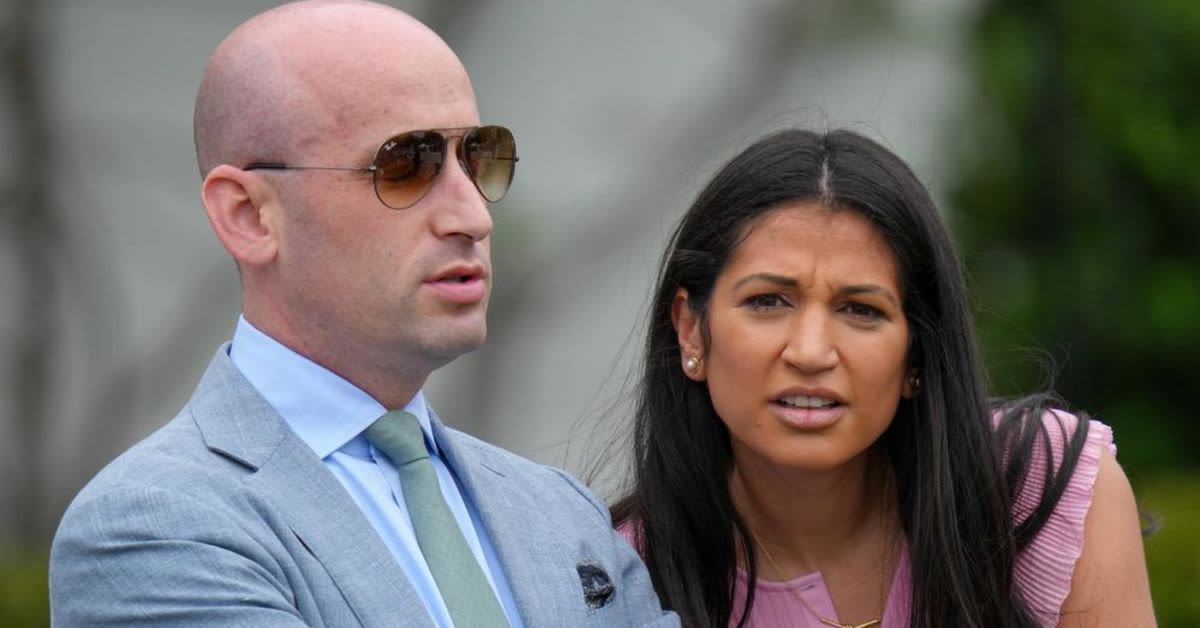
Katie Miller, the outspoken wife of senior Trump adviser Stephen Miller, used her podcast to deliver a pointed and uncompromising interrogation of Deputy Attorney General Todd Blanche over the Department of Justices handling of the Jeffrey Epstein scandal and the broader question of accountability within the federal government.
The exchange, which unfolded just days before Blanche and Attorney General Pam Bondi were scheduled to appear behind closed doors before the House Oversight Committee, centered on the long-delayed release of the Epstein files and the publics eroding trust in federal institutions. According to Gateway Pundit, the session with lawmakers is expected to probe why critical information tied to Epsteins powerful network has remained shielded from public view for so long.
Miller opened by channeling the anger and anxiety of parents across the country, pressing Blanche on whether the Justice Department had failed in its duty to protect children from predatory elites. The moms are desperate to know because they want to be protectors of kids Do you think youve failed them thus far? she asked, framing the issue not as a bureaucratic dispute but as a moral reckoning for a justice system that too often seems to bend for the well-connected.
Blanche responded by defending the DOJs record, insisting that the department has been diligent in complying with the bipartisan Epstein Files Transparency Act, which mandated the release of millions of pages of government records. He noted that the DOJ had already made public 3.5 million government documents on Epstein and rejected the notion that victims had been abandoned, declaring, I mean, no, not in any way, shape or form, and adding, When I hear this narrative that we are letting down victims or that we are failing victims I want to make sure people know that every day we fight for victims.
Miller then shifted to the most controversial aspect of the Epstein saga: his death in federal custody, officially ruled a suicide by a coroner but widely viewed with suspicion by the public. She pressed Blanche on whether he personally accepted the suicide determination or believed Epstein may have been murdered inside the Metropolitan Correctional Center in Brooklyn, a facility that has become synonymous with security lapses and unanswered questions.
Her questions drilled into the glaring irregularities surrounding that night, particularly the reported malfunction of surveillance cameras and the lack of a precise time of death. Do the cameras in the jail fail frequently or just in this specific case? she asked pointedly, before adding, No time of death was ever determined, only that his body was discovered [at] 6.30 a.m. the next morning. Why couldnt investigators establish a clearer timeline?
Blanche, to his credit, did not dismiss the concerns outright and acknowledged the legitimacy of the publics doubts. Thats a good question, he conceded, adding, And its one of the failures, right? What happened with Epstein leads to these type of fair questions about what happened that night.
Refusing to stay within the narrow confines of official talking points, Miller broadened the conversation to touch on the infamous Pizzagate controversy and its evolution into the QAnon movement, both of which alleged that powerful Democrats, including Hillary Clinton, were tied to secret sex-trafficking operations. She asked whether investigators had ever explored any potential overlap between Epsteins real-world trafficking network and those earlier claims that were dismissed and mocked by the political and media establishment.
Blanche was quick to distance himself and the department from such theories, stressing that law enforcement had repeatedly rejected them. Well the Pizzagate conspiracy theory has been debunked repeatedly by law enforcement, not by me, by law enforcement, he said, reiterating the official line that there was no basis for those allegations.
Miller, however, highlighted the uncomfortable contrast between what elites label conspiracy theories and what later emerges as fact, especially when it involves wealthy, well-connected men exploiting minors. Sure, it was totally debunked, she replied with evident skepticism. And then you look at what happened with Epstein, where a wealthy, well-connected man was actually trafficking underage girls in elite circles. And then you begin to think, Hmm, maybe things arent a real conspiracy theory?
The most explosive moment came when Miller turned from Epstein to the broader issue of what many conservatives see as a two-tiered justice system that shields the Lefts power brokers while relentlessly targeting Donald Trump and his supporters. She zeroed in on the intelligence and law-enforcement officials who drove the Russia collusion hoax and other investigations that conservatives regard as politically motivated assaults on a sitting president.
Why havent we arrested Clapper, Comey, Brennan? So many traitors to our country. Why havent we done more to hold people accountable? Miller demanded, giving voice to the frustration of millions of Americans who watched these unelected bureaucrats wage what she called witch hunts against Trump for purely political reasons. Blanches reply was notably guarded, reflecting the DOJs habitual reluctance to confront its own internal abuses.
Todd Blanche: I think thatwell, first of allIm not going to talk about any ongoing investigations, and I cant. But I think the Attorney General, myself, and Director Patel are focused on nothing more than accountability, he said, offering assurances but few specifics. Miller pressed again, underscoring the perception that those who weaponized federal power against a political opponent have escaped consequences: These are people who waged witch hunts against President Trump for purely political purposes. Yet Im sure theyre all guilty of committing various crimeswhich I know you cant comment on, so well give you a pass. But dont you agree that we should hold people accountable who do these types of things?
Blanche ultimately affirmed the principle, if not the practice, of equal justice under the law, stating, I think theres nothing more important in the Department of Justice than accountability. Yes, I agree with that. For many on the Right, however, words are no longer enough: Millers interrogation captured a growing conservative demand that the same system that eagerly pursues Trump finally turn its scrutiny on the entrenched bureaucrats, political elites, and alleged predators who have long operated with impunity behind the shield of the federal government.
Login