
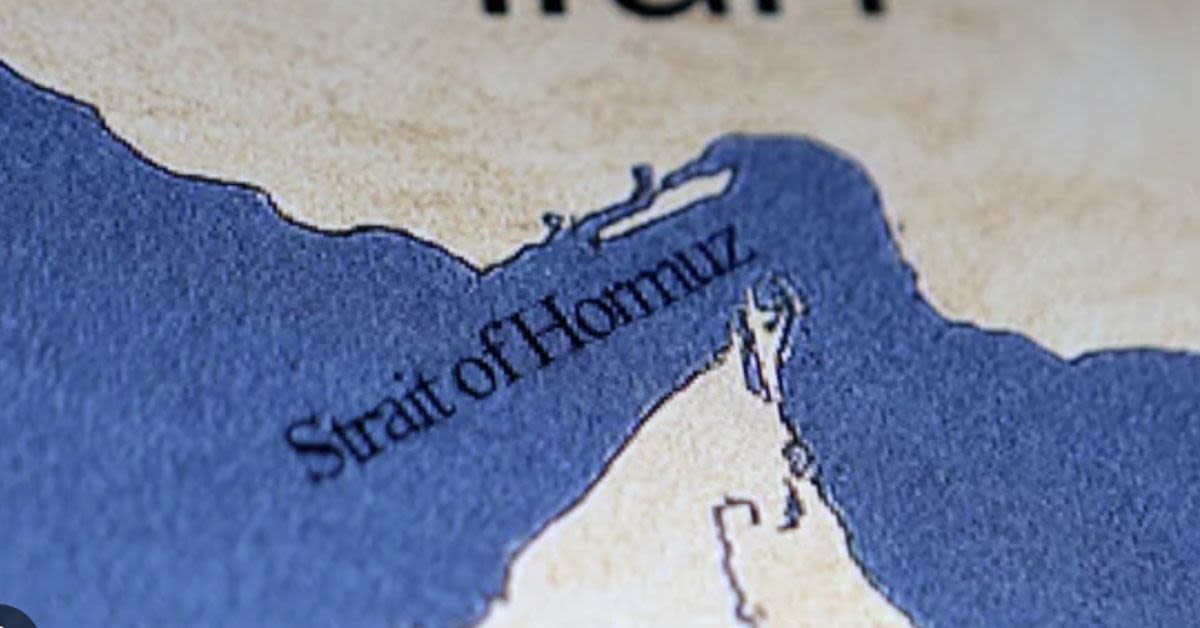
Europes mounting energy insecurity has collided with escalating tensions in the Persian Gulf, thrusting the Strait of Hormuzone of the worlds most vital trade arteriesinto the center of global political and economic anxiety.
In recent days, France and Italy have quietly initiated diplomatic outreach to Tehran, seeking assurances that European commercial vessels will be allowed to transit the strategic waterway without interference. As reported by Gateway Pundit, these contacts, first disclosed by the Financial Times, highlight the growing unease within European capitals that prolonged instability in the Gulf could unleash a new wave of economic turmoil across an already fragile continent.
The Strait of Hormuz is not merely another busy shipping lane; it is the narrow maritime corridor through which roughly one-fifth of the worlds oil and a comparable share of liquefied natural gas flows each day. When traffic through this chokepoint slows or halts, the shock is transmitted almost instantly through global energy markets, driving up prices and rattling investors.
European officials insist that their current diplomatic efforts are designed to restore at least partial shipping flows while avoiding a broader regional escalation that could spiral out of control. Yet even those directly involved in the talks concede that there is no guarantee Iran will accept any arrangement that truly secures free navigation for Western-aligned commercial traffic.
The urgency of the situation is reflected in the markets, where oil prices have surged toward the $100-per-barrel threshold and could climb higher if the crisis deepens. European natural gas prices have also risen sharply since the latest tensions erupted, reviving memories of the energy price shock that followed the war in Ukraine and the continents rushed decoupling from Russian supplies.
For governments already wrestling with persistent inflation, stagnant growth, and public discontent over rising living costs, the prospect of another prolonged disruption in Gulf energy flows is deeply troubling. Politicians who embraced aggressive green policies and rapid energy transitions now face the reality that their economies remain tethered to fossil fuels and vulnerable to geopolitical blackmail.
Energy security has long been one of Europes most glaring strategic weaknesses, a vulnerability repeatedly exposed whenever global supply routes come under threat. Despite years of lofty rhetoric about diversification, renewables, and climate targets, the continent remains heavily dependent on external suppliers for the oil and gas that power its industries, heat its homes, and keep its transport networks moving.
That dependence becomes painfully obvious whenever instability threatens the maritime corridors that deliver those resources, and the Strait of Hormuz is the most critical of them all. Situated between Iran and Oman, it is widely regarded as the single most important maritime bottleneck in the global energy system, a narrow passage whose disruption can send shockwaves across continents.
Although the channel itself is roughly fifty kilometers wide, the actual navigable lanes used by massive oil tankers are far narrower, making the route acutely sensitive to military threats, blockades, or even minor incidents. The International Energy Agency estimates that global oil demand now exceeds 100 million barrels per day, and a substantial portion of that volumeespecially the crude that fuels Asias industrial giants and a significant share of Europes importspasses through this confined corridor.
Countries such as China, India, Japan, and South Korea are heavily reliant on shipments moving through Hormuz, and their economic stability is directly tied to the waterways security. For China in particular, the strait is nothing less than a strategic lifeline, with roughly half of its oil imports transiting the passage, meaning any sustained disruption could hit manufacturing output, electricity generation, and broader economic performance.
The shockwaves from the current crisis are already reverberating through financial markets, where uncertainty is often as damaging as actual supply cuts. Stock exchanges across Europe and Asia have recorded losses amid fears that escalating tensions could choke off energy supplies and drive up costs for energy-intensive industries, from chemicals and steel to transportation and logistics.
Shipping companies, ever sensitive to risk and insurance costs, have begun altering their routes to avoid the danger zone. Tankers and cargo vessels that would normally pass through the Persian Gulf and the Suez Canal are increasingly being diverted around the Cape of Good Hope, a lengthy detour that can add up to two weeks to transit times between Asia and Europe.
Those extended journeys carry significant economic consequences, especially in a just-in-time global economy that depends on predictable schedules and low transport costs. Longer routes mean higher fuel consumption, increased crew and maintenance expenses, and additional strain on already stretched supply chains, all of which ultimately push up the price of goods for consumers and businesses.
Insurance markets have reacted swiftly and decisively, as they typically do when geopolitical risk spikes in a confined area. Several maritime insurers have sharply increased premiums for vessels operating in the Persian Gulf, while others have gone further and suspended war-risk coverage altogether for ships entering the most volatile zones.
Without adequate insurance, many shipping companies simply refuse to send their vessels into the area, regardless of diplomatic assurances or naval patrols. That dynamic has left dozens of ships anchored near regional ports, effectively sidelined while owners and operators wait for clarity on whether the route will become safeand insurableagain.
The disruption is not confined to the seas; air transport networks across the broader Middle East have also been affected by the rising tensions. Airspace closures over Iran, Iraq, Syria, and parts of the Gulf have disrupted one of the busiest aviation corridors linking Asia, Europe, and North America, forcing airlines to improvise new routes on short notice.
For the past two decades, Gulf hubs such as Dubai and Doha have served as major global transit points, capitalizing on their geographic position and relatively stable political environments. That model depends on open skies and predictable regional security, and with multiple air corridors now restricted, airlines are being compelled to reroute flights through Central Asia or Africa, increasing both costs and travel times for passengers and cargo.
The economic fallout extends far beyond the aviation sector, rippling through the intricate web of modern supply chains. Todays global trade system relies heavily on the tight coordination between maritime shipping and air freight, with many industries depending on a delicate balance of sea-borne bulk cargo and time-sensitive air deliveries.
When both systems experience simultaneous disruption, the result can be shortages of key components, contract cancellations, and production slowdowns that hit manufacturers and consumers alike. Central banks are monitoring the situation closely, aware that energy price spikes have historically been among the fastest triggers for inflationary surges and forced interest-rate hikes.
For European economies already burdened by high public debt, heavy welfare commitments, and fragile growth, another energy shock could be especially punishing. Policymakers who have spent years prioritizing climate agendas and regulatory expansion over energy resilience may soon face hard questions from voters about why their countries remain so exposed to foreign supply disruptions.
Despite the gravity of the situation, the diplomatic response within Europe remains fragmented and, in many respects, hesitant. While France and Italy have opted to pursue direct discussions with Iran in search of shipping guarantees, other European governments remain skeptical of engaging Tehran, wary of legitimizing a regime that has repeatedly used energy and security threats as leverage.
Britain, for example, has not opened talks with Iranian officials regarding specific guarantees for navigation in the strait. Instead, British authorities are focusing on consultations with Gulf allies to secure alternative energy supplies and reinforce regional partnerships that align more closely with Western interests.
At the same time, European naval forces already deployed in nearby waters are confronting difficult operational and political choices. Several EU member states maintain warships in the Red Sea under the blocs Aspides maritime protection mission, but officials acknowledge that escorting commercial vessels through the Strait of Hormuz itself would entail serious risks and potential escalation.
No European navy is currently prepared to undertake such escort operations if the threat of attack remains high, particularly given domestic political constraints and limited defense budgets. French President Emmanuel Macron has indicated that military escorts could be considered at a later stage, but only if tensions ease and if Iran agrees to respect freedom of navigation, a conditional stance that underscores Europes reluctance to confront Tehran directly.
Until such conditions are met, European governments appear to be relying primarily on diplomacy and risk management rather than hard power. That approach reflects both the continents military limitations and its political inclination toward negotiation, even when dealing with regimes that have a long record of destabilizing behavior.
Turkey has also been drawn into the crisis, highlighting how the fallout extends beyond the European Unions formal borders. According to Turkish transport officials, a Turkish-owned vessel was recently granted permission by Iranian authorities to transit the strait after behind-the-scenes negotiations, suggesting that Ankara is pursuing its own parallel channels with Tehran.
Fourteen additional Turkish vessels remain in the region awaiting similar authorization, a situation that illustrates the delicate balance many governments are attempting to strike between securing their economic interests and avoiding entanglement in a broader confrontation. Of course, no country wants to see the global energy artery closed, yet few are eager to trigger a wider conflict that could make matters even worse, a sentiment that captures the cautious posture of many regional actors.
Ultimately, the Strait of Hormuz is far more than a geographic chokepoint; it is a central pillar of the global economic system, a place where geopolitics, energy markets, and international trade intersect in a narrow band of water. When that pillar begins to shake, the consequences travel quickly from oil tankers and shipping routes to household energy bills, factory floors, and national budgets across the Western world.
For Europe in particular, the turmoil surrounding Hormuz is a stark reminder of how fragile its energy architecture has become after years of policy choices that prioritized ideological climate goals over practical security. The current crisis exposes the risks of overreliance on distant suppliers and unstable regions, reinforcing the argumentoften made by conservativesthat genuine energy independence, diversified supply, and robust domestic production are essential to national sovereignty and economic stability.
The instability in the worlds most important energy corridor is not merely a regional flare-up; it is a warning signal to Western policymakers who have treated reliable fossil fuel access as an afterthought. Whether Europe heeds that warning and reorients its energy strategy toward resilience and realism will determine how vulnerable it remains the next time the Strait of Hormuz becomes a flashpoint in global affairs.
Login