
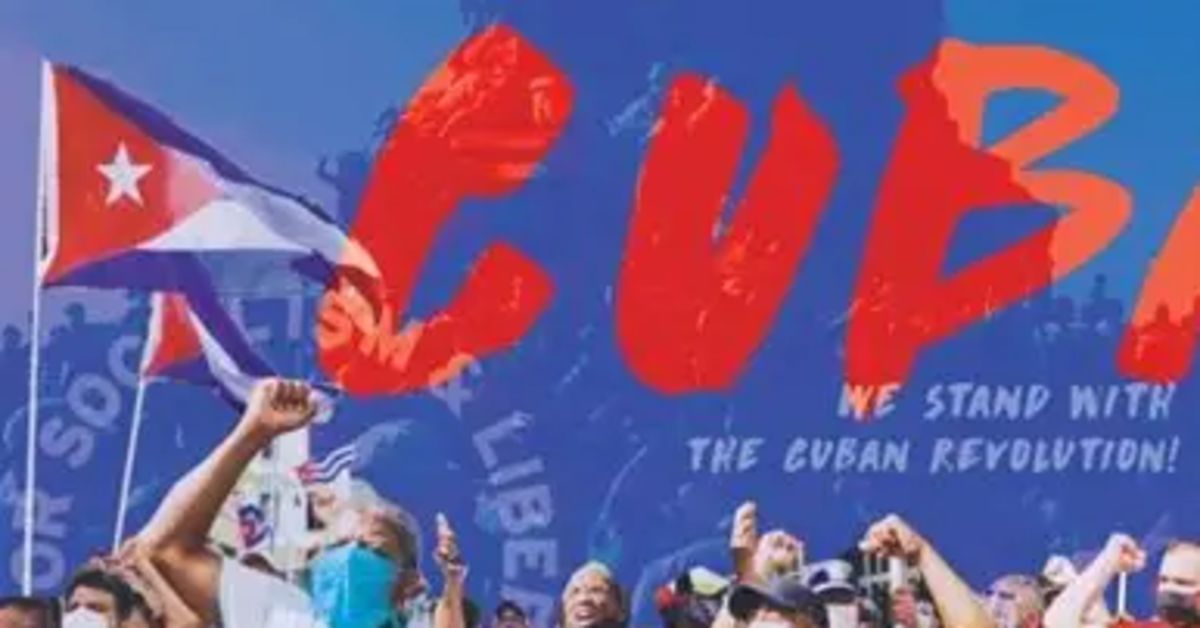
Cubas communist leadership has quietly opened talks with Washington over the longstanding U.
S. blockade, even as Havanas economic crisis deepens and domestic discontent grows.
According to Newsmax, President Miguel Diaz-Canel disclosed the contacts in a video message aired on Cuban state television early Friday, framing the discussions as an attempt to ease the pressure that has pushed the islands fragile economy to the brink. He stated that these talks have been aimed at finding solutions through dialog to the bilateral differences we have between the two nations, a rare public acknowledgment of behind-the-scenes engagement with the United States at a moment when the regime faces mounting strain.
The address, broadcast shortly before Diaz-Canel was scheduled to appear before Cuban media, underscored how severe the situation has become for the one-party state. His appearance, unusual in both timing and tone, came as the government confronts a combustible mix of economic collapse, chronic shortages, and growing frustration among ordinary Cubans.
Diaz-Canel linked the crisis to what he described as a U.S. blockade, language Havana has long used to deflect blame from its own failed socialist policies. He also portrayed the talks with Washington as a pragmatic step, even as he insisted that Cuba would not abandon its ideological course.
The speech was framed as a follow-up to a Feb. 5 event in which Diaz-Canel issued one of his starkest warnings to date about the countrys trajectory. At that earlier appearance, he cautioned that Cuba was approaching a point that would require extreme measures in response to the economic free fall, rolling blackouts, and fuel shortages.
Those shortages, he argued, have been exacerbated by Trump's imposition of an oil blockade on the Caribbean island, a reference to President Donald Trumps tougher line on the Havana regime. The Trump administrations stance has been clear: tighten economic pressure on the communist government, restrict its access to hard currency, and curb the flow of resources that help sustain its repressive apparatus.
For conservatives, the current moment highlights the long-standing case against unearned concessions to Cubas rulers, whose centrally planned system and political repression have driven generations into poverty and exile. While Diaz-Canel now seeks relief through negotiations, his own rhetoric about extreme measures and the regimes refusal to liberalize economically or politically suggest that any U.S. engagement must be conditioned on real reforms, not mere promises.
As Havana signals its willingness to talk, the central question is whether these contacts will be used to genuinely ease the suffering of the Cuban people or simply to buy time for a discredited system. With President Trump maintaining a hard line and insisting that pressure remain squarely on the communist leadership, the outcome of these quiet discussions will test whether the regime is prepared to change courseor simply maneuver for survival.
Login