
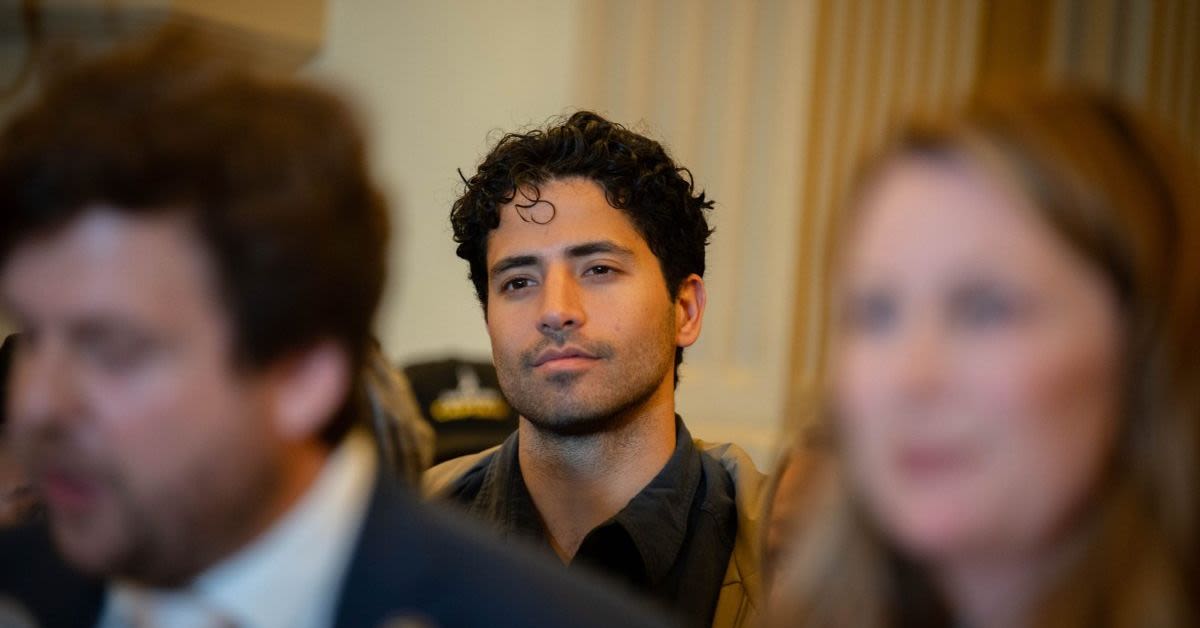
Colorado Democrat Manny Rutinel, once arrested for storming the field at a Yale-Harvard football game to denounce fossil fuels, is now the Democratic frontrunner in a congressional district whose economy is powered by the very industry he once tried to shut down.
In November 2019, Rutinel and dozens of other activists flooded the Yale Bowl during halftime, halting play for nearly an hour as they demanded that Yale and Harvard divest from fossil fuels, chanting that the universities were "complicit in climate injustice" and shouting, "hey hey, ho ho, fossil fuels have got to go."
According to The Washington Free Beacon, that same activist is now leading a crowded Democratic primary in Colorados Eighth Congressional District, a swing seat anchored in Weld County, where oil, gas, and agriculture are not abstract villains but the backbone of local jobs and tax revenue.
The district sits atop the Denver-Julesburg Basin, a prolific shale formation that produces roughly 4 percent of all U.S. crude oil and feeds two Denver-area refineries that together process 103,000 barrels of crude per day, according to the Energy Information Administration. Voters there narrowly elected Republican Rep. Gabe Evans in 2024 by fewer than 2,500 votes, making any Democratic nominees record on energy and regulation a potential deciding factor in a race that could help determine control of the House.
Rutinel, who has served in the Colorado legislature since 2023, has quickly become the favorite of the Democratic establishment despite his history of hardline climate activism. He reported raising more than $3 million by late February and has secured the backing of Rep. Robert Garcia (D., Calif.), the ranking Democrat on the House Oversight and Government Reform Committee and a vocal Green New Deal supporter who has campaigned aggressively for a rapid transition away from fossil fuels.
The Yale Bowl protest that helped launch Rutinels political profile was celebrated by the partys progressive icons, even as it disrupted a storied Ivy League rivalry and led to criminal charges. Sens. Bernie Sanders (I., Vt.) and Elizabeth Warren (D., Mass.) hailed the demonstrators for standing "up for justice" and taking "bold action" against what they describe as the existential threat of climate change, reinforcing Rutinels credentials with the activist left but potentially alienating blue-collar voters in an energy-rich district.
Rutinel was charged with disorderly conduct for his role in the field invasion, which was organized by the Yale Endowment Justice Collective, a student group that has also pressed the university to divest from Israel. At the time, he made no effort to distance himself from the protest, telling the New Haven Register, "I think were in the midst of a climate crisis and Yale is sitting on their hands and failing to act on the biggest issue of our time," and expressing confidence that his actions would force Yale to divest from fossil fuels.
That prediction never materialized, underscoring the gap between activist theatrics and institutional reality. In 2021, Yales Board of Trustees adopted a new investment framework for fossil fuel producers that tightened standards but stopped well short of the full divestment Rutinel and his allies demanded, leaving the universitys endowment still tied to conventional energy.
The disorderly conduct case against Rutinel, whose legal first name is Tonty, was ultimately dropped after he completed community service with the Florida Rights Restoration Coalition, a group that helps former inmates register to vote. That arrangement allowed him to avoid a criminal conviction while maintaining his standing in progressive circles that prize civil disobedience as a political tool.
Now that he is courting a far more ideologically diverse electorate, Rutinel is attempting to recast his role in the Yale Bowl incident. His campaign insists that "Manny attended the event as a legal observer, not a protestor," and a spokesman added, "As the son of a single mom who was raised on food stamps, Manny believes in an all-of-the-above energy solution that keeps costs for families low and protects good-paying jobs in our communities."
That rhetorical pivot reflects the political reality of Colorados Eighth District, where hostility to fossil fuels is not a theoretical policy stance but a direct threat to livelihoods. Yet Rutinels record suggests a long-standing alignment with environmental activists who view oil, gas, and traditional agriculture as industries to be regulated, taxed, and ultimately phased out rather than supported as engines of prosperity.
Energy is not the only flashpoint in his activist past that could unsettle voters in a district heavily dependent on animal agriculture. As a fellow with Yale Law Schools Law, Ethics & Animals Program, Rutinel denounced the meat industry as "horrific" and "exploitive [sic]" and publicly pressured Popeyes to introduce plant-based menu options, signaling a hostility to mainstream dietary choices and the businesses that serve them.
After leaving Yale, he founded the nonprofit Climate Refarm, which lobbied schools to adopt plant-based meals and advocated tax hikes on meat, dairy, and eggs, policies that would fall hardest on working families and ranchers already squeezed by inflation and regulatory costs. The Washington Free Beacon reported that this agenda placed Rutinel firmly in the camp of activists who see higher prices and government intervention as tools to reshape consumer behavior rather than as burdens on ordinary Americans.
With his sights now set on Congress, Rutinel is working to soften that image and reassure the agricultural community that he is not their enemy. His campaign website highlights his teenage job at McDonalds, and he told the Colorado Sun that his past vegan activism was aimed only at the industrys "bad apples," even as he now proclaims that Colorado ranchers are "the envy of the globe."
Those reassurances may face skepticism in a district where voters know firsthand how environmental mandates and animal-rights campaigns can translate into lost jobs, shuttered operations, and higher grocery bills. As Rutinel attempts to walk back years of anti-fossil fuel and anti-meat rhetoric, the race in Colorados Eighth District will test whether a progressive activist can successfully rebrand as a champion of energy workers and ranchersor whether voters will decide that his record speaks louder than his newly calibrated campaign language.
Login