
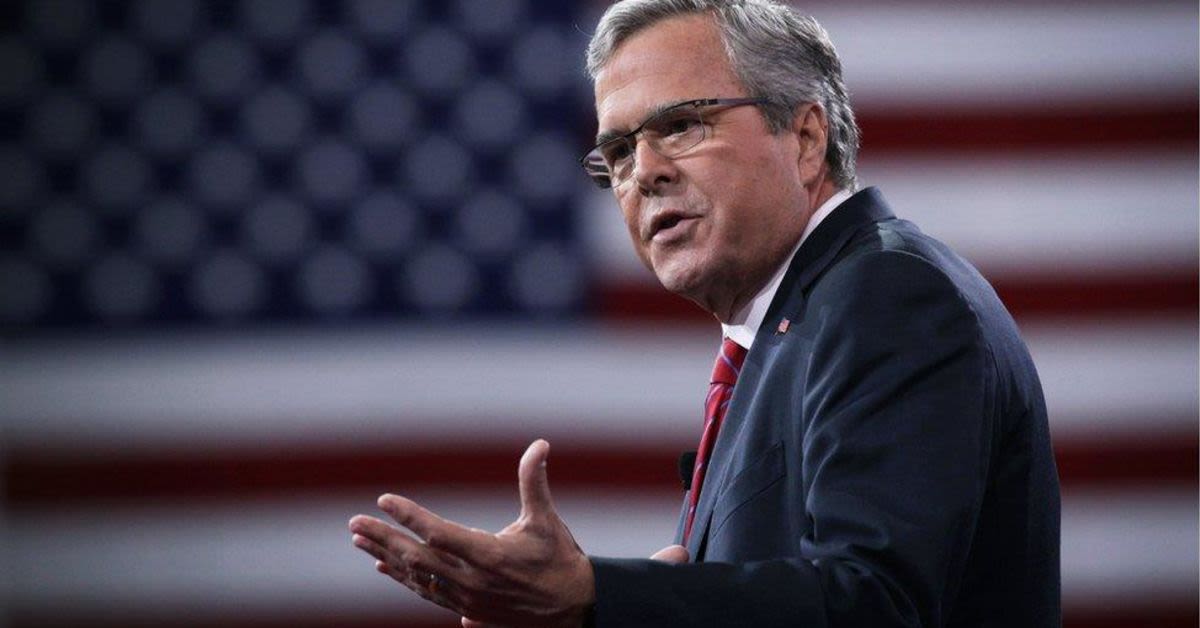
A prominent conservative policy organization co-led by former Florida Governor Jeb Bush is offering strong praise for President Donald Trumps decision to authorize sweeping military strikes against Iran.
United Against a Nuclear Iran (UANI), founded in 2008 by Ambassador Mark Wallace and veteran diplomat Dennis Ross, has long positioned itself as a bulwark against the Islamic Republics nuclear ambitions and regional aggression, according to Fox News. Wallace previously served in a United Nationsfocused role under President George W. Bush, while Ross was a senior figure in the George H.W. Bush administration, underscoring the groups deep roots in Republican foreign-policy circles.
The nonprofit has been at the forefront of exposing Tehrans human rights abuses and its attacks on Americans, while advising U.S. and international policymakers on the dangers posed by the regime in Tehran. It also counsels current and prospective commercial partners of Iran on the legal, financial and reputational risks of doing business with a government widely viewed as a state sponsor of terror.
In a statement to Fox News Digital, Bush and Wallace offered unambiguous support for the joint American-Israeli operation. "UANI salutes the courage and professionalism of American and Israeli service members carrying out this historic mission against the Iranian regime," Bush and Wallace told Fox News Digital Saturday.
They also made clear that Trumps decision to act militarily was, in their view, both justified and overdue. "We applaud President Trump for his courageous decision to launch this military operation. For 47 years, the Iranian regime has unleashed terror, violence and misery against its own people and across the region while threatening the United States, Israel and our allies."
Bush, who clashed bitterly with Trump during the 2016 Republican primaries, and Wallace stressed that previous administrations had tried and failed to integrate Iran into what they called the "peaceful community of nations." They argued that Trump, despite his hawkish reputation, had first attempted to resolve the standoff diplomatically.
"This president engaged extensively and in good faith to achieve a diplomatic solution," they said, noting that Trump had signaled as recently as last week that he remained open to negotiations. "The regime chose escalation and continued its pursuit of nuclear weapons. The responsibility for this moment rests squarely with Ayatollah Khamenei."
By late afternoon, Israeli sources were reporting that the 86-year-old Khamenei had been declared dead, a development that would mark a seismic shift in the Middle East power balance. Bush and Wallace emphasized that the joint operation was aimed not at the Iranian nation or its people, but at the regimes capacity to project violence.
They stressed that ordinary Iranians have long borne the brunt of the regimes repression and that Trumps stated message since the strikes began should unite Americans across the political spectrum. The former governor and the ambassador highlighted the presidents words: "We aim to see Iran free, prosperous, and at peace. This is their time to take their great country back."
In a separate public statement, Bush and Wallace were even more blunt about the significance of Khameneis reported demise. "The Butcher of Tehran is dead," they declared, framing the operation as a moral as well as strategic victory.
Bush amplified that sentiment on X, calling the mission a watershed moment in confronting Irans ruling elite. He wrote that "Operation Epic Fury marks a historic mission against the Iranian regime," and added, "We salute the courage and professionalism of American and Israeli service members and commend for his courageous decision."
The warm words for Trump mark a notable shift from the acrimony of 2016, when Trump derided Bush as "Low Energy Jeb" and Bush retorted that Trump could not "insult your way to the presidency." Their rivalry once symbolized a broader struggle inside the GOP between the establishment and the populist insurgency that ultimately carried Trump to the White House.
Yet on issues such as Iran and education reform, Bush has increasingly aligned himself with Trump-era priorities that emphasize strength abroad and decentralization at home. As governor, Bush made K12 reform a signature cause, tightening proficiency standards and enacting the "A+ plan," which made Florida the first state to require clear letter grades on student performance.
More recently, he has lauded the Trump administrations push for universal school choice and the use of federal block grants to empower states. He called those efforts a "transformational opportunity," writing that "The Trump administration has a chance to shift the power dynamic back to the states, where policymakers are uniquely equipped to understand and address the diverse needs of their students, schools, and communities," a vision that dovetails with long-standing conservative commitments to limited federal power and local control.
Login