
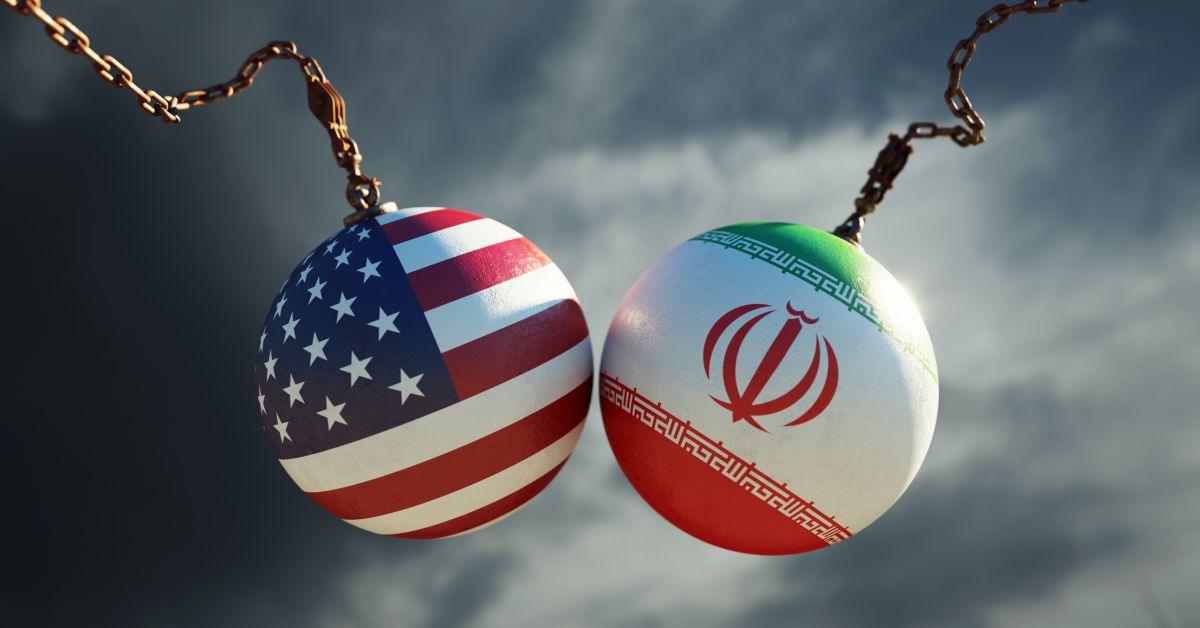
The latest joint U.
S.-Israeli military strikes on Iran have triggered a fierce political clash in Washington, exposing a deep divide over war powers, American interests, and the future of U.S. policy in the Middle East.
According to The Blaze, the operation has drawn both effusive praise and sharp condemnation from lawmakers in both parties, with some hailing President Donald Trumps decision as a long-overdue reckoning for Tehran and others warning that the administration is dragging the United States into another open-ended conflict. The strikes, framed by supporters as a decisive blow against a regime that has targeted Americans for decades, have also reignited a constitutional debate over who holds the authority to take the nation to war.
Sen. Lindsey Graham (R-S.C.), one of the most outspoken advocates of regime change in Tehran, rushed to celebrate what he called a "historic operation," casting the president as a reluctant warrior forced to confront evil. Graham declared that he is "in awe of President Trump's determination to be a man of peace but at the end of the day, evil's worst nightmare."
In one of several emotional statements, Graham wrote, "My mind is racing with the thought that the murderous ayatollah's regime in Iran will soon be no more. The biggest change in the Middle East in a thousand years is upon us." His rhetoric underscored a long-standing conservative view that peace is best secured through overwhelming strength and a willingness to confront hostile regimes directly.
Graham was hardly alone in his celebration of the regime-change strikes on the Shiite nation, as other Republicans framed the operation as both morally justified and strategically necessary. Arkansas Sen. Tom Cotton (R) offered a detailed bill of indictment against Tehran, calling the campaign a "vital mission of vengeance, and justice, and safety."
Cotton reminded Americans that "Iran has waged war against the U.S. for 47 years: the hostage crisis, the Beirut Marine barracks, Khobar Towers, roadside bombs in Iraq and Afghanistan that killed or maimed thousands of American soldiers, the attempted assassination of President Trump." He added that "The butchers bill has finally come due for the ayatollahs," later signaling his appreciation for Trumps address to the nation in a separate post.
Sen. Rick Scott (R-Fla.), a member of the Senate Armed Services Committee alongside Cotton, also praised the presidents decision in unequivocal terms, tying it directly to a Reagan-era doctrine of deterrence. Scott thanked Trump for his "strong leadership," describing Operation Epic Fury as both a demonstration of "peace through strength" and "AMERICA FIRST."
In a notable break from the usual partisan script, Democrat Sen. John Fetterman (Pa.) joined Graham and other Republicans in applauding Trumps actions, aligning himself with the argument that confronting Iran is a prerequisite for any lasting peace. Fetterman stated, "President Trump has been willing to do what's right and necessary to produce real peace in the region."
"God bless the United States, our great military, and Israel," continued the Democrat, offering a rare moment of bipartisan unity around support for the U.S.-Israel alliance and the American armed forces. His remarks highlighted a small but significant faction of Democrats willing to back a more assertive posture against Tehran despite resistance from their partys progressive wing.
Several of Fetterman's Democrat colleagues, however, condemned both the strikes and what they characterized as the presidents circumvention of Congress, which constitutionally retains the authority to declare war. Sen. Elizabeth Warren (Mass.) claimed that "single-handedly starting another war with Iran is dangerous and illegal" and questioned whether "America first" truly meant another foreign entanglement.
Democrat Sen. Mark Warner (Va.) raised pointed concerns about the legality and constitutionality of the operation, especially in the absence of an immediate threat to the homeland. "The Constitution is clear: the decision to take this nation to war rests with Congress, and launching large-scale military operations particularly in the absence of an imminent threat to the United States raises serious legal and constitutional concerns," Warner noted.
Warner demanded that the administration "come forward with a clear legal justification, a defined end state, and a plan that avoids dragging the United States into yet another costly and unnecessary war." His comments reflected a broader unease among Democrats and some libertarian-leaning Republicans who fear mission creep and another protracted Middle Eastern conflict.
While Congress as a whole was not formally briefed on the strikes, House Speaker Mike Johnson (R-La.) indicated that key leaders were notified in advance through the established intelligence channels. Secretary of State Marco Rubio met with and briefed the Gang of Eight, which includes the Democrat and Republican leaders from both the Senate and the House.
A spokesperson for Johnson confirmed to NOTUS that the speaker was notified ahead of the operation, suggesting that at least some congressional oversight mechanisms were observed. Sources also told NOTUS that Senate Majority Leader John Thune (R-S.D.) and House Minority Leader Hakeem Jeffries (D-N.Y.) were notified along with Sen. Warner, Rep. Jim Himes (D-Conn.), and Republican Rep. Rick Crawford (Ark.).
Sen. Tim Kaine (D-Va.) who recently introduced a Senate resolution with Republican Sen. Rand Paul (Ky.) to block a war against Iran unless explicitly approved by Congress was far more scathing in his assessment of the presidents actions. Kaine accused Trump of waging an "illegal war," labeled the strikes a "colossal mistake," and urged his colleagues to "go on the record about this dangerous, unnecessary, and idiotic action" by voting on his war powers resolution.
On the House side, Rep. Thomas Massie (R-Ky.), a frequent critic of executive overreach in foreign policy, echoed those concerns from a constitutionalist, small-government perspective. Massie referred to the attacks as "acts of war unauthorized by Congress," warning that such actions undermine the separation of powers and the requirement that elected representatives debate and approve major military commitments.
In a subsequent social media post, Massie sharpened his critique, stating, "I am opposed to this War. This is not 'America First.'"
"When Congress reconvenes, I will work with @RepRoKhanna to force a Congressional vote on war with Iran," continued Massie. "The Constitution requires a vote, and your Representative needs to be on record as opposing or supporting this war."
The emerging divide on the right now pits national-security hawks, who argue that Irans decades of aggression demand a decisive response, against constitutional conservatives and non-interventionists who insist that even a just cause must be pursued within the bounds of congressional authority. As the dust settles from Operation Epic Fury, lawmakers will be forced to confront not only the question of how to deal with Tehran, but whether the United States can continue to project strength abroad while allowing presidents of either party to bypass the very war-making checks the Founders designed.
Login