
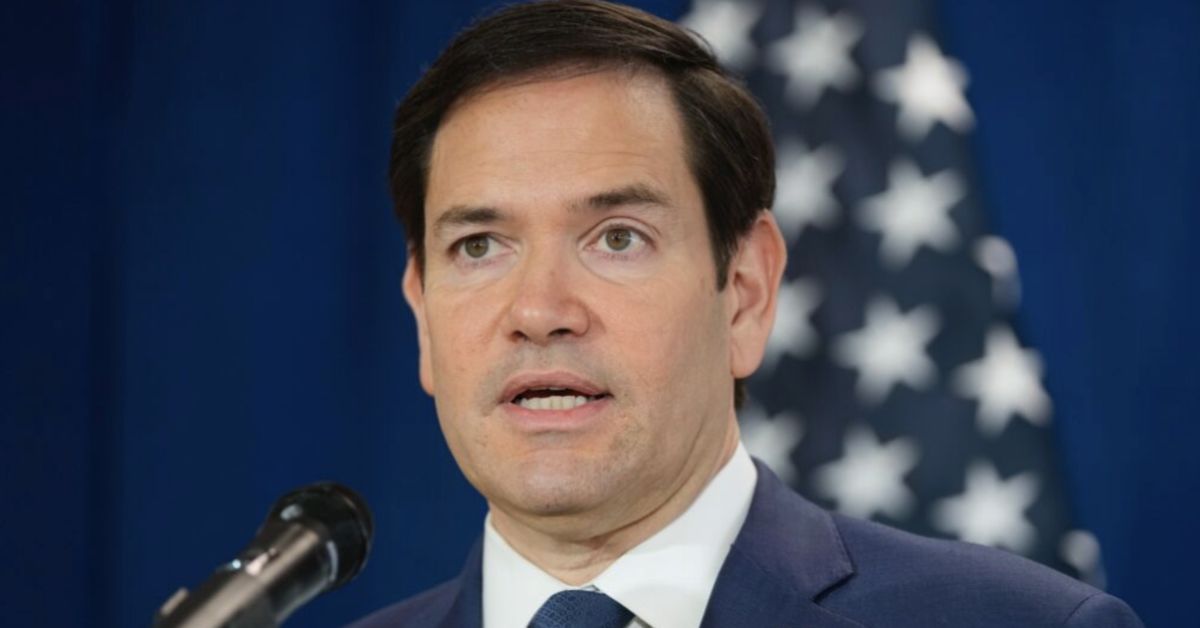
Secretary of State Marco Rubio quietly laid the groundwork on Capitol Hill for the Trump administrations overnight strikes on Iran, briefing key lawmakers in the days before the operation began, according to a senior State Department official.
In the early hours of Saturday morning, President Donald Trump announced in a 2:57 a.m. video address that U.S. forces had initiated strikes against Iran to eliminate imminent threats from the Iranian regime. According to the Daily Caller, a State Department official said Rubio convened an hour-long classified briefing Tuesday with the bipartisan Gang of Eight, the small group of congressional leaders entrusted with the nations most sensitive intelligence.
The Gang of Eight includes the top Republican and Democratic leaders in both chambers, along with the chairs and ranking members of the House and Senate intelligence committees. These lawmakers are routinely briefed on covert or highly classified national security operations, giving Congress limited but crucial oversight of executive war powers.
The State Department official said Rubio successfully reached seven of the eight members, with one lawmaker unreachable at the time of the briefing. The official added that the Department of War notified the House and Senate Armed Services Committees early Saturday morning, after the strikes were underway, to ensure the relevant defense panels were formally informed.
Rubio is currently at Mar-a-Lago with the president as the operation unfolds, the official noted, underscoring the secretarys central role in both the diplomatic and political dimensions of the crisis. His presence alongside Trump signals a united front within the administration as it confronts Tehrans aggression and nuclear ambitions.
Several members of the Gang of Eight issued public statements Saturday morning, revealing a sharp partisan divide over the presidents decision to use force. Democratic Connecticut Rep. Jim Himes, the ranking member of the House Permanent Select Committee on Intelligence, charged that the administration had entered a war of choice with no strategic endgame.
As I expressed to Secretary Rubio when he briefed the Gang of Eight, military action in the region almost never ends well for the United States, and conflict with Iran can easily spiral and escalate in ways we cannot anticipate, Himes added. His remarks reflect a familiar Democratic skepticism toward robust U.S. military action in the Middle East, even when aimed at a regime that has sponsored terrorism and targeted Americans for decades.
Democratic Virginia Sen. Mark Warner, the Senate Select Committee on Intelligence vice chairman, pressed the White House to spell out its objectives. The president owes the country clear answers: What is the objective? What is the strategy to prevent escalation? And how does this make Americans safer? Warner stated, echoing a long-running Democratic critique that strong action against Iran risks escalation more than it enhances deterrence.
House Speaker Mike Johnson, by contrast, praised the presidents resolve and framed the strikes as overdue accountability for Tehrans malign behavior. Writing on X, Johnson declared, Today, Iran is facing the severe consequences of its evil actions. President Trump and the Administration have made every effort to pursue peaceful and diplomatic solutions in response to the Iranian regimes sustained nuclear ambitions and development, terrorism, and the murder of Americansand even their own people.
The White House and the Department of War declined to elaborate beyond the presidents own remarks, referring the Daily Caller to Trumps video message for insight into his decision-making. In that address, Trump said Iran rejected every opportunity to renounce their nuclear ambitions, making clear he views the regime as having squandered any remaining diplomatic goodwill.
He called on the Islamic Revolutionary Guard Corps and Irans armed forces to stand down rather than fight, offering them a path to safety if they abandon the regime. Trump urged them to lay down their weapons in order to have complete immunity, signaling that Washingtons quarrel is with the ruling theocracy, not the rank-and-file soldiers or the Iranian people.
It has always been the policy of the United States, in particular, my administration, that this terrorist regime can never have a nuclear weapon. Ill say it again, they can never have a nuclear weapon, the president said, reiterating a red line that many conservatives argue should have been enforced years ago. He then laid out the scope of the military campaign, promising to dismantle Irans offensive capabilities if necessary.
We are going to destroy their missiles and raise their missile industry to the ground. It will be totally again, obliterated. Were going to annihilate their navy, Trump continued, describing a strategy aimed at crippling Irans ability to threaten its neighbors, international shipping lanes, and U.S. forces.
Were going to ensure that the regions terrorist proxies can no longer destabilize the region or the world and attack our forces and no longer use their IEDs or roadside bombs, as they are sometimes called, to so gravely wound and kill 1000s and 1000s of people, including many Americans. And we will ensure that Iran does not obtain a nuclear weapon. Its a very simple message, he added, tying the strikes directly to the safety of American troops and the broader fight against terrorism.
Trump elaborated further in a call with The Washington Post early Saturday, emphasizing that his concern extends beyond U.S. security to the fate of ordinary Iranians living under a repressive regime. He told the outlet his main concern is freedom for the Iranian people, and added that his administration is working to make Iran a place thats safe.
In his video message, Trump directly addressed the Iranian public, urging them to protect themselves during the strikes and then seize the moment to challenge their rulers. When we are finished, take over your government. It will be yours to take. This will be probably your only chance for generations. For many years, you have asked for Americas help, but you never got it. No president was willing to do what I am willing to do tonight, Trump said, casting his decision as a historic opportunity for regime change from within.
Just days before the attack, Department of War press secretary Kingsley Wilson outlined the administrations posture toward Iran in an interview with the Daily Caller, stressing both U.S. military strength and the presidents firm red lines. Weve got a lot of assets over there, a lot of aircraft over there, and were going to make sure that the Iranian people know we mean business, and the regime and the mullahs there particularly, know we mean business. They remember Midnight Hammer and the success of that operation. They also, like the rest of the world and our enemies, watched the Maduro raid, Wilson told the Caller.
They see what the United States military, and only the United States military is capable of doing so, it would be very wise for them to make a deal with this president. And I would also add that the president has been clear, whether on the campaign trail or throughout his entire presidency, that Iran cannot have a nuclear weapon. That is a red line, and we at the Department of War are in full support of that initiative, Wilson concluded, underscoring the administrations view that peace is best preserved through unmistakable strength.
A State Department official confirmed to the Daily Caller that a special task force has been established to assist American citizens in the Middle East and to support diplomatic efforts as the situation develops. While Democrats warn of escalation and demand more process, the administration is signaling that after years of appeasement and half-measures, Washington is finally prepared to confront Tehrans terror regime and defend both American lives and the cause of freedom in Iran.
Login