
Daniel Richman, once a federal prosecutor and now a Columbia University law professor, has reemerged in the public debate with a New York Times opinion piece arguing that the recently released Jeffrey Epstein files should never have been released.
.
According to Western Journal, what the Times chose not to emphasize is at least as important as what it did. The paper dutifully highlighted Richmans former role as a prosecutor and his current academic perch, but omitted a far more politically charged credential: Richman was the conduit James Comey used to leak internal FBI material to the press, a move that helped trigger the ultimately fruitless special counsel probe into the so-called Russiagate scandal.
That omission matters, because Richman is now warning against the public release of government documents, and his reasoning tracks neatly with the interests of the same political and bureaucratic class that benefited from his earlier leaks.
Richmans essay, titled The Epstein Files Should Never Have Been Released, makes its core case in the headline. He concedes that vague rhetoric about accountability for people in power can make it hard to see a downside to the disclosure, but insists that the release of millions of pages of the Epstein files is both a sign of institutional failure and a cause for concern. In other words, transparency sounds good in theory, but in practice, he argues, it has gone too far in this instance.
The specifics of his argument are revealing, particularly when he turns to the political context that produced the Epstein Files Transparency Act. Calls for the Epstein files release predate the Trump administration. But they are now online and searchable because too many Americans didnt trust the Justice Departments leadership with control of them. In the past, he writes, departmental leaders could limit suspicions about their motives by conspicuously leaving a matter such as this to career subordinates, rather than political appointees.
Richman then offers a pointed, if tellingly skewed, political narrative. Seen by so many as having fired or driven outprosecutors and agents who refused to become tools of President Trumps will, Attorney General Pam Bondi lacked credibility. She couldnt get away with asking the public to rely on the apolitical and independent judgment of those who remained. The eventual result was the Epstein Files Transparency Act. The framing is familiar: distrust of the Justice Department is laid at the feet of Trump and his allies, while the institutional failures of the DOJ and FBI under Democratic administrations receive far less scrutiny.
From there, Richman pivots to the dangers he sees in the document dump itself. The release of the files is also cause for concern because so much of the raw investigative material in them untold layers of hearsay, unverified accusations and vague circumstantial connections ought not be released for the public to pick over. On this point, he is not entirely wrong; any responsible conservative should recognize that reputations can be unfairly damaged by unvetted allegations, especially when the bureaucracy rushes a massive disclosure for political reasons. Yet the question is not whether redactions and care were needed, but why those in power waited until the political calculus shifted before suddenly discovering their qualms.
Richman continues by stressing the governments duty to protect victims, a duty he says was badly neglected. We dont know the degree to which the Justice Department has appropriately or inappropriately withheld or redacted documents. We do know that any effort to protect victims was woefully inadequate, as explicit photos and identifying information of many women, and possibly girls, have been found in the files. The governments obligation not to revictimize people ought to be one of its highest priorities. Here, it failed. That failure is real and serious, but it is also the predictable result of a political class that demanded speed and spectacle over methodical, victim-centered transparency.
It is worth underscoring that the Epstein materials have been in the Justice Departments possession across three administrations: Trump 45, Biden, and now Trump 47. Yet only now, after the files have been forced into the open and have conspicuously failed to deliver the long-promised knockout blow against Donald Trump, do we see this sudden wave of elite hand-wringing about over-disclosure. A few paragraphs later in his piece, Richman finally tips his hand as to why he is so personally exercised about the dangers of coercive investigative tools and document access.
You see, he writes, these tools can and have been misused, as when prosecutors and FBI agents illegally rummaged through my emails and computer files in an effort to come up with a case against James Comey, the former FBI director. That single admission reframes his entire argument. The man warning Americans about the perils of transparency is the same man who served as Comeys chosen leaker, and who now complains that investigators later searched his own records while exploring whether Comey mishandled government information.
Richman links to a partially redacted December ruling by a federal district court, which found that using prior searches of his data to build a potential case against Comey violated the Fourth Amendment. The courts conclusion on that narrow legal question may well be correct, but the broader optics are impossible to ignore. The same network of former officials and allies that weaponized selective leaks to damage a sitting Republican President now recoils at investigative scrutiny when it lands on their own doorstep.
Apparently accountability for people in power only goes so far, especially when hes the one who wields the power. That observation, drawn from the record of Richmans own conduct, is hard to dispute. It is not as though investigators lacked a plausible basis to examine his communications; Richman was, by his own admission and by contemporaneous reporting, the intermediary Comey used to get his memo into the press and to spur the appointment of a special counsel.
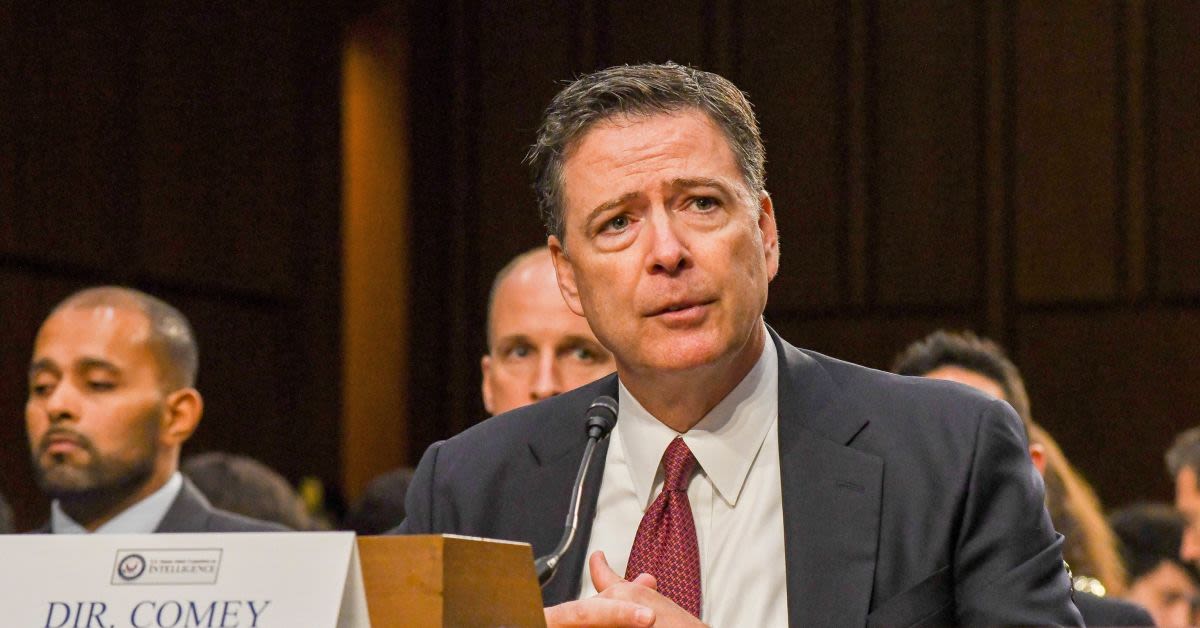
ABC News, in a June 2017 report following Comeys testimony before Congress, laid out the basic facts. Speaking before the Senate Intelligence Committee on June 8, Comey said he wanted to get a record of his meetings with President Donald Trump out into the public square so he decided to ask a friend to share the content of his memo with a reporter. Comey elaborated: Didnt do it myself, for a variety of reasons. But I asked him to, because I thought that might prompt the appointment of a special counsel. And so I asked a close friend of mine to do it, Comey told Sen. Susan Collins (R-Maine). Collins asked who that was, and he responded, without providing a name, A good friend of mine whos a professor at Columbia Law School.
Richman, described as an adviser to Comey, confirmed to ABC News that he was the friend Comey was referring to during his testimony. According to the December decision in his own court case, the memo Richman leaked stated that President Trump had asked Mr. Comey to drop a federal investigation into former National Security Advisor Michael T. Flynn. That leak was not some idle academic exercise; it was a deliberate attempt by a former FBI director, using a trusted ally, to engineer the appointment of a special counsel against a sitting president.
The relationship between the two men did not end there. In February 2020, Comey appeared in a public conversation with Richman and openly acknowledged that he took some steps that might hasten the appointment of a special counsel that involved you. The candor is striking: the former FBI chief and his confidant casually discussing how they maneuvered behind the scenes to shape the most consequential investigation of the Trump presidency. How bout that, indeed.
To be fair, there is no perfect one-to-one equivalence between Richmans selective leaking on behalf of Comey and his current objections to the Epstein document release. The contexts differ, and the legal issues are not identical. Yet the pattern is unmistakable: transparency is celebrated when it serves to damage a Republican president and advance a narrative favored by the establishment, and decried as reckless and dangerous when it threatens to expose the misdeeds or embarrassments of Democrats, bureaucrats, and their allies.
It is only now, when it has become clear that the Epstein files are not the silver bullet against Donald Trump that many on the left had hoped for, that Democrats and their media allies have discovered grave concerns about over-disclosure. The document dump has, instead, drawn uncomfortable attention to figures within the Democratic orbit and the broader deep state milieu, leaving them quite a bit deeper in the scandal than they were before. Yet these same forces were instrumental in pushing not only for the legislation mandating the release, but also for an accelerated timetable that virtually guaranteed sloppy redactions and collateral damage.
Who, exactly, could not have foreseen that rushing out roughly three million documents would lead to under-redactions and innocent people being smeared? As Western Journal has long warned, and as every sane person who knew that three million documents could not be effectively redacted in such a short period understood, the process was destined to be flawed. The political class demanded speed for partisan gain, and now that the fallout is politically inconvenient, their concern has shifted from accountability to damage control.
Yet the underlying instinct that drove the Epstein Files Transparency Act is not inherently misguided. Contrary to Richmans sweeping claim that The Epstein Files Should Never Have Been Released, a more measured conservative position recognizes that they should have been released, but at a reasonable pace and with suitable redactions. That could have been accomplished at any point since Epsteins death in 2019, and it certainly should have been completed at some stage during the Biden years, when the Justice Department had ample time and resources to do the job properly.
The fact that this did not happen speaks volumes about priorities in Washington. When Democrats believed the files might contain politically useful dirt on Trump, the urgency was all about exposure and speed; when it became clear that the fallout might land closer to their own camp, the rhetoric shifted to privacy, institutional integrity, and the dangers of public scrutiny. The principle at work is not a neutral concern for justice or victims, but a partisan calculus about who benefits from what the public learns.
That is why Richmans argument, viewed in light of his own history, appears to lack any coherent limiting principle beyond raw political interest. When he selectively leaked on behalf of a former FBI director who thought that might prompt the appointment of a special counsel, the publics right to know was paramount. When the same culture of exposure threatens to reveal the failures and compromises of the permanent bureaucracy and its favored politicians, we are told that such transparency is a sign of institutional failure and a cause for concern.
The American people are right to demand accountability from those in power, whether they wear a red or blue jersey, and they are equally right to insist that victims be protected and innocent parties shielded from reckless smears. A genuinely conservative approach would have insisted on both: a careful, timely release of the Epstein files, with rigorous redactions and a clear focus on criminal conduct, rather than a politically driven rush followed by elite panic once the consequences became inconvenient.
What Richmans essay ultimately reveals is not a principled defense of privacy or due process, but a familiar double standard in which transparency is a virtue only when it advances the interests of the ruling class and its preferred narratives.
Login