
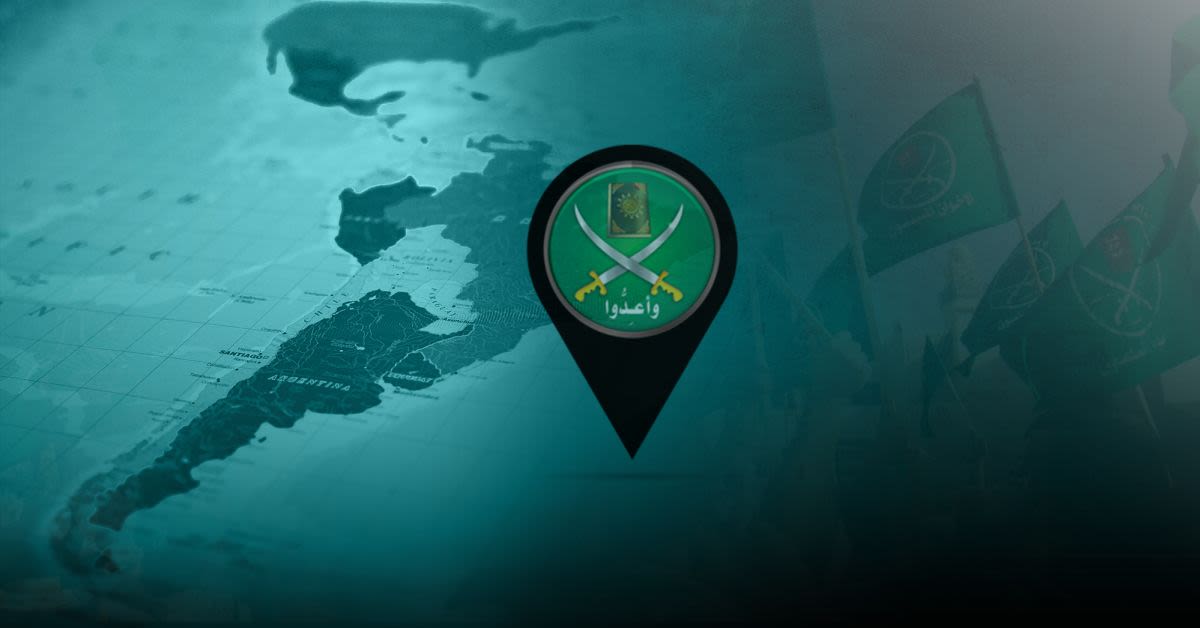
President Donald Trump has taken a step no previous American president was willing to take, formally designating key branches of the Muslim Brotherhood as terrorist organizations and signaling a decisive break with decades of bipartisan reluctance to confront the groups global network head-on.
According to The Gateway Pundit, the Trump administrations move targets the Egyptian, Jordanian, and Lebanese branches of the Brotherhood, treating them not as benign political actors but as integral components of a broader Islamist infrastructure that has long incubated extremism. For years, Western foreign-policy elites and liberal commentators have insisted that the Brotherhood was a moderate Islamist movement that could be engaged, co-opted, or used as a counterweight to more openly violent jihadist groups, despite mounting evidence to the contrary.
Founded in 1928 by Hassan al-Banna, the Muslim Brotherhood has spent nearly a century embedding itself across the Middle East through branches and affiliated political parties that blur the line between religious activism, political agitation, and militant support. The Lebanese branch, for example, holds seats in parliament and in 2024 openly backed Hezbollahs support front against Israel, aligning itself with an Iranian-backed terrorist organization that has fired rockets at Israeli civilians and destabilized Lebanon for decades.
In Jordan, the Brotherhoods political arm made significant electoral gains, winning 31 seats in the House of Representatives in the 2024 elections before the organization was banned over alleged links to a sabotage plot. That patternpolitical participation followed by accusations of subversion and violencehas repeated itself across the region, undermining the narrative that the Brotherhood is merely a democratic Islamist party unfairly maligned by authoritarian regimes.
In Egypt, the Brotherhood briefly achieved its long-sought political victory when it won the countrys 2012 presidential election and installed Mohamed Morsi as head of state. Within a year, however, Morsi was overthrown amid mass protests and military intervention, and he later died in custody, leaving behind a deeply polarized society and a legacy of Islamist overreach that alarmed secular Egyptians and regional governments alike.
The Brotherhood continues to present itself as a political and social movement, yet its core ideas laid the intellectual groundwork for modern jihadist organizations that have waged war on the West, Israel, and moderate Muslim societies. The oft-repeated claim that it is the mother of all Islamist movements rests on three pillarsideology, personnel, and strategyeach of which connects the Brotherhood to the rise of groups such as al-Qaeda, ISIS, and Hamas.
The most consequential ideological bridge is the work of Sayyid Qutb, a leading Brotherhood ideologue executed in 1966, whose writings have become canonical for violent Islamists. In his book Milestones, he advanced two concepts that became central to jihadist doctrine: jahiliyyah, the idea that modern society, including Muslim-majority countries, had reverted to a state of pre-Islamic ignorance and was therefore un-Islamic, and takfir, the practice of declaring other Muslims apostates, providing a religious justification for killing them.
These radical concepts later formed the foundation of the Salafi-jihadist ideology adopted by al-Qaeda and ISIS, offering theological cover for mass murder, suicide bombings, and the targeting of civilians. While Western academics and progressive commentators often downplay these links, the intellectual lineage from Qutbs Brotherhood-rooted thought to todays jihadist movements is clear to security professionals and Middle Eastern reformers who have watched the spread of this ideology firsthand.
Personnel ties are equally damning, as many of the worlds most notorious terrorists began their activism within the Muslim Brotherhood before moving on to more overtly violent organizations. Osama bin Laden joined the Brotherhood in his youth in Saudi Arabia, absorbing its worldview before founding al-Qaeda and orchestrating the September 11 attacks that killed nearly 3,000 Americans.
Ayman al-Zawahiri, who later led al-Qaeda after bin Ladens death, was a member of the Egyptian Brotherhood before forming Egyptian Islamic Jihad, a group that merged with al-Qaeda and helped globalize jihad. Abu Bakr al-Baghdadi, the former ISIS leader who declared a so?called caliphate across Iraq and Syria, was associated with the Brotherhood in Iraq during his university years, while Khalid Sheikh Mohammed, the principal architect of 9/11, joined the Brotherhood in Kuwait at age 16.
Hamas provides perhaps the most direct institutional link, functioning as an official offshoot of the Muslim Brotherhood rather than a mere ideological cousin. Article 2 of the Hamas Covenant states, The Islamic Resistance Movement is one of the wings of the Muslim Brotherhood in Palestine, a declaration that undercuts any attempt to portray the Brotherhood as divorced from terrorism.
Because Hamas has carried out suicide bombings and targeted attacks on civilians, critics argue that this relationship fatally undermines the Brotherhoods claim to be solely a political or social movement. The groups open embrace of Hamas, combined with its ideological and personnel overlaps with other jihadist organizations, makes the Trump administrations decision to treat Brotherhood branches as terrorist entities a logical extension of existing U.S. counterterrorism policy.
On January 13, 2026, the U.S. Department of the Treasurys Office of Foreign Assets Control (OFAC), working in coordination with the Department of State, formally designated the Egyptian and Jordanian branches of the Muslim Brotherhood as Specially Designated Global Terrorists under Executive Order 13224, as amended. In a concurrent action, the State Department designated the Lebanese branch, al-Jamaa al-Islamiyah, as both a Foreign Terrorist Organization under section 219 of the Immigration and Nationality Act and a Specially Designated Global Terrorist, and also designated its Secretary General, Muhammad Fawzi Taqqosh, as a Specially Designated Global Terrorist.
These measures follow President Trumps November executive order directing the administration to begin blacklisting certain Muslim Brotherhood chapters and align with Executive Order 14362, issued November 24, 2025. The administration stated that the designations are part of a broader effort to counter what it describes as the Brotherhoods support for terrorism, particularly its backing of Hamas and activities targeting U.S. and Israeli interests.
Secretary of the Treasury Scott Bessent emphasized that the action was taken under President Trumps leadership to sever the organizations from the international financial system and deny them the resources needed to operate. Under Secretary for Terrorism and Financial Intelligence John K. Hurley stated that the branches had conspired to support Hamas and undermine their own governments, underscoring that these were not merely opposition parties but actors engaged in destabilization and violence.
The administration described the measures as the first phase of an ongoing effort to address Muslim Brotherhood-linked violence and destabilization, suggesting that additional branches, front groups, and financial conduits could face scrutiny in the months ahead. For conservatives who have long warned about the Brotherhoods penetration of Western institutions and its role in radicalization, this phased approach represents a long-overdue course correction.
According to the Treasury Department, Brotherhood branches have provided material support to Hamas, which it described as inspired by and serving as a branch of the Brotherhood. In 2025, the Egyptian Muslim Brotherhood reportedly coordinated with Hamas on potential terrorist activities targeting Israeli interests and worked with Hamass military wing to destabilize the Egyptian government, a U.S.-aligned state that has cooperated closely with Washington and Jerusalem on security.
In 2024, individuals seeking to travel to Gaza to fight for Hamas allegedly relied on Brotherhood connections in Egypt to facilitate entry, while fundraising efforts linked to members supported Hamas militants. These activities highlight how the Brotherhoods networks function as logistical and financial arteries for terrorism, even when the organization attempts to cloak itself in the language of democracy and social welfare.
Elements connected to the Jordanian Muslim Brotherhood, which was dissolved by judicial verdict in 2020, were implicated in terrorism cases in Jordan in 2025, including manufacturing rockets, explosives, and drones, as well as recruitment and fundraising through illegal means. Both the Egyptian and Jordanian branches were designated for materially assisting, sponsoring, or providing financial, material, or technological support to Hamas, reinforcing the administrations case that these are not harmless political clubs but operational partners of a U.S.-designated terrorist group.
The ideological reach of the Brotherhood extends even into Irans revolutionary elite, despite the Sunni-Shia divide often cited by Western analysts as a barrier to cooperation. Many of Irans revolutionary leaders, including Supreme Leader Khamenei, were influenced by the writings of Muslim Brotherhood ideologues such as Sayyid Qutb, demonstrating that radical Islamist thought can transcend sectarian lines when it serves a shared anti-Western, anti-Israel agenda.
The designation has implications for ongoing U.S.-Iran nuclear talks, as Washington now formally recognizes that some of the ideological currents shaping Tehrans leadership are intertwined with Brotherhood thought. Despite sectarian differences, elements of the Muslim Brotherhood and Iran have at times coordinated logistics and media efforts in opposition to shared adversaries, a reality that complicates any attempt to treat these actors as isolated or purely local phenomena.
Iran funds and trains Hamas, and has reportedly increased coordination with the Lebanese Brotherhood in the context of tensions with Israel, further knitting together a regional axis of Islamist militancy. U.S. intelligence reporting has also cited instances in which Iran-backed groups, including Hezbollah, and Muslim Brotherhood-linked networks have cooperated in the Levant in what officials have described as battlefield coordination, underscoring that these alliances are not theoretical but operational.
Predictably, the Brotherhood has rejected the U.S. designations and cast itself as a victim of geopolitical maneuvering rather than a perpetrator of extremism. Salah Abdel Haq, acting general guide of the Egyptian Muslim Brotherhood, rejected the US designation and said the group would pursue legal avenues to challenge it.
He denied that the organization had directed, funded, or supported terrorism and suggested the decision reflected pressure from Israel and the United Arab Emirates rather than an objective US assessment. Egypts Foreign Ministry, by contrast, welcomed the designation, calling it a pivotal step that reflects what it described as the groups extremist ideology and threat to regional security, aligning Cairo more closely with Washington and Jerusalem in confronting Islamist radicalism.
The legal and financial consequences of the designations are substantial, reflecting the seriousness with which the Trump administration views the Brotherhoods activities. The designations make it illegal to provide material support to the named groups and impose economic sanctions, while the Foreign Terrorist Organization label also bars members from entering the United States.
Within the United States, some Republican governors moved to designate the Council on American-Islamic Relations (CAIR) alongside the Muslim Brotherhood as terrorist groups, prompting CAIR to file lawsuits denying any links to the organization. That domestic debate highlights a broader concern among conservatives that Brotherhood-linked or Brotherhood-sympathetic entities have gained influence in American civic life under the guise of civil-rights advocacy, interfaith dialogue, or community organizing.
As a result of the designations, all property and interests in property of the designated persons within the United States or under the control of U.S. persons are blocked and must be reported to OFAC. Entities owned 50 percent or more by designated persons are also blocked, and U.S. persons are generally prohibited from engaging in transactions involving blocked property unless authorized by OFAC.
Violations may result in civil or criminal penalties, and foreign financial institutions may face secondary sanctions for conducting significant transactions on behalf of designated persons, raising the cost of doing business with Brotherhood-linked entities worldwide. The release states that sanctions are intended to bring about behavioral change and provides information on how designated persons may seek removal from the SDN List, but given the Brotherhoods deep ideological commitments and long record of association with jihadist movements, few in conservative circles expect a rapid or genuine transformation.
For many on the right, Trumps decision to confront the Muslim Brotherhood marks a long-awaited alignment of U.S. policy with the hard lessons of the past two decades of terrorism and war. By recognizing the Brotherhoods role as an ideological incubator, logistical facilitator, and political shield for violent Islamism, the administration has signaled that American security and the defense of Western civilization take precedence over the failed experiments of engagement and appeasement that have too often empowered the very forces that seek to undermine them.
Login