
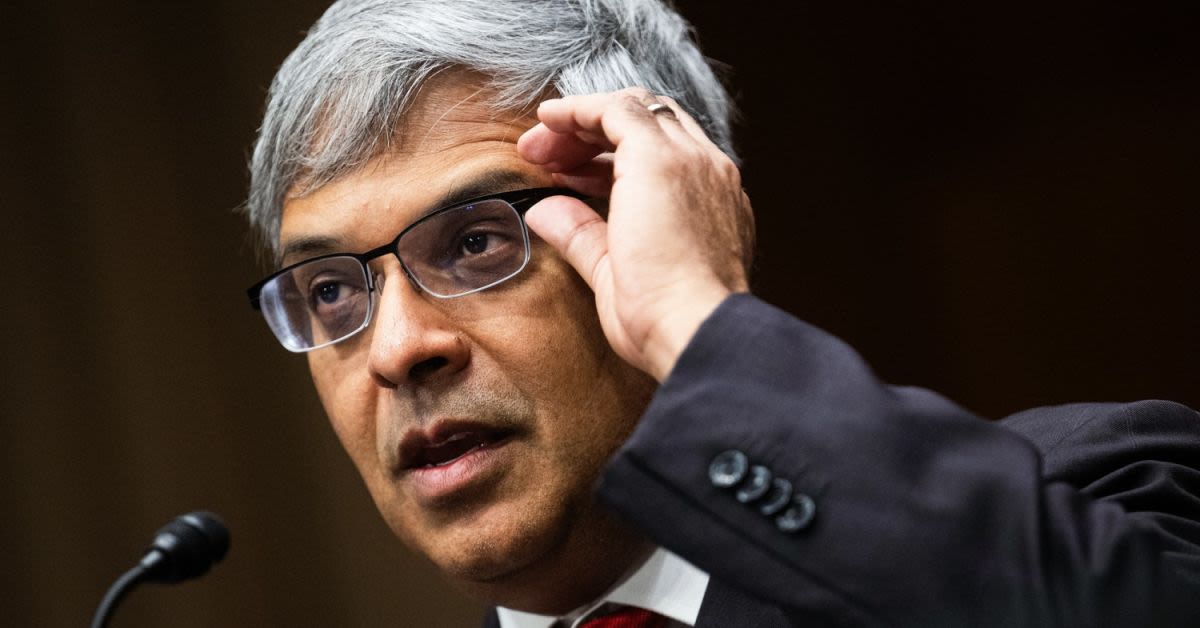
Jay Bhattacharya, director of the National Institutes of Health, has been tapped to serve as acting director of the Centers for Disease Control and Prevention, underscoring a sharp shift in who will define federal public health doctrine in the post-COVID era.
According to RedState, Bhattacharya will assume the CDC role following the dismissal of Jim ONeill, a move that comes amid a broader leadership shake-up at the Department of Health and Human Services. A White House official and an administration official confirmed that the NIH chief will serve temporarily as director of the Centers for Disease Control and Prevention until President Trump selects a permanent CDC director, while he continues in his current NIH position.
ONeill, who was removed from the CDC post last week, is expected to be nominated by the president to lead the National Science Foundation, signaling that the reshuffle is as much about ideological realignment as personnel management. The decision places Bhattacharya, a prominent critic of sweeping COVID restrictions, at the helm of the very agency that helped drive those policies.
This appointment is far more than a routine interim assignment; it represents a reversal in who sets the terms of acceptable public health debate in Washington. Bhattacharya rose to national prominence as a co-author of the Great Barrington Declaration, which argued for ending widespread lockdowns and focusing protection on vulnerable populations, challenging the one-size-fits-all approach favored by the public health establishment.
The backlash from that establishment was immediate and fierce. One former NIH director derided Bhattacharya and his co-authors as fringe epidemiologists, a characterization that fuel[ed] anger among conservatives who saw it as an attempt to silence legitimate scientific dissent.
That history is central to understanding the political and cultural weight of his elevation. During the pandemic, disagreement with official guidance was frequently portrayed as reckless or anti-science, even when it came from credentialed experts questioning the costs of indefinite lockdowns and mandates.
The split between President Trump and thenNational Institute of Allergy and Infectious Diseases director Anthony Fauci became one of the defining political ruptures of the COVID era, symbolizing a deeper clash over who controls public health policy. In January 2025, long after COVID lockdown restrictions had been lifted, Trump abruptly ended Faucis federal security detail and told reporters: You can't have a security detail for the rest of your life because you worked for government.
Against that backdrop, Bhattacharyas rise to the top of the CDC reads as both a repudiation of the lockdown-heavy approach and a clear signal to voters who believed federal health authorities overreached. For many on the right, it is a long-awaited correction to a technocratic regime that dismissed economic, educational, and civil-liberties concerns as secondary to bureaucratic control.
At the same time, Bhattacharyas record complicates efforts by critics to caricature him as anti-vaccine. I have not seen a study that suggests any single vaccine causes autism, Bhattacharya told a Senate panel, directly rejecting one of the most persistent claims of the anti-vaccine fringe.
He also told Congress that people should get vaccinated against measles amid the largest outbreak in decades, underscoring that his skepticism has been directed at lockdowns, masking mandates, and centralized pandemic micromanagement, not at vaccines themselves. His stance aligns more closely with a traditional conservative emphasis on targeted risk management and individual choice rather than blanket coercive measures.
As NIH director, Bhattacharya has repeatedly stressed the importance of scientific rigor and open debate within the research community. He has also encouraged scientists to pursue high-risk, high-reward ideas and called for more replication of studies to validate their results, a philosophy that challenges the groupthink that many conservatives believe dominated COVID-era policymaking.
That emphasis on replication and intellectual diversity speaks directly to the credibility crisis that engulfed federal health agencies during the pandemic. For millions of Americans, the fight over school closures, business shutdowns, and mask mandates was not merely a dispute over tactics; it became a referendum on whether Washingtons experts could be trusted at all.
The leadership changes at Health and Human Services arrive as health policy once again looms large ahead of the midterm elections, with COVID-era grievances still shaping voter attitudes. In this environment, the fractures in public trust are not relics of the past; they remain active political fault lines that both parties must navigate.
Elevating a prominent lockdown critic to lead the CDC allows the administration to argue that it is correcting course inside institutions that many voters came to see as partisan and unaccountable. Bhattacharyas appointment can thus be read two ways at once: for lockdown skeptics, it represents vindication after years of being dismissed as fringe, while for the White House, it is a strategic acknowledgment that pandemic policy remains electorally potent.
The debate over how COVID was handled is no longer confined to outside commentators and sidelined experts; it is now unfolding inside the CDC itself. With Bhattacharya at the helm, the agency that once championed some of the most aggressive restrictions in modern history will be led by a figure who questioned their wisdom from the start, setting the stage for a fundamental rethinking of federal public health power.
Login