
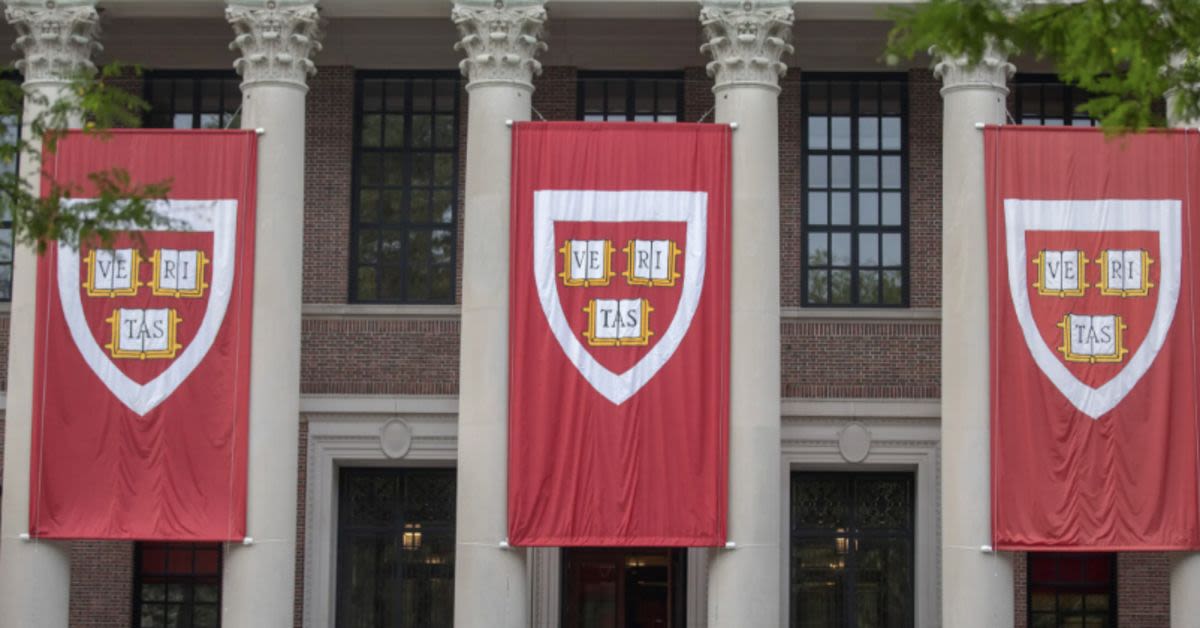
The Justice Department filed a civil lawsuit against Harvard University on Friday, charging the elite institution with stonewalling a federal inquiry into whether it is obeying the Supreme Courts landmark ban on race-based admissions.
According to the Washington Free Beacon, the complaint contends that Harvard has refused to turn over key admissions records that would reveal whether the university has truly abandoned affirmative action or merely repackaged it under new bureaucratic labels. The Justice Department says the school has declined to provide race-related admissions policies, internal correspondence touching on race, ethnicity, and DEI, as well as individualized applicant data that would allow federal officials to test for ongoing discrimination.
Assistant attorney general Harmeet K. Dhillon framed the dispute as a direct challenge to universities that believe they are above federal civil rights law. "The Justice Department will not allow universities to flout our nations federal civil rights laws by refusing to provide the information required for our review," Dhillon said. "Providing requested data is a basic expectation of any credible compliance process, and refusal to cooperate creates concerns about university practices."
Dhillon sharpened the point by suggesting that Harvards reluctance speaks volumes about what it may be trying to hide. "If Harvard has stopped discriminating, it should happily share the data necessary to prove it," she added.
The lawsuit also alleges that Harvard is violating Title VI of the Civil Rights Act by failing to comply with lawful document requests tied to the Supreme Courts 2023 ruling in Students for Fair Admissions v. Harvard. That decision, a major victory for merit-based admissions, barred colleges from using race as an explicit factor, prompting the Trump administration to intensify oversight of elite schools long accused of ideological and racial engineering.
In August, federal officials announced they would demand broader race-related admissions data and move aggressively against "hidden racial proxies," such as diversity statements and other DEI mechanisms that can function as backdoor affirmative action. Harvards own numbers have already raised questions: the university disclosed that Asian enrollment climbed to 41 percent from 37 percent in 2025, while the share of black freshmen fell from 14 percent to 11.5 percent, down from 18 percent before the Supreme Courts ruling.
Hispanic enrollment also dropped by 5 points to 11 percent, even as Harvard declined to reveal the proportion of white students, leaving an incomplete picture of how its class is actually composed. For conservatives who have long argued that Harvard used racial preferences to suppress Asian and white applicants in the name of equity, the new data and the universitys secrecy only deepen suspicions that the school is maneuvering to preserve ideological DEI priorities at the expense of equal treatment under the law.
Attorney General Pam Bondi underscored that the administration views this case as part of a broader effort to restore merit and transparency in higher education. "Under President Trumps leadership, this Department of Justice is demanding better from our nations educational institutions," Bondi said, adding, "Harvard has failed to disclose the data we need to ensure that its admissions are free of discriminationwe will continue fighting to put merit over DEI across America."
Login