
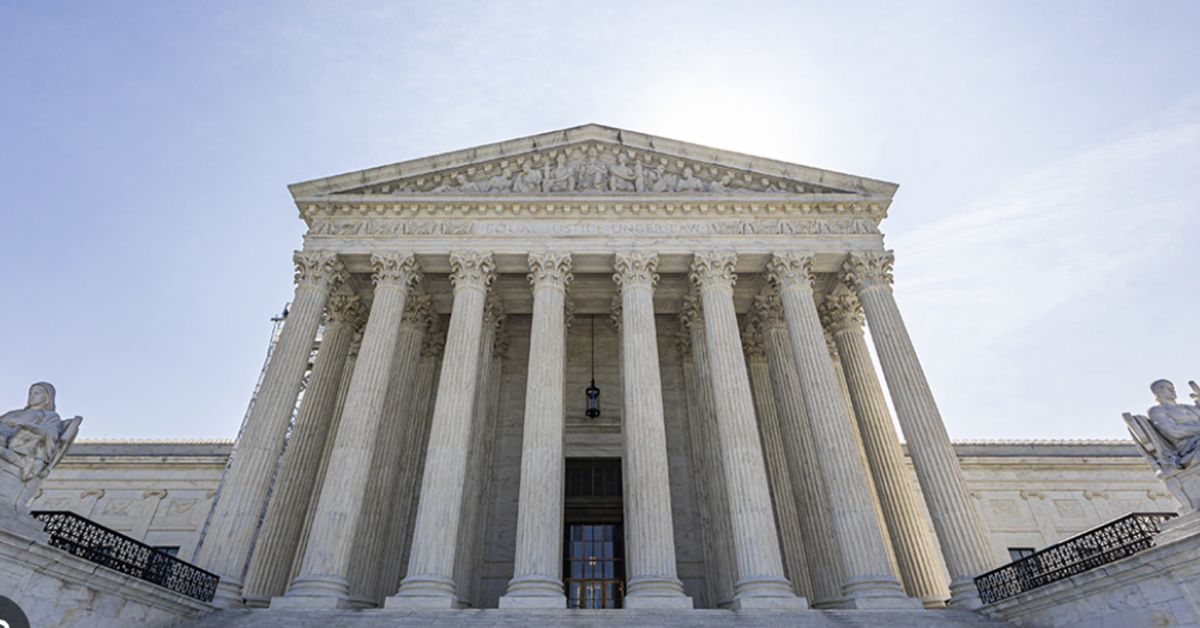
Washington is bracing for a U.
S. Supreme Court decision that could determine whether the American people still meaningfully govern themselves or merely ratify the rule of an entrenched bureaucracy.
At the heart of the case lies a deceptively straightforward question: Can the president the only official elected by the entire nation remove the administrators and experts who wield vast, largely unaccountable power within the executive branch. As reported by The Blaze, the dispute is not a matter of clerical procedure or bureaucratic housekeeping; it is a fundamental test of whether the Constitution still means what it says about who exercises executive power.
If the Court answers no, then the peoples control over their own government becomes theoretical at best, and the promise of representative self-government is reduced to a ritualistic formality.
This is not a technical fight, and it is certainly not a mere paperwork dispute. It is a turning point, because if the president cannot dismiss those who exercise federal power in his name, then elections become ceremonial, the bureaucracy becomes permanent, and the Constitution is treated as a suggestion rather than the supreme law of the land.
A government run by experts instead of elected leaders is not a republic. Its a bureaucracy with a voting booth bolted onto the front to make us feel better.
That outcome is precisely what the framers of the Constitution sought to prevent. Justice Neil Gorsuch captured the stakes during oral arguments when he declared, There is no such thing in our constitutional order as a fourth branch of government thats quasi-judicial and quasi-legislative.
Yet for more than a century, the administrative state has expanded like unchecked kudzu quietly, relentlessly, and always in the direction of more centralized control. Today, Americans confront what amounts to a fourth branch of government: unelected, unaccountable, and insulated from real consequence, as Congress routinely delegates lawmaking to agencies while presidents arrive with agendas that career bureaucrats can effectively veto.
If the Supreme Court rules that presidents may not fire the very officials who execute federal authority, the justices will not merely be rearranging an organizational chart. They will be rewriting the structure of the republic and confirming a long-standing fear: that in practice, the experts rule, not the voters.
A government run by experts instead of elected leaders is not a republic. Its a bureaucracy with a voting booth bolted onto the front to make us feel better.
The men who drafted the Constitution anticipated this temptation to elevate technocrats above citizens. In the Federalist Papers, Alexander Hamilton and James Madison repeatedly stressed that political power must remain traceable to the people, recognizing that once administrators are shielded from accountability, they will accumulate power without limit because, as they understood, that is what human beings do when unchecked.
For that reason, the Constitution vests the executive power in a single president an official chosen by the entire nation and subject to removal at the ballot box. The framers did not design a managerial council or a permanent priesthood of experts; they wanted responsibility and authority concentrated in one place so that the people could either reward or replace it.
This case therefore poses a stark question: Do the people still govern this country, or has a protected class of bureaucrats effectively taken charge. The record of recent decades offers a sobering answer for anyone willing to look.
The experts insisted they could manage the economy and produced historic debt and inflation. The experts insisted they could run public health and left millions of Americans sick, injured, and dead while avoiding accountability.
The experts insisted they could steer foreign policy and delivered endless conflict with no measurable benefit to our citizens. And through it all, they stayed, Untouched, unelected, and utterly unapologetic.
If a president cannot fire these officials, then the voter has no real ability to change the direction of the federal government. Citizens may vote for reform, but they will continue to get the same insiders making the same decisions in the same agencies, regardless of the outcome at the ballot box.
That is not self-government. That is inertia disguised as expertise.
A monarchy can coexist with a permanent bureaucracy, and a dictatorship can thrive alongside one. A constitutional republic, however, cannot survive indefinitely when its governing apparatus is effectively immune from electoral control.
Americans are supposed to live under a system in which the people set the course, Congress writes the laws, and the president carries them out. When agencies write their own rules, judges shield them from oversight, and presidents are barred from removing those who defy their directives, the country no longer operates under that constitutional design but under something else something the founders explicitly warned against.
And the people become spectators of their own government. They watch decisions made in their name by officials they never chose and cannot remove, while being told that this is the price of expertise.
Restoring the separation of powers does not require rejecting expertise or technical knowledge. It requires returning expertise to its proper role: advisory, not sovereign, subordinate to elected authority rather than elevated above it.
No expert should hold power that voters cannot revoke. No agency should drift beyond the reach of the executive. No bureaucracy should be allowed to grow branches the Constitution never gave it.
The Supreme Court now faces a choice that will shape American life for a generation: It can reinforce the Constitutions allocation of power, or it can permit the administrative state to drift even further from democratic control. The decision will either reaffirm that the president must be able to direct and, when necessary, dismiss those who exercise executive authority, or it will entrench a class of officials who answer to no one the public can remove.
This case isnt about President Trump. It isnt about Rebecca Slaughter, the former Federal Trade Commission official suing to get her job back. Its about whether elections still mean anything whether the American people still hold the reins of their own government.
That is what is at stake: not procedure, not technicalities, but the survival of a system built on the revolutionary idea that the citizens not the experts are the ones who rule. If the Court sides with the bureaucracy over the ballot box, it will signal that the age of genuine self-government is fading, replaced by a technocratic order in which the peoples role is reduced to periodic applause for decisions already made without them.
Login