
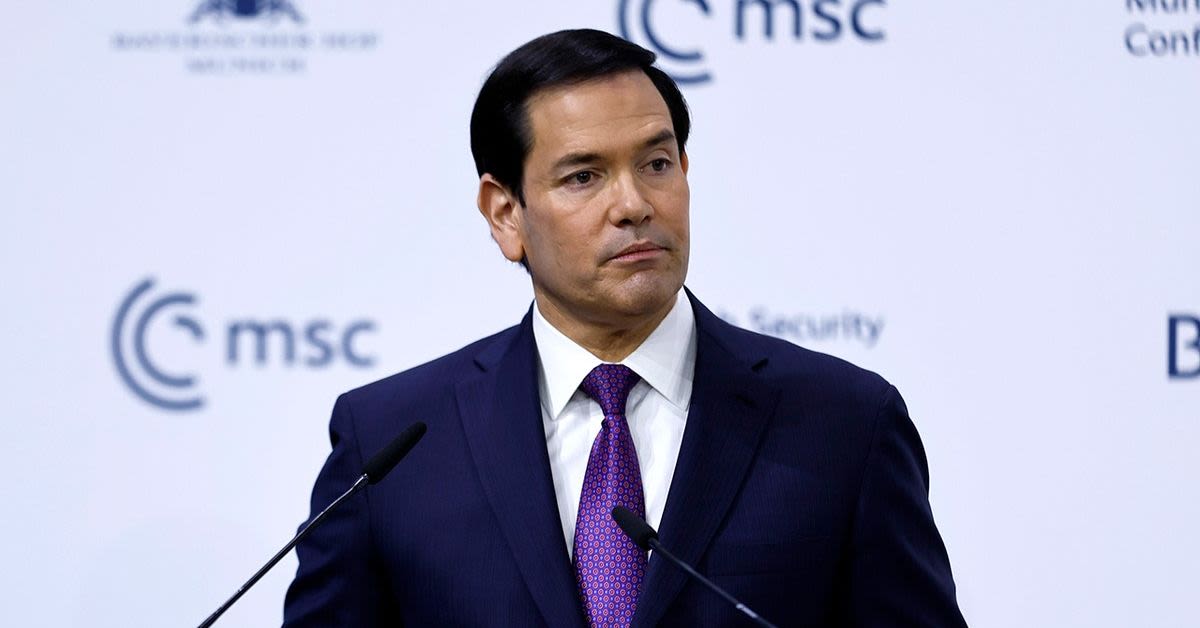
Secretary of State Marco Rubio used a Valentines Day address in Germany to deliver a pointed warning to Europes ruling class: the West cannot defend what it no longer believes in.
Speaking before an audience of European politicians, military leaders, media figures, and influencers, Rubio called for a renewed partnership rooted in cultural confidence and national sovereignty, a message that drew a standing ovation from attendees, according to Breitbart. He framed his remarks as both an appeal and a rebuke, arguing that Europes left-wing establishment has embraced policies that erode the very foundations of Western civilization while pretending such decay is inevitable or even virtuous.
Rubios central contention was that Europes dominant progressive parties are undermining citizen-led nation-states by flooding them with mass migration, fueling civic disorder, and entrenching welfare dependency and economic stagnation. He argued that this agenda, cloaked in the language of humanitarianism and diversity, is in practice dissolving historic nations in an acidic sea of resentful migrants, civic chaos, welfare spending, and low-tech poverty.
Instead, Rubio urged Europes elites to pivot toward a low-migration, high-tech model that safeguards cultural identity while driving innovation and prosperity. Such a strategy, he said, would not only protect Europes heritage but also expand mutually beneficial trade with emerging economies in Asia and Africa, rather than relying on demographic replacement and cheap imported labor.
His remarks closely tracked the themes advanced by President Donald Trump in his January address to global leaders in Davos and by Vice President JD Vance in a November television interview. Rubios speech, like theirs, rejected the globalist orthodoxy that equates economic growth with open borders, ever-expanding bureaucracy, and dependence on foreign supply chains.
At the heart of Rubios argument was a blunt assessment of what makes nations defendable. Armies do not fight for abstractions [such as diversity or human rights]. Armies fight for a people; armies fight for a nation. Armies fight for a way of life. And that is what we are defending: a great civilization that has every reason to be proud of its history, confident of its future, and aims to always be the master of its own economic and political destiny.
Mass migration, he warned, is not a benign social experiment but a direct threat to the cohesion and security of Western societies. Mass migration is transforming and destabilizing societies all across the West, Rubio said, arguing that European elites are not merely misguided but are actively betraying their own citizens by refusing to control their borders.
He rejected the standard progressive accusation that border enforcement is inherently bigoted or hateful. Controlling who and how many people enter our countries, this is not an expression of xenophobia. It is not hate. It is a fundamental act of national sovereignty. And the failure to do so is not just an abdication of one of our most basic duties owed to our people. It is an urgent threat to the fabric of our societies and the survival of our civilization itself.
Rubio did not spell out a detailed psychological profile of Europes ruling class, but he did suggest that a deeper spiritual and cultural crisis lies beneath their policy choices. He described a malaise of hopelessness and complacency paralyzed into inaction by fear fear of climate change, fear of war, fear of technology shackled by guilt and shame, implying that Western leaders have lost faith in their own civilization and are governing accordingly.
The path forward, Rubio argued, requires Europes leaders to rediscover the worth of their own traditions and civic culture and to embrace an economic strategy centered on innovation, productivity, and strategic independence. We want allies who are proud of their culture and of their heritage, who understand that we are heirs to the same great and noble civilization, and who, together with us, are willing and able to defend it [with] an alliance that does not allow its power to be outsourced, constrained, or subordinated to systems beyond its control; one that does not depend on others for the critical necessities of its national life; and one that does not maintain the polite pretense that our way of life is just one among many and that asks for permission before it acts.
Rubio stressed that this renewed alliance must be more than a military compact; it must be an economic and technological partnership designed to restore Western industrial strength. Together we can reindustrialize our economies, he said, echoing Trumps Davos message that the West must reclaim strategic industries and rebuild its productive base rather than exporting jobs and importing dependency.
The work of this new alliance should not be focused just on military cooperation and reclaiming the industries of the past, Rubio continued. It should also be focused on, together, advancing our mutual interests and new frontiers, unshackling our ingenuity, our creativity, and the dynamic spirit to build a new Western century. Commercial space travel and cutting-edge artificial intelligence; industrial automation and flex manufacturing; creating a Western supply chain for critical minerals not vulnerable to extortion from other powers; and a unified effort to compete for market share in the economies of the Global South.
This agenda, he suggested, is the only realistic answer to Chinas state-driven, no-migration model of high-tech manufacturing and export-led growth. Rather than imitating Beijings authoritarianism, Rubio argued, the West should leverage its own strengthsfree enterprise, innovation, and cultural confidencewhile rejecting the globalist dogma that treats borders as obsolete and national identity as suspect.
Trump made a similar case in Davos, contrasting a secure, productive America with the chaos of open borders and deindustrialization. Our previously open and dangerous border is closed and virtually impenetrable, and the United States is in the midst of the fastest and most dramatic economic turnaround in our countrys history, he declared, presenting border security and economic revival as two sides of the same conservative policy coin.
He blasted the bipartisan establishment consensus that dominated Washington and European capitals for decades. In recent decades, it became conventional wisdom in Washington and European capitals that the only way to grow the Western economy was through ever-increasing government spending, unchecked mass migration, and endless foreign imports. The consensus was that so-called Dirty Jobs and heavy industries should be sent elsewhere, that affordable energy should be replaced by the green new scam, and that countries could be propped up by importing new and entirely different populations from faraway lands.
Trump argued that this model, championed by Sleepy Joe Bidens administration and many other Western governments, directly undermined the sources of national strength. This was the path that Sleepy Joe Bidens administration and many other Western governments very foolishly followed [contradicting] everything that makes nations rich and powerful and strong The result was record budget and trade deficits and a growing sovereign deficit driven by the largest wave of mass migration in human history. Weve never seen anything like it.
He reminded his audience that the technocratic class had confidently predicted disaster if their orthodoxy were challenged. Virtually all of so-called experts predicted my plans to end this failed model would trigger a global recession and runaway inflation, Trump said, adding: We have proven them wrong In one year, our agenda has produced a transformation like America has not seen in over 100 years.
Taken together, Rubios and Trumps messages outline a coherent conservative alternative to the prevailing globalist project: secure borders instead of demographic engineering, reindustrialization instead of managed decline, and cultural self-respect instead of civilizational guilt. Their challenge to Europes leaders is starkeither reclaim sovereignty, identity, and productive capacity, or continue down a path that leaves the West defenseless, dependent, and increasingly unrecognizable to its own people.
Login