
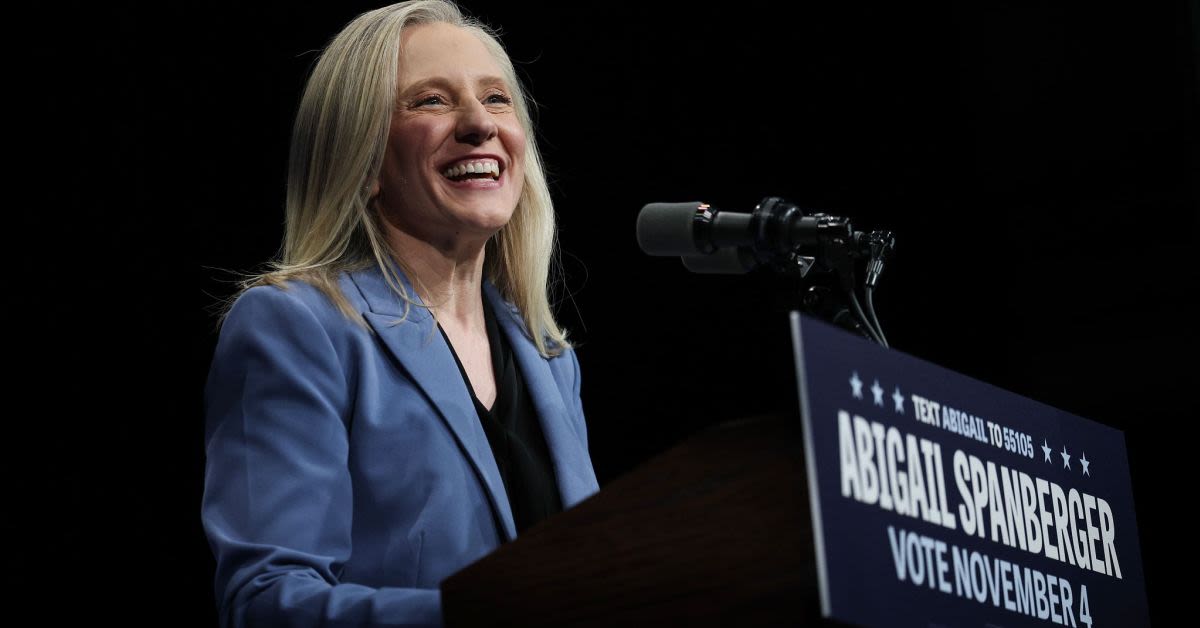
Virginias new Democratic governor, Abigail Spanberger, swept into office promising to tackle affordability, yet her opening moves in Richmond have centered on abortion, felon voting rights, same-sex marriage, and partisan redistricting rather than the cost-of-living crisis she claimed would be her top priority.
According to the Washington Free Beacon, Spanbergers first legislative push was not aimed at lowering grocery bills, cutting taxes, or easing energy prices, but at advancing a slate of constitutional amendments that mirror the national progressive agenda. She quickly celebrated the move on social media, declaring, "I JUST signed bills to allow Virginians to vote on proposed amendments to our Constitution," and boasting, "We took the next step to protect marriage equality, reproductive rights, the automatic restoration of voting rights, and to let voters respond to extreme measures taken by other states."
If voters approve the measures in November, abortion and same-sex marriage would be locked into the Virginia Constitution, along with automatic restoration of voting rights for felons who have completed their sentences. A separate resolution would open the door to mid-decade redistricting of the states congressional map, a maneuver that would discard the usual ten-year cycle and hand Democrats a powerful tool to entrench their power.
Draft maps already floated in Richmond would heavily tilt the playing field toward Democrats and could wipe out most Republican-held seats, effectively silencing large swaths of conservative voters. State Republicans have blasted the scheme as "reckless," and have taken the fight to court in an effort to stop what they see as a partisan power grab masquerading as reform.
Spanbergers office framed the amendments as a response to a broader national struggle over social issues and election rules. "Virginia voters deserve the opportunity to respond to the nationwide attacks on our rights, freedoms, and elections," her office said in a press release, language that mirrors the talking points of the Democratic Partys activist base rather than the bread-and-butter concerns of working families.
That emphasis stands in stark contrast to the themes she highlighted during her campaign, when she repeatedly pledged to focus on "lowering costs, keeping our communities safe, and strengthening our economy." On the trail, she insisted, "Every day on the campaign trail, Im hearing about issues of affordability," and promoted her "Affordable Virginia Plan" as a comprehensive answer to rising costs in health care, housing, and energy.
As recently as late January, Spanberger was still assuring voters that pocketbook issues would dominate her agenda. In a Jan. 23 interview, she promised to maintain a "relentless focus" on affordability, saying, "Along the campaign, I talked about issues of affordability, the priority of strengthening our public schools, and overall just strengthening our communities."
She doubled down on that message, vowing, "My focus will be a relentless focus on taking every action possible to move policies and initiatives forward that will impact peoples lives, bring down costs, and contend with some of the root causes of cost increases." Yet her early record in office has fueled criticism that, once elected, she pivoted away from economic relief and toward the cultural and ideological priorities of the left.
Within days of taking office, Spanberger announced that Virginia would end its cooperation with Immigration and Customs Enforcement, ordering state law enforcement agencies to sever ties with federal immigration authorities. At the same time, her administration began the process of rejoining the Regional Greenhouse Gas Initiative, a cap-and-trade program that former Republican governor Glenn Youngkin warned would drive up energy costs for Virginia families already squeezed by inflation.
Spanberger has also drawn scrutiny for personnel decisions that raise questions about foreign influence and ideological capture in higher education. She appointed two Qatari lobbyists to the board of visitors at George Mason University, a move that, as reported by the Washington Free Beacon, has alarmed critics who see it as emblematic of a governing philosophy more attuned to globalist and progressive interests than to the everyday concerns of Virginians struggling to pay their bills.
For conservatives, the pattern is familiar: a Democrat campaigns on kitchen-table issues, then governs from the left on abortion, immigration, and climate regulation while pursuing redistricting schemes that could marginalize Republican voters for years to come. As Spanberger presses ahead with constitutional amendments and policy shifts that please national progressives, Virginians who took her at her word on affordability are left waiting to see when, or if, the governors promised focus on costs, public safety, and economic strength will finally materialize.
Login