
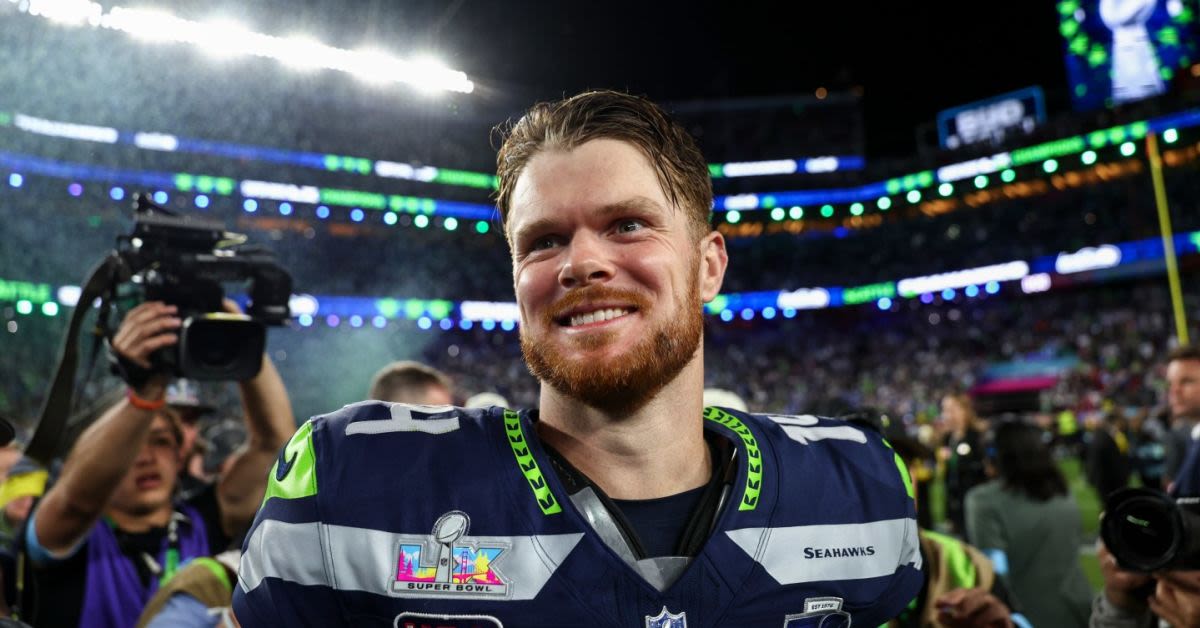
In a telling illustration of modern tax policy gone awry, Seattle Seahawks quarterback Sam Darnold may end up losing money for the privilege of winning the biggest game in American sports.
According to Western Journal, the veteran signal-callers triumphant Super Bowl LX performance at Levis Stadium in Santa Clara has reportedly triggered a tax bill from California that actually exceeds his official Super Bowl winnings. The Seahawks defeated the New England Patriots 2913, and Darnold earned $178,000 under the NFLs collective bargaining agreement for helping secure his first Lombardi Trophy. Yet California, with its notoriously aggressive tax regime, is expected to send him a bill for roughly $249,000 tied to that same game.
The mechanics behind this financial absurdity were laid out in detail by the sports business outlet Sportico in the days leading up to the championship. Under league rules, each member of the winning Super Bowl team receives $178,000 whether starting quarterbacks or second-string bench warmers, as Sportico reported, but that payout is only part of the story when the game is played in a high-tax state like California. Players are not merely taxed on the Super Bowl bonus; they are also ensnared by Californias so?called jock tax, which demands a slice of an athletes income based on how many days he works within the states borders.
Those workdays, known as duty days, began accumulating when the Seahawks arrived in Northern California on Feb. 1, ultimately totaling eight days for Darnold and his teammates. Because Darnold is in the first year of a lucrative new deal, those eight days suddenly became very expensive. Now in his eighth NFL season, he recently signed a three-year, $105 million contract with Seattle, according to Sportico, including a $30 million signing bonus, a $5.3 million base salary, and incentive clauses such as a $2.5 million bonus for winning the Super Bowl.
Sportico noted that there are other, unknown factors that could be in play, but used the publicly available contract details to estimate Darnolds California jock tax exposure. When those figures are combined and apportioned to the eight duty days in California, the state calculates what it believes is its share of his income. That is how, according to Sportico, Darnold ends up with a projected $249,000 tax bill for a game that, under NFL rules, only paid him $178,000 for the victory itself.
This is not a plea for sympathy for professional athletes, and no one is suggesting that a quarterback making nine figures on a contract to play a game is a victim in the traditional sense. The real issue is what this episode reveals about a tax structure that has grown so confiscatory and detached from common sense that it can turn a championship into a financial penalty. The Peoples Republic of California, as critics derisively call it, has managed to transform a career-defining achievement into what looks and feels like a government shakedown.
And for what, exactly, is this money being seized from productive earners who happen to set foot in the Golden State for a few days of work. Those dollars are not going to wildfire readiness, we know that much, the critique goes, and they are plainly not being channeled into effective public safety or serious infrastructure renewal. Instead, taxpayers watch as Sacramento presides over crumbling roads, rampant crime, and rolling blackouts while demanding ever more revenue from anyone within reach. More than likely, that cash will disappear into the same bureaucratic maze that somehow manages to spend billions to fix drugs and the homeless by delivering them needles for heroin.
In a state that has prioritized expansive welfare programs and permissive social policies, it is hardly far?fetched to suspect that for all anyone knows, that money will help fund illegal alien health care, housing, and food. Californians and visiting workers alike are left in the dark about where, precisely, their dollars end up, and we will never know where the money is going, and that uncertainty is a problem. In a climate where even a dubious Quality Learing Centers West Coast branch might conceivably get a cut, public trust erodes further, and taxpayers grow more cynical about the states intentions.
The sting is sharper when one considers Darnolds personal journey. Darnold was widely considered a bust just a few years ago. He was a joke, to be honest, written off by many analysts and fans as another failed high draft pick. Rather than retreat, he took the hits, swallowed the criticism, climbed every hurdle, and did everything right to put himself in a position to succeed, rebuilding his reputation through persistence and hard work.
That perseverance culminated in a Super Bowl title with a franchise that just a year ago was not contending, a turnaround story that should have been purely celebratory. Instead, the headline now includes a caveat: And this tax burden, reportedly, is his reward for all that hard work. For conservatives who believe that success should be encouraged rather than punished, the symbolism is hard to miss a productive, high?achieving individual is treated as a convenient revenue source for a state government that has long since lost fiscal discipline.
If the NFL Players Association is serious about defending its members interests, it has any backbone, it should insist that future Super Bowls be staged in states that respect both economic freedom and basic fairness. It will demand that future Super Bowls be held in Florida, Texas, or Louisiana, jurisdictions with no state income tax and a far more welcoming attitude toward enterprise and achievement. Las Vegas is also nice this time of year, offering another alternative outside Californias reach.
Anywhere but California would send a powerful message that the league will not continue to reward a state simply because it has pleasant weather and lingering nostalgia from an era when it was functional. Steering marquee events toward states that value limited government and responsible stewardship would not only be a favor to the players, it would also be a stand for principle and even a chance for some good, old-fashioned spite. With the states leftist Democrats having driven California far from its former promise, the NFL has every reason to reconsider whether its premier showcase should continue to enrich a government that treats champions like cash machines.
Login