
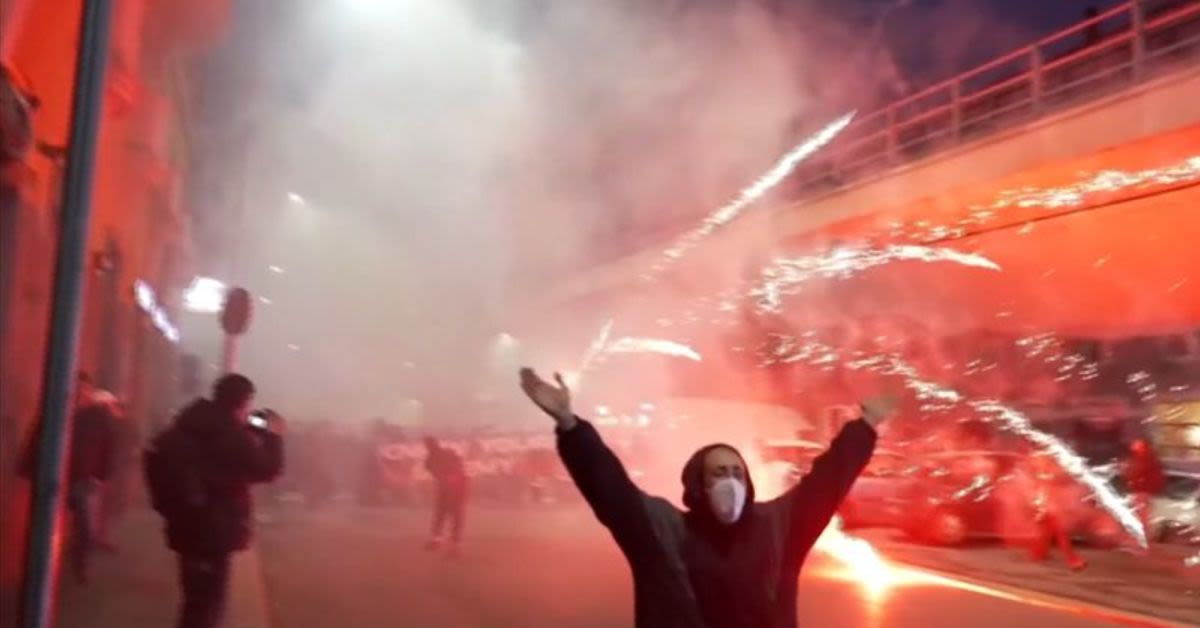
Italian Prime Minister Giorgia Meloni has denounced radical anti-Olympics activists as enemies of Italy after a night of violence in Milan and coordinated sabotage on the national rail network overshadowed the opening weekend of the Winter Games.
The unrest erupted on the first full day of competition in the Games that Milan, Italys financial hub, is co-hosting with the Alpine resort of Cortina dAmpezzo. According to Newsmax Media, Inc., the disturbances have raised concerns that a small but aggressive fringe is intent on tarnishing an event designed to showcase Italian excellence and unity on the world stage.
Meloni, who leads a right?wing coalition government, used social media to draw a sharp contrast between law?abiding citizens and those she portrayed as intent on damaging the countrys reputation. She praised the thousands of Italians working to make the Games run smoothly and present a positive face of Italy, while condemning those who, in her words, are enemies of Italy and Italians, demonstrating against the Olympics and ensuring that these images are broadcast on television screens around the world.
Her remarks followed a demonstration in Milan that drew an estimated 10,000 people, ostensibly to protest housing costs and environmental concerns linked to the Games. A hard?core group of around 100 protesters broke away from the main march, hurling firecrackers, smoke bombs, and bottles at police, turning what began as a political rally into a violent confrontation in the streets of Italys showcase Olympic city.
Police responded with water cannon to disperse the rioters and restore order, detaining six individuals in connection with the clashes. The scenes of masked agitators attacking officers will likely bolster Melonis argument that Italy faces not peaceful dissent but organized extremism willing to undermine a major national event for ideological gain.
The violence in Milan was compounded by a series of sabotage attacks on the rail network that authorities say were clearly designed to disrupt the Games and broader national transport. On Saturday, saboteurs damaged rail infrastructure near the northern city of Bologna, with police reporting three separate incidents at different locations that caused delays of up to two and a half hours for high?speed, Intercity, and regional services.
No group has claimed responsibility for the damage, but the timing and coordination have fueled suspicions of a radical network targeting critical infrastructure. For a country relying on efficient rail links to move athletes, officials, and spectators between venues, such attacks strike directly at Italys logistical backbone and its international image as a reliable host.
Meloni, who has made law and order a central pillar of her premiership, expressed strong backing for security forces and those working on the Games. Once again, solidarity with the police, the city of Milan, and all those who will see their work undermined by these gangs of criminals, she wrote, underscoring her view that the perpetrators are not protesters but offenders who must face the full force of the law.
Her government has already moved to strengthen police powers in response to a broader pattern of left?wing street violence. The Italian police have been granted new arrest authorities following serious unrest last weekend in Turin, where a hard?left protest left more than 100 officers injured, a stark reminder of the risks borne by law enforcement when radical groups take to the streets.
For conservatives, the latest incidents reinforce long?standing concerns about extremist factions on the far left using social and environmental grievances as a pretext for attacks on public order and national institutions. While legitimate debate over housing and environmental policy is part of any democracy, the escalation to violence, sabotage, and attempts to disrupt a global sporting event raises questions about whether these movements are more interested in destruction than dialogue.
As the Winter Games continue, the Meloni government is likely to double down on its message that Italy will not be held hostage by what it views as a small but dangerous minority. The coming days will test whether enhanced police powers and a firm political stance can deter further attacks, or whether radical activists will persist in efforts to mar an event intended to celebrate Italian pride, economic vitality, and the countrys capacity to host the world.
Login