
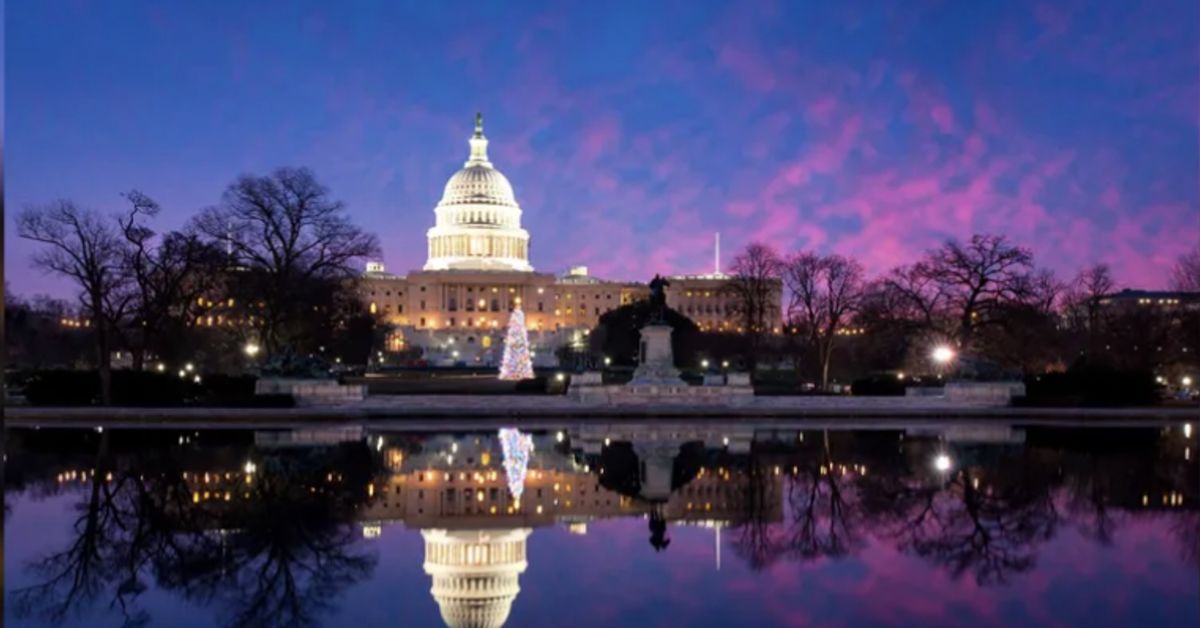
Washington, D.C., a city that only recently symbolized the nations urban crime crisis, has now gone three weeks in 2026 without a single homicide, marking a dramatic shift in its public safety landscape.
According to Sean Hannity, even The Washington Post has been forced to acknowledge the trend, reporting that the nations capital is experiencing a sharp decline in violent crime after years of surging lawlessness. As the paper noted, the city is entering its third year of recovery from a generational crime spike that in 2023 thrust the nations capital into the top tier of the countrys deadliest urban centers.
From The Washington Post: As of Friday, 18-year-old Malik Delonte Moore was the only person killed in D.C. in January. It capped a remarkable period of calm for a city entering its third year recovering from a generational crime spike that in 2023 thrust the nations capital into the top tier of the countrys deadliest urban centers.
The report underscored how unusual this moment is for Washington, noting that D.C. hadnt started a year with more than 10 days without a slaying in three decades. By this time last year, there had been nine homicides in the city. Carjackings have also plummeted, dropping fivefold compared with the first month of last year and tenfold compared to 2024.
Interim D.C. police chief Jeffery Carroll credited the officers on the ground for the turnaround, emphasizing the human cost that is being averted. Its a testament to the work of the members of the Metropolitan Police Department have been doing, Carroll said in an interview.
Those are peoples families that dont have to deal with a loved one whos no longer here, he added, stressing that the department will not become complacent. And to Moores family, he pledged police are going to do everything we can to try to solve and bring to justice the person who killed Malik.
Police data show that violent and property crimes in the District have largely fallen to or below pre-pandemic levels, a stark contrast to the chaos that followed the 2020 shutdowns. Those include homicides, robberies, carjackings, burglaries and vehicular thefts, the report stated, while noting that assaults with dangerous weapons are the lone crime category up this month, although they are still lower than in the years immediately after covid struck in 2020.
The broader context is that crime spiked in cities across the country during pandemic-induced shutdowns that upended routines and jobs and shattered the social safety net. Progressive policies that weakened policing, reduced prosecutions, and prioritized ideological experiments over public order only compounded the damage. Now, as cities slowly restore law enforcement tools and embrace tougher stances on crime, the numbers are finally beginning to reflect those course corrections.
Former FBI Deputy Director Dan Bongino highlighted the Washington Post headline and cut through the spin, saying, This is not an accident. His point reflects a conservative view that serious, sustained law enforcement not social engineering is what drives crime down.
Yet the mainstream media mob has been notably hesitant to credit President Trumps administration for broader national declines in violent crime, even as tougher federal enforcement and a renewed focus on law and order have helped change the trajectory. Instead, many outlets prefer to dwell on abstract root causes while downplaying the role of policing, prosecution, and accountability.
The early-2026 calm in Washington follows a steep multi-year decline in homicides from 274 in 2023 to 187 in 2024 and 127 in 2025, as reported by The Washington Post. Carjackings, once a signature fear across the city, have also fallen sharply in January versus prior years, according to the same reporting and the Metropolitan Police Departments public updates.
Police statistics further indicate that violent and property crimes are largely at or below pre-pandemic levels across multiple categories, with assaults with dangerous weapons standing out as the primary category still running higher year-over-year in early 2026. For conservatives, the lesson is clear: when leaders reject soft-on-crime experiments and return to basic principles of law, order, and personal responsibility, communities including those in the nations capital become safer.
Login