
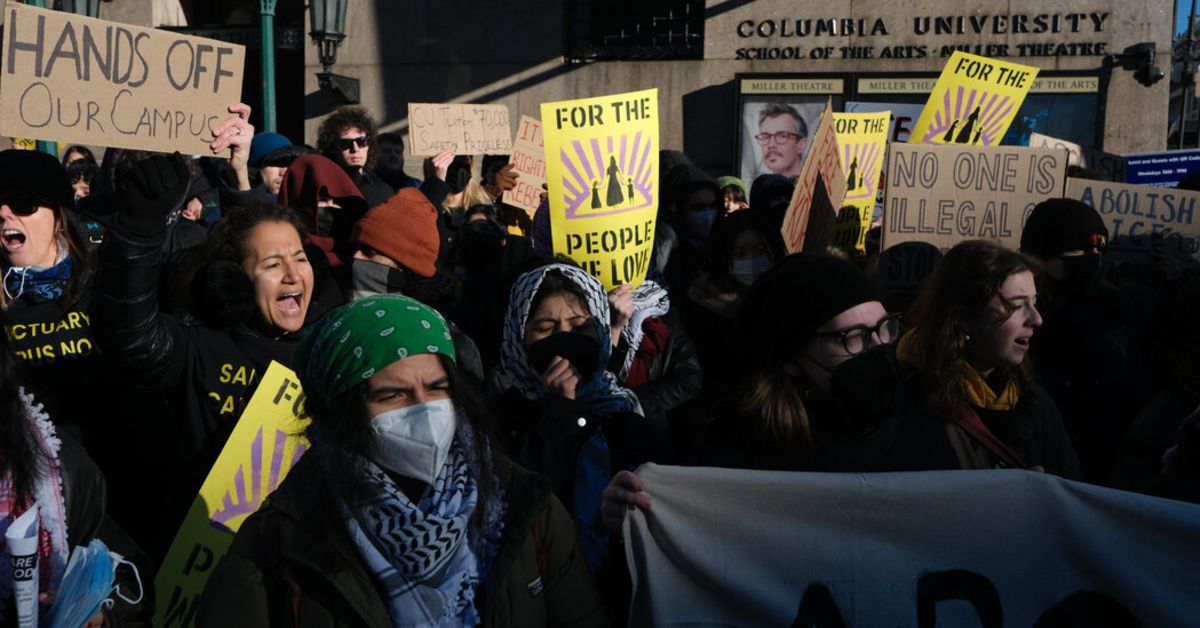
Twelve demonstrators were arrested Thursday after an anti-ICE protest outside Columbia University in New York spilled into the streets and blocked traffic, underscoring ongoing campus unrest over immigration enforcement and radical activism.
According to The Hill, a spokesperson for the New York Police Department said officers repeatedly ordered the crowd to disperse before taking a dozen protesters into custody and issuing criminal court summons for obstructing roadways. The New York Times reported that all 12 of those arrested were either Columbia professors or students, highlighting the extent to which activist politics have penetrated the universitys own ranks.
Roughly 150 protesters, some organized by a campus group, wore Sanctuary Campus Now shirts, according to the Times, signaling demands that Columbia further shield illegal immigrants from federal law enforcement. Columbia, however, said in a statement that while it supports peaceful protest, key claims made at the demonstration were misleading and inflammatory.
As we made clear repeatedly, no member of Columbias leadership or the board of trustees has ever requested the presence of ICE agents on or near campus. This is a false assertion, the university wrote, stressing that ICE is barred from nonpublic areas of the institution without a judicial warrant. The administrations clarification reflects the tension between activist narratives and legal realities, even as the campus left continues to push for broader sanctuary policies.
Columbia has been comparatively quiet since it reached a deal with the Trump administration last year, paying a substantial fine and agreeing to tougher disciplinary rules after prior unrest. Yet anti-ICE vigils have resurfaced in recent weeks, following earlier protests when Mahmoud Khalil, a former student and past leader of the pro-Palestinian campus movement, was arrested by immigration officers and the administration sought his deportation on grounds he is a threat to U.S. foreign policy.
The case involving Khalil is ongoing, though he is no longer in ICE custody, leaving questions about how far universities should go in shielding controversial activists from federal law. Columbia became a prime focus of the Trump administration after students led pro-Palestinian protests in 2024 against the Israel-Hamas war in Gaza, a movement that spread to campuses nationwide and intensified scrutiny of higher educations embrace of radical politics.
Login