
Republicans already fragile grip on the House of Representatives is poised to weaken further as a series of special elections, largely in Democrat-leaning territory, threatens to narrow the GOPs majority and complicate conservative efforts to check the Biden administrations agenda.
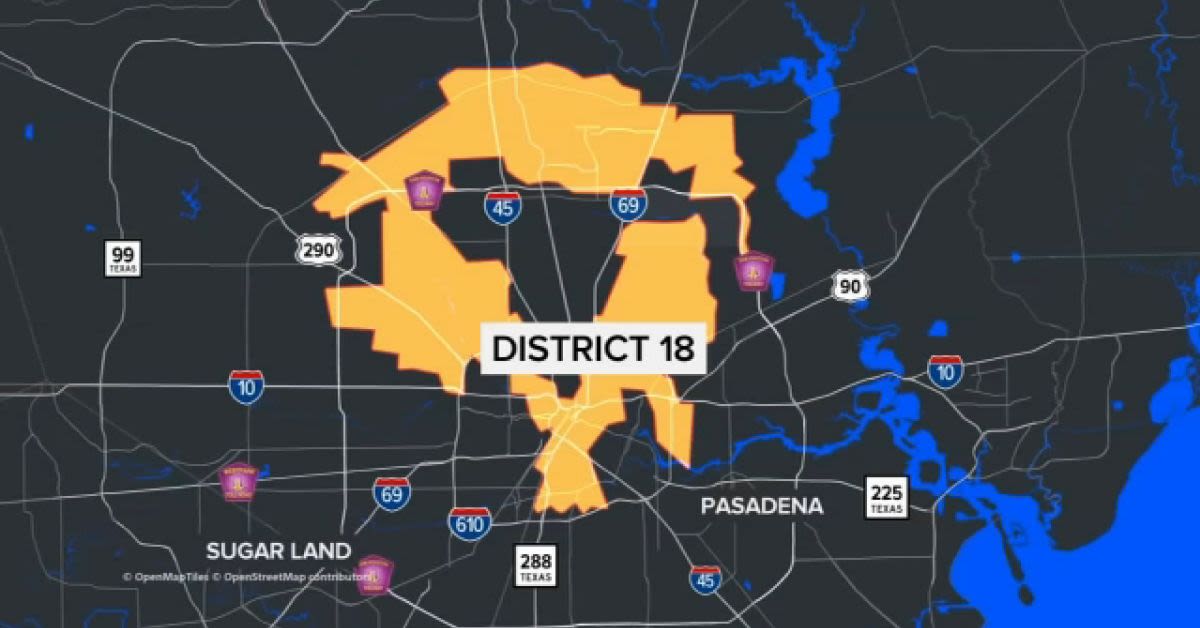
According to Fox News, the GOP currently holds a slim 218-213 edge, a margin that will contract after this weekends special election in Texas 18th Congressional District, a deep-blue seat that has been vacant for nearly a year. The runoff, scheduled for Saturday, offers Republicans no opportunity to compete for the district, as both contenders are Democrats vying to replace the late Rep. Sylvester Turner.
The district, centered on downtown Houston and its surrounding neighborhoods, has long been a Democratic stronghold and will remain so regardless of the outcome. Voters there will choose a successor to fill the seat left open when Turner died last March, depriving Democrats of a reliable vote but never putting the seat in realistic Republican play.
Turner, a former longtime state legislator, served two terms as Houston mayor before winning election to Congress in 2024, succeeding the late Democratic stalwart Sheila Jackson Lee. His passing triggered a crowded contest, and Democrats Christian Menefee, a former attorney for Houstons Harris County, and former Houston City Council member Amanda Edwards emerged as the top two finishers from a 16-candidate field in November.
Although Texas has already redrawn its congressional maps for the 2026 midterms as part of the ongoing redistricting clash pitting President Donald Trump and Republicans against Democrats, this special election will be conducted under the existing lines. That means the partisan balance of the current House map will not shift geographically, but the Democratic caucus will gain one more vote once the winner is sworn in.
For House Republican leaders, even a single additional Democrat in the chamber raises the stakes for every floor vote and heightens the risk of defections from moderates or populist conservatives. The winner of the Texas race will further tighten the margin, giving GOP leadership headaches as they attempt to advance a conservative agenda and block progressive legislation.
House Speaker Mike Johnson has made clear that discipline and attendance are now non-negotiable for Republicans navigating this precarious majority. "They'd better be here," Johnson recently said of his members. "I told everybody, and not in jest, I said, no adventure sports, no risk-taking, take your vitamins. Stay healthy and be here."
House Majority Whip Tom Emmers office has echoed that sense of urgency, signaling that absences will not be tolerated except in the most extreme circumstances. Emmers team confirmed it is advising members that "outside of life-and-death circumstances," they expect Republican lawmakers to be on Capitol Hill.
Beyond Texas, three additional special congressional elections this year will test both parties organizational strength and messaging, with Republicans seeking to defend conservative turf while probing for opportunities in swing or left-leaning districts. In New Jerseys 11th Congressional District, eleven Democrats are competing in a Feb. 5 primary to replace now-Gov. Mikie Sherrill, who vacated her House seat after winning Novembers gubernatorial race.
The Democratic nominee will face Randolph Mayor Joe Hathaway, the lone Republican to file for the April 16 special election, giving the GOP a clear, unified standard-bearer in a crowded field. The northern New Jersey district, suburban and historically left-leaning, saw Sherrill win re-election in 2024 by 15 points, mirroring her margin in the gubernatorial contest.
Yet Republicans see a glimmer of opportunity in the districts recent presidential performance, which suggests some openness to a more conservative message. Then-Vice President Kamala Harris carried the district by just eight points in the 2024 presidential election, a narrower margin that has given the GOP some hope of possibly flipping the seat with the right candidate and a disciplined campaign.
In Georgias 14th Congressional District, the stakes are different but no less significant for the future direction of the Republican Party. A staggering 22 candidates, including 17 Republicans, are running in a special election to succeed former GOP Rep. Marjorie Taylor Greene, the MAGA firebrand and one-time top Trump ally who stepped down from Congress four weeks ago, a year before her term ended.
Georgia law requires all candidates to appear on the same ballot, a jungle primary format that can splinter the vote and force a second round. If no contender surpasses 50% of the vote, a runoff between the top two finishers will be held on April 7, extending the contest and potentially intensifying intraparty divisions.
Despite the crowded field, the district itself remains firmly in Republican hands, offering conservatives a safe seat once a nominee emerges. The northwestern Georgia district is solidly red, with Greene winning re-election in 2024 by nearly 30 points and Trump carrying the area by 37 points, underscoring its loyalty to the GOP and its America First base.
On the West Coast, Californias 1st Congressional District will also be on the ballot this year, adding another layer to the GOPs challenge of maintaining its majority while defending conservative representation in blue states. Primary Day for the 2026 elections is set for June 2, and this cycle it will include a primary for the special election to fill the seat left vacant by the unexpected death of Republican Rep. Doug LaMalfa, with the general election scheduled for Aug. 4.
The northeastern California district is reliably Republican, offering the party a strong chance to retain the seat once voters choose a successor. As in Texas, however, Californias ongoing redistricting battles will not affect this special election, which will be conducted under the current district boundaries despite broader map changes looming for future cycles.
The timing of these contests has itself become a partisan flashpoint, with both parties accusing the other of manipulating election schedules for political gain. The White House and congressional Republicans sharply criticized Democratic Gov. Gavin Newsom for delaying the special election to fill LaMalfas seat until August, six months after the congressmans death, effectively denying the district full representation for an extended period.
Democrats, for their part, leveled similar complaints against Republican Gov. Greg Abbott of Texas for waiting eight months to schedule the special election to replace Turner, underscoring how both sides weaponize process arguments when it suits their interests. For conservatives, the broader concern remains that every delayed or lost seat further constrains the House GOPs ability to rein in federal spending, resist progressive social policies, and provide a meaningful check on the Biden administrations agenda at a time when the margin for error has nearly vanished.
Login