
America has never been a nation of half-measures, and the debate over a towering new monument in the nations capital is proving that once again.
According to RedState, when President Donald J. Trump was presented with three competing designs for a triumphal arch to mark the 250th anniversary of American independence, he gravitated immediately toward the boldest vision on the table. The United States, after all, is the country that overwhelmed Nazi Germany and Imperial Japan by outproducing them in guns and tanks, and guns and airplanes, and guns and artillery... and guns and guns not always the best, but the most.
That same instinct to think and build on a grand scale now appears to be shaping how some conservatives believe the nation should celebrate its upcoming semiquincentennial.
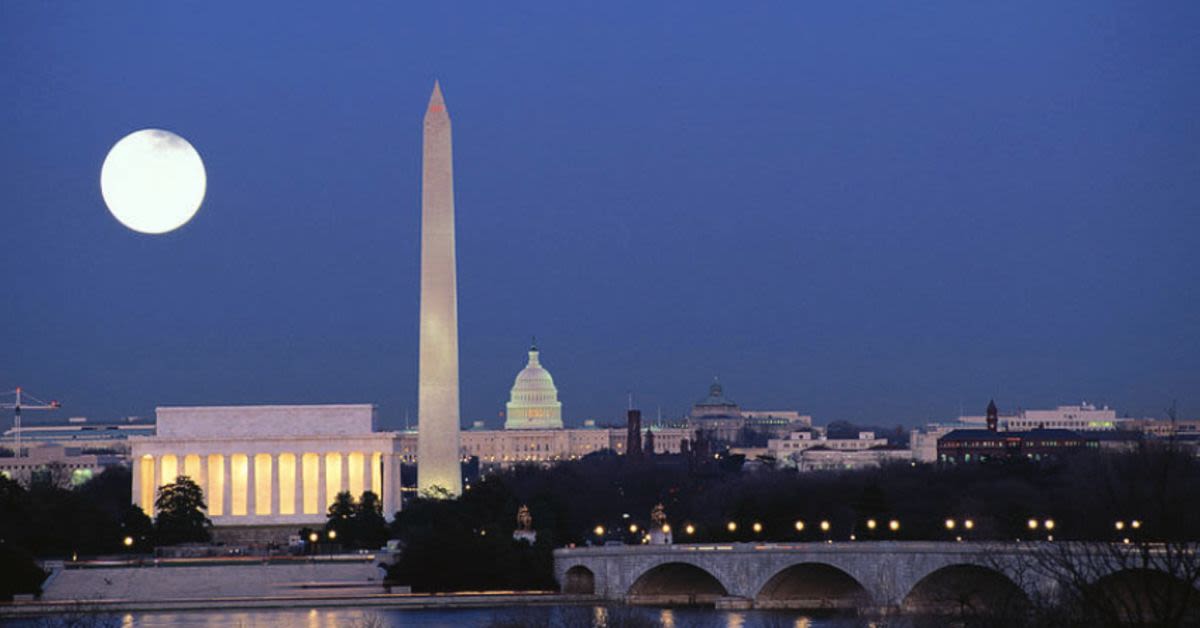
The proposed Independence Arch would dwarf many of Washingtons most iconic landmarks if Trumps preferred design is realized. The White House rises roughly 70 feet, and the Lincoln Memorial stands at about 100 feet, but the arch envisioned by Trump would soar to 250 feet, dominating the landscape along the Potomac River.
Trump has reportedly become attached to the idea of a 250-foot-tall structure overlooking the Potomac River, according to two individuals who spoke on condition of anonymity about his private comments. Those sources say the scale of the project has unsettled some architectural experts who initially backed the concept of an arch but assumed it would be far more modest in height.
The Independence Arch is intended as a signature monument for Americas 250th birthday, transforming a small parcel of land between the Lincoln Memorial and Arlington National Cemetery into a new focal point. Built to Trumps specifications, it would reshape the relationship between the two memorials and obstruct pedestrians views, a prospect that has fueled both excitement and unease.
While alternative designs have been floated, the President appears unmoved by the smaller options. Trump has considered smaller versions of the arch, including 165-foot-high and 123-foot-high designs he shared at a dinner last year, but, advisers say, he has favored the largest option, arguing that its sheer size would impress visitors to Washington, and that 250 for 250 makes the most sense.
Supporters of the project see the concept art and respond with an unapologetic sense of national pride. The reaction, captured in a simple online exclamation Heck yes followed by the succinct justification Because America, reflects a belief that a milestone of this magnitude deserves something visually and symbolically overwhelming.
Measured against foreign counterparts, the proposed structure would be a statement of American exceptionalism in stone and steel. The famed Arc de Triomphe in Paris stands at about 164 feet, while Berlins Brandenburg Gate reaches roughly 85 feet, and as the original commentary wryly notes, these figures are approximate because France and Germany use Euro-weenie metric measurements, not good, honest American feet and inches, to measure their monuments.
For those who see national greatness as something to be celebrated rather than downplayed, allowing European capitals to outshine Washington in monumental architecture is simply unacceptable. When it comes to triumphal arches, we can hardly let France and Germany show us up, the argument goes; the United States should not only match them, but beat them, decisively so.
Yet not everyone is persuaded that bigger is better in this case, particularly when it comes to the sensitive setting near Arlington National Cemetery. I would be very concerned about the scale, cautioned Calder Loth, a retired Senior Architectural Historian for the Virginia Department of Historic Resources, warning that a 250-foot-high arch could alter pedestrians views as they approach Arlington from Washington. It would make Arlington House just look like a dollhouse or you couldnt see it all, with the arch blocking the view.
Such concerns about sightlines and historical context are not trivial, especially in a city where symbolism and memory are embedded in every vista. Still, advocates of the project argue that the 250th anniversary of American independence is a once-in-a-lifetime moment, a big deal that will not recur for another fifty years, and that a nation which has been the best country, the greatest country in the history of humankind should mark a quarter-millennium on a scale worthy of that legacy.
For those who remember the Bicentennial and know they will not live to see the tricentennial, the desire is to see this quarter-millennia of America recognized and celebrated in American style. The call is simple and characteristically blunt: Go big or go home. Go with the 250-foot arch to commemorate 250 years and ensure that the capital of the free world reflects the magnitude of the freedom it represents.
Login