
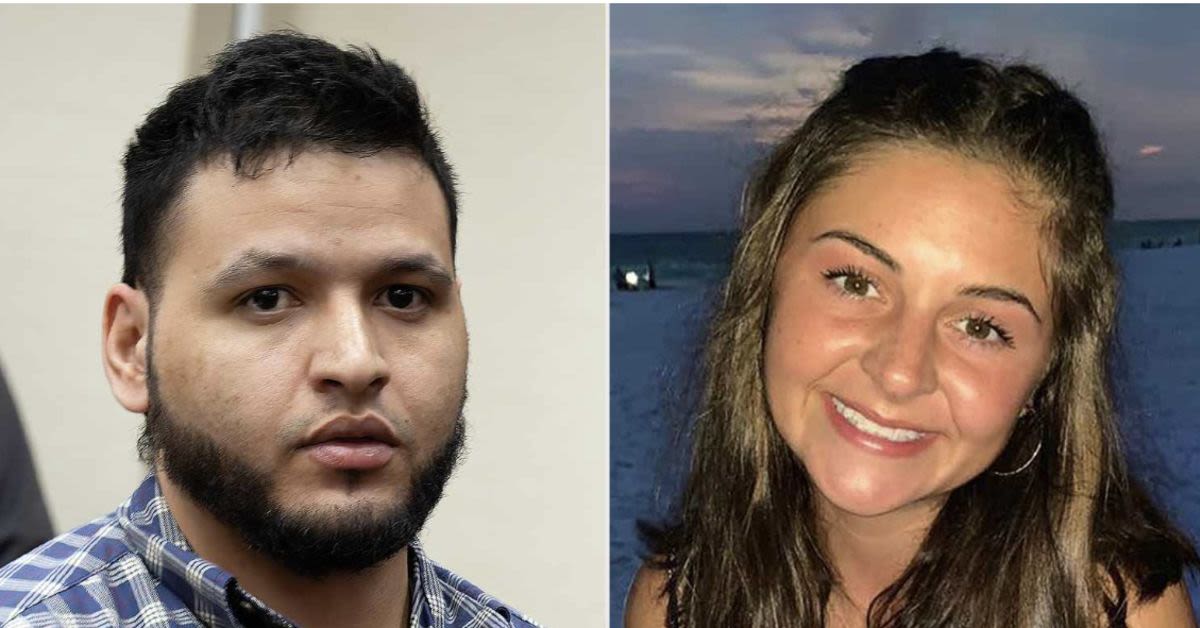
A convicted Venezuelan illegal immigrant seeking a new trial in the brutal killing of Georgia nursing student Laken Riley has once again thrust questions of border security, criminal accountability, and judicial integrity into the national spotlight.
According to One America News, Jose Ibarra, who was found guilty in 2024 of murdering 22-year-old Riley on the University of Georgia campus, is now asking a Georgia court to overturn that verdict and grant him a new trial. On Friday, Clarke County Superior Court Judge H. Patrick Haggard presided over a hearing in which a defense-retained DNA expert, Ruth Ballard, testified about forensic evidence collected in the case.
Ballard told attorneys she would need six weeks to complete a full report of her findings, prompting the defense to seek a delay, but Judge Haggard declined to slow the process and kept the case on schedule.
The judge did not issue an immediate ruling on the motion for a new trial, instead ordering both the prosecution and defense to submit additional written arguments by March 2nd. Only after reviewing those filings, he indicated, would he decide whether Ibarras conviction should stand or whether the case should be reopened. The defense has centered much of its challenge on alleged procedural and evidentiary errors, attempting to cast doubt on both the investigation and the original trial.
Before the initial trial, Ibarras attorneys had urged Judge Haggard to exclude evidence obtained from two cellphones that the state said belonged to Ibarra, arguing that the search warrants authorizing seizure of the phones were invalid because police lacked probable cause. Haggard rejected that request, allowing the cellphone evidence to be presented to the jury. Defense lawyers also sought to bar evidence and expert testimony derived from TrueAllele Casework, a DNA-analysis software tool that has been used in numerous prosecutions nationwide.
Another defense argument claimed that Ibarra was not mentally competent at the time of the crime and therefore should not be held fully responsible for his actions. Judge Haggard dismissed that contention, pointing to a court-ordered mental evaluation reviewed in 2024 that found Ibarra competent to stand trial and to understand the nature of his conduct. That earlier evaluation had already been weighed by the court before the jury ever heard the case.
Ballard, a forensic serology and DNA specialist, focused her testimony on physical evidence gathered during the original investigation, including a pair of bloodstained gloves recovered near Ibarras residence. She stated that those gloves did not contain Ibarras DNA, though they did contain DNA from Riley and at least one unidentified individual, and she further testified that Rileys sexual assault evidence kit revealed no male DNA. The defense has attempted to use these points to suggest alternative scenarios and to raise doubts about the prosecutions narrative.
During cross-examination, however, Prosecutor Sheila Ross challenged the defenses insinuation that Ibarras older brother, Diego Ibarra, might have been the real perpetrator. Ballard acknowledged that Y-chromosome Short Tandem Repeat (Y-STR) testing indicated that DNA found under Rileys fingernails could have come from either Jose Ibarra or his brother Argenis Ibarra. Yet she also confirmed that TRULEO testing, which incorporates AI-assisted analysis, excluded Jose Ibarras brothers and identified the DNA as belonging to Jose himself, and she agreed that a victim in a violent struggle would likely carry her attackers DNA under her fingernails.
Rileys killing quickly became a defining example of the human cost of lax border enforcement, emerging as a central issue in President Donald Trumps 2024 campaign as he highlighted the dangers posed by criminal illegal aliens released into American communities. The case underscored what conservatives have long argued: that the Biden administrations open-border posture has real, devastating consequences for law-abiding citizens. Trump repeatedly cited Rileys death as anecdotal and personal evidence of the failures of current immigration policy and the urgent need for strict enforcement.
The timing of the latest hearing was notable, coming just one day after the first anniversary of Trumps signing of the Laken Riley Act on January 29, 2025, the first bill he signed into law in his second term. The law mandates federal detention of illegal immigrants accused of local crimes such as theft, burglary, or assault, closing a loophole that had allowed offenders like Ibarra to remain at large. Had that statute been in place earlier, Ibarra would have been detained following a shoplifting citation and kept off Rileys college campus altogether, a stark reminder of how policy decisions can mean the difference between life and death.
Riley, a 22-year-old nursing student out for a run on the University of Georgia campus, crossed paths with Ibarra in what prosecutors described as a predatory attack. During the 2024 trial, Ross told jurors that Ibarra was hunting for females, portraying him as a predator roaming the campus in search of a victim. When Laken Riley refused to be his rape victim, he bashed her skull in with a rock repeatedly, Ross stated, a chilling description that captured the brutality of the crime and the terror Riley endured in her final moments.
The jury ultimately found Ibarra guilty on all 10 counts, including murder, kidnapping with bodily injury, aggravated battery, assault with intent to rape, hindering an emergency telephone call, tampering with evidence, and concealing the death of another. He is now serving a life sentence without the possibility of parole in a Georgia state prison, a punishment many see as the bare minimum for such a heinous act.
As the court weighs his bid for a new trial, the case continues to highlight the stakes of Americas immigration debate and the responsibility of government to protect its citizens before tragedy strikes.
Login