
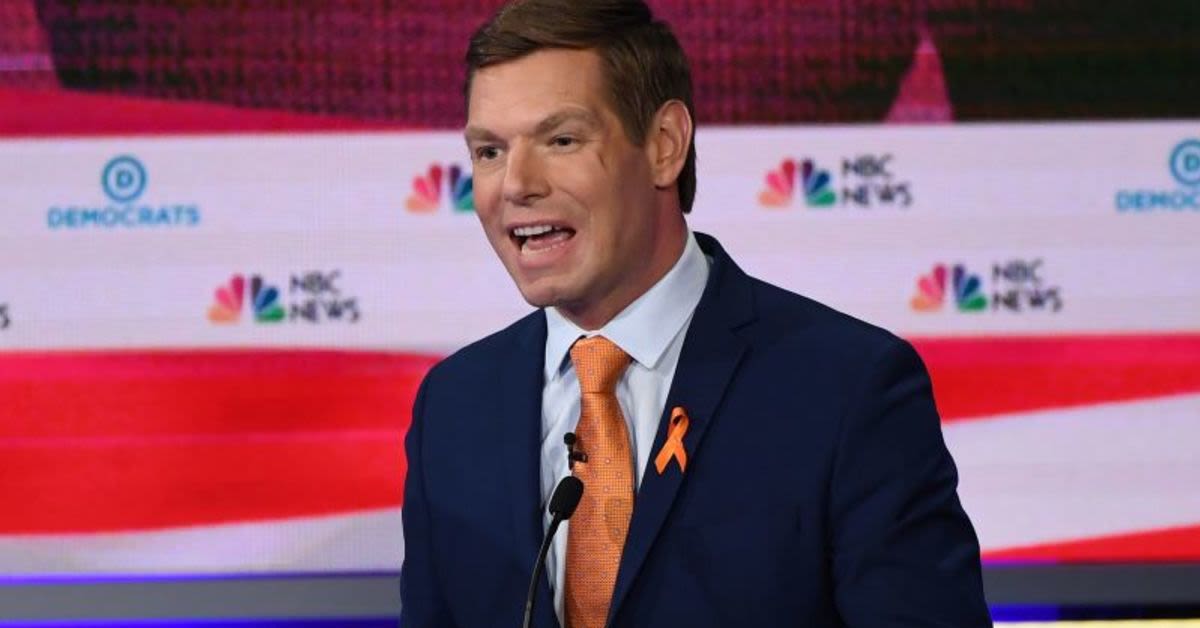
The lawsuit challenging Rep. Eric Swalwells (D-Calif.) eligibility to run for California governor has done more than raise technical questions about residency; it has exposed a troubling double standard on personal security and the rule of law.
According to The Hill, filmmaker Joel Gilbert has filed suit alleging that Swalwell does not truly reside in California, as required by the states five-year residency rule, but effectively lives in Washington, D.C. Swalwells campaign counters that he does maintain a California home, claiming he uses a campaign office address on official documents because of repeated death threats.
His consultant, Kate Maeder, has defended this as a legal and common practice in California politics, arguing that security concerns justify shielding his true residence. They further point out that Swalwell holds a California drivers license and pays state taxes, markers typically used to establish residency.
On its face, this explanation might appear reasonable, and no serious observer would dismiss credible threats against elected officials in an increasingly polarized climate. Yet Swalwells justification collapses under scrutiny when contrasted with his own rhetoric about the safety and anonymity of Immigration and Customs Enforcement (ICE) officers.
While he seeks to conceal his own address to avoid potential harm, Swalwell has aggressively pushed to unmask ICE agents who wear face coverings for their protection amid a surge in doxxing and physical assaults. This is not merely an inconsistency; it is a dangerous double standard that places ideology above the safety of law enforcement officers tasked with enforcing federal law.
Last year, Swalwell went so far as to threaten to expose the identities of masked ICE agents if Democrats regained control of Congress. I want this to be absolutely clear these masked men roaming around like bank robber bandits will be unmasked in a Democratic majority, he declared in an August statement.
He likened these officers to some 1800s bank robber or some KGB officer in Russia, stressing that it was his priority to ensure they are no longer faceless. This was not idle campaign bluster; Swalwell even just vowed to strip drivers licenses from ICE agents wearing masks during operations in California if he becomes governor.
ICE officers do not wear masks to intimidate, as Swalwell suggests, but to shield themselves and their families from very real threats in an era of escalating hostility toward law enforcement. Under the Trump administrations immigration enforcement push, ICE experienced a 700 percent surge in assaults, according to White House reports, while doxxing the public release of personal data such as home addresses and phone numbers became widespread.
In one notorious case, the personal information of more than 4,500 ICE employees was leaked online, triggering harassment and death threats against individuals who were simply carrying out laws passed by Congress. When pressed on this during a 2025 appearance on CNNs Cuomo, Swalwell acknowledged the doxxing but brushed past its implications, saying ICE started out under the Trump administration with this posture.
Rather than unequivocally condemning the endangerment of federal officers, he pivoted to attacking their enforcement tactics, turning a security issue into a partisan talking point. That response signaled a troubling willingness to subordinate the safety of front-line officers to ideological narratives favored by the left.
If security concerns are sufficient to justify concealing his own residence, it is difficult to see why the same logic should not apply to ICE agents who face direct, personal risk for enforcing duly enacted immigration laws including those supported by Democrats like Swalwell. The message his stance sends is that privacy and protection are privileges reserved for politicians, not for the men and women charged with upholding the law.
Swalwells legal defense on residency may ultimately withstand judicial scrutiny, as courts often grant flexibility to federal officials who divide their time between Washington and their home states. Yet the larger issue is one of character and consistency: public servants cannot selectively invoke safety and privacy when it benefits them while denying those same protections to law enforcement officers they happen to disagree with politically.
Over decades in politics and academia, many of us have taught that integrity is measured by whether one applies the same principles even when it is inconvenient. By that standard, Swalwells record falls short, and voters are right to question whether a man who shields his own hide while seeking to expose others to harm is fit to lead a state as complex and challenged as California.
Login