
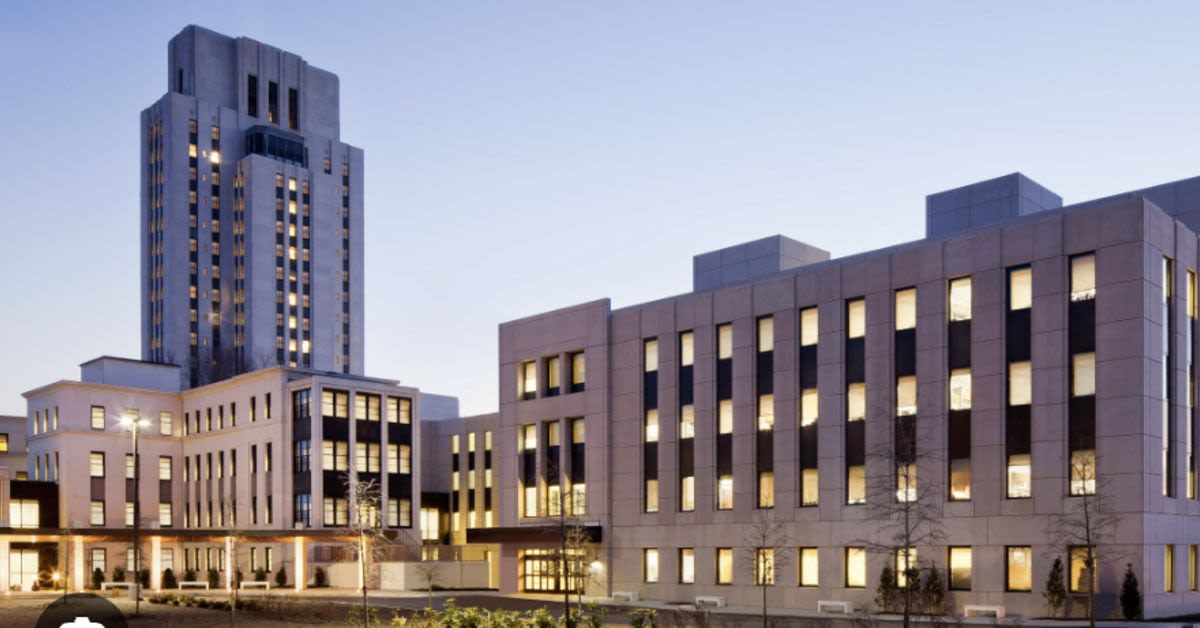
Donald Trump has privately described the MRI-style imaging he underwent at the insistence of White House physicians last year as the worst f***ing thing I ever did, even as those same doctors insist the results show he is in excellent health."
The President, who will turn 80 in June and is poised to become the oldest commander-in-chief in American history if he returns to office, has been battling a swirl of speculation about his physical and cognitive condition.
According to the Daily Mail, Trump used a December Oval Office interview with New York Magazines Ben Terris to vent his anger at the medical team that urged him to undergo advanced imaging at Walter Reed National Military Medical Center, and to push back against what he views as politically motivated attempts to portray him as infirm while his Democratic opponents receive a far gentler press.
In October, Trump publicly acknowledged that he had undergone the procedure during a hospital visit, offering for the first time a detailed explanation of why he had a second major medical evaluation within a single year. While the White House characterized the October 10 trip to Walter Reed as a routine check-up, it was nonetheless his second comprehensive exam in less than twelve months, a fact that fueled media chatter and social media rumor-mongering about his health, much of it driven by critics eager to see him weakened ahead of another presidential term.
Trump, however, has remained furious with the White House medical staff over the decision to proceed with the imaging, insisting that the test itself created a narrative that something must be wrong. It was the worst f***ing thing I ever did, and I blame them, Trump told Terris, pointing directly at White House physicians Captain Sean Barbabella and Lieutenant Colonel James Jones as they sat in the Oval Office, underscoring his view that the episode was a self-inflicted political wound rather than a medical necessity.
The president discussed his health at length with the reporter, using the interview to both mock the medias fixation on his age and to highlight what he says are stellar test results. They wanted me to take it. And because I took it, people want to say, Oh, there must be something wrong, he complained, before turning to the two doctors and demanding, Can you explain why you asked me that? Stupidest thing I've ever done.
Jones, a career military physician who has served under multiple administrations, attempted to defuse the tension by explaining that Trump already had an appointment scheduled at Walter Reed and that the additional testing was meant to be part of a routine, age-appropriate evaluation. While he was there, I asked him if we could complete some additional physical things that we were planning on doing annually. And he was like, Okay. We will work it in for time schedules. It wasn't actually an MRI, Jones said, emphasizing that the imaging was not prompted by any acute concern.
Jones further clarified that Trump underwent an MRI-like exam of his chest and abdomen, rather than a brain scan or other more alarming procedure. Trump, still irritated, shot back that the entire episode was unnecessary and politically damaging, telling the doctors, And not for any reason. It's because the machine was sitting there, I'm sitting right next to it, suggesting that the test was ordered simply because the equipment was available, not because of any medical red flag.
From a clinical standpoint, Jones insisted the decision was entirely appropriate for a man of Trumps age, stressing that the purpose was to rule out silent problems before they could become serious. The reason for the imaging, as routine as we stated, is that any patient his age could have things, and we ruled them out, Jones added, underscoring that the results were reassuring and that the presidents health profile remains strong for someone approaching 80.
Both Barbabella and Jones maintained that the test results were excellent and that Trump is in robust condition, a point the president believes the media has largely ignored in favor of sensational speculation. The story should be about the fact that the results were, uh, perfect. They did not demonstrate any problems, one of the physicians said, echoing Trumps own frequent insistence that his medical evaluations show no cause for concern.
Trump, however, voiced a broader unease about the institutional nature of the White House medical office, which serves presidents of both parties and often outlasts any single administration. I love these two guys; they're great but I don't know them. They're White House doctors, he remarked, hinting at a distrust of a permanent bureaucracy that conservatives have long argued can be more loyal to the Washington establishment than to any elected leader.
Jones himself previously served for several years under President Barack Obama as a senior medical leader, a fact that underscores the continuity of the White House medical unit across partisan lines. At one point during the interview, Terris asked Jones directly, Who is healthier, Obama or President Trump? and Jones did not hesitate before answering, President Trump, a response that sharply undercuts the narrative pushed by many on the left that Trump is physically unfit for office.
In early December, Barbabella, who serves as physician to the president, issued a formal statement summarizing Trumps advanced imaging results, which he described as consistent with what is commonly referred to as an MRI. Trumps scan, Barbabella said, revealed no abnormalities and confirmed that he is in excellent health, adding that such imaging is a standard preventive measure for men in Trumps age bracket.
Barbabellas written assessment was detailed and unequivocal, emphasizing that the imaging was part of a comprehensive, proactive approach to the presidents care. As part of President Donald J Trump's comprehensive executive physical, advanced imaging was performed because men in his age group benefit from a thorough evaluation of cardiovascular and abdominal health, he stated, framing the test as a prudent, textbook example of preventive medicine rather than a response to any crisis.
The purpose of this imaging is preventive: to identify issues early, confirm overall health, and ensure he maintains long-term vitality and function, Barbabella continued, making clear that the goal was to keep Trump functioning at a high level for years to come. President Trump's cardiovascular imaging is perfectly normal. There is no evidence of arterial narrowing impairing blood flow or abnormalities in the heart or major vessels, he reported, language that would normally be greeted as reassuring if the subject were not a polarizing conservative figure.
The heart chambers are normal in size, the vessel walls appear smooth and healthy, and there are no signs of inflammation or clotting. Overall, his cardiovascular system shows excellent health, Barbabella added, offering a portrait of a cardiovascular system that many men decades younger would envy. His abdominal imaging is also perfectly normal. All major organs appear very healthy and well-perfused. Everything evaluated is functioning within normal limits with no acute or chronic concerns, he said, reinforcing the message that no hidden disease had been discovered.
SUMMARY: This level of detailed assessment is standard for an executive physical at President Trump's age and confirms that he remains in excellent overall health, Barbabella concluded, in a statement that would seem to put the matter to rest for anyone approaching the issue in good faith. Yet even back then, the scan appeared to frustrate President Trump when reporters pressed him about it, sensing an opportunity to stoke doubts about his fitness while largely ignoring far more visible signs of decline in President Joe Biden.
[The scans] were perfect like my phone call where I got impeached. Absolutely perfect. If you want to have it released, I'll release it, Trump said, drawing a pointed comparison to the Ukraine phone call that Democrats used as a pretext for impeachment. A second reporter followed up with a question that bordered on the absurd, asking whether the MRI had been carried out on his brain, a query clearly designed to feed the lefts favorite narrative about Trumps mental state.
I have no idea. It was just an MRI. It wasn't the brain because I took a cognitive test and aced it. I got a perfect mark which you would be incapable of doing, Trump shot back, turning the question into an opportunity to mock the reporters own intellect. He then pointed at the journalist who had asked the original question, adding, You too, making clear that he views much of the press corps as neither fair nor particularly bright.
The October 10 exam at Walter Reed, though described at the time as routine, quickly became fodder for online conspiracy theories and partisan commentary. The rumors intensified earlier this year after observers noticed a bruise on Trumps hand and swelling around his ankles, developments that critics seized upon before the White House clarified that he had been diagnosed with chronic venous insufficiency, a relatively common circulatory condition in older adults.
Beyond visible signs like bruising, some commentators have tried to build a case around what they claim is a perceived difference in Trumps energy levels compared with his first term. In the same New York Magazine feature, Trump dismissed fears of Alzheimers diseasethough in a moment of human fallibility he briefly forgot the name of the condition, which causes dementiabefore quickly recovering and turning the exchange into a reflection on his family history.
The president spoke about his father, real estate developer Fred Trump, who died in 1999 at the age of 93 after suffering from dementia. He had one problem, Trump said of his father. At a certain age, about 86, 87, he started getting, what do they call it? he asked aloud, momentarily searching for the term.
Trump then looked to White House press secretary Karoline Leavitt for help, a small but telling reminder that even a man famous for his quick tongue occasionally reaches for a word. Alzheimer's, Leavitt responded, prompting Trump to say his father had like an Alzheimer's thing, before quickly distancing himself from any suggestion that he might be following the same path.
Well, I don't have it, the president insisted, rejecting the premise that his fathers condition foretells his own. When Terris asked whether he thinks about the possibility at all, Trump responded with characteristic nonchalance and fatalism.
No, I don't think about it at all. You know why? Trump asked. Because whatever it is, my attitude is whatever, he said, signaling that he refuses to live in fear of hypothetical future ailments. At another point in the interview, he boasted that he felt the same as I did 40 years ago, a claim that, while impossible to verify, is consistent with the relentless schedule and high-energy rallies that have defined his political career.
Like President Joe Biden before himwho, upon his election, became the oldest president in U.S. historyTrump faces persistent questions about his age and health, though the medias tone toward the two men has been markedly different. Trump appeared irritated that the topic kept resurfacing, especially given the clean bill of health from his doctors and the obvious cognitive struggles Biden has displayed in public.
I hate to waste a lot of time on this, but if you're going to write a bad story about my health, I'm going to sue the a** off of New York Magazine, he told Terris, making clear he believes some outlets are less interested in facts than in crafting a damaging narrative. There will be a time when you can write that story, maybe in two years, three years, five years - five years, no one is going to care, I guess, he added, suggesting that any future decline would be a matter of age, not current incapacity.
Trump will be out of office in three years if he serves a full second term, a timeline that underscores why his opponents are so eager to raise doubts now. Just in recent days, the White House again had to address speculation after a bruise appeared on Trumps left hand while he was attending the World Economic Forum in Davos, Switzerland, an event that already draws criticism from conservatives wary of globalist elites.
Leavitt explained that the president had hit his hand on a table during his Board of Peace event on Thursday, and that he bruises easily because of his daily Aspirin regimen. In July, the White House also disclosed that Trump had been diagnosed with chronic venous insufficiency, offering a straightforward medical explanation for his swollen ankles that did little to deter those determined to see every blemish as evidence of looming collapse.
Trumps mental fitness has also been a favorite target of his critics, particularly when he appeared to be threatening to invade Greenland after being snubbed by the Norwegian Nobel Committee, which awarded last years Nobel Peace Prize to Venezuelan opposition leader Maria Corina Machado instead of the U.S. president. Machado has since given her Nobel to Trump, but that symbolic gesture did not stop the media from amplifying his Greenland comments while he was at the Alpine conference of world leaders, often stripping them of context and Trumps well-known penchant for hyperbole.
Everyone around Trump, including his White House doctors, told New York Magazine that the president is fine, repeatedly emphasizing his stamina, work ethic, and sharpness. Only one anonymous senior staff member claimed that the president was losing his hearingand even suggested that Trump himself was not yet aware of itan allegation that conveniently fit the narrative of decline but lacked the transparency and accountability conservatives expect from serious journalism.
He can work harder and he has a better memory and he has more stamina and has more energy than a normal mortal, White House Deputy Chief of Staff Stephen Miller told the magazine, offering a glowing assessment that reflects what many close aides have long said about Trumps capacity to outwork staff half his age. The headline of your story should be "The Superhuman President," Miller added, a line New York Magazine did usebut only in quotation marks, signaling its skepticism even as it acknowledged the view from inside the West Wing.
Trump himself would not concede that he had nodded off during any meetings, even when critics circulated images suggesting he had dozed during long sessions. Instead, he told Terris, It's boring as hell, describing the grind of marathon gatherings with foreign leaders and business executives.
I'm going around a room, and I've got 28 guys - the last one was three and a half hours. I have to sit back and listen, and I move my hand so that people will know I'm listening. I'm hearing every word, and I can't wait to get out, he said, painting a picture of a president who is more restless than exhausted, impatient with diplomatic theater rather than physically overwhelmed by it. Jones even told the magazine that Trumps EKG reads like he is 14 years younger, a striking claim that, if made about a liberal president, would likely be trumpeted as proof of vigor rather than dismissed as spin.
So age 65. His stamina demonstrates that. We get a view that nobody else does. Nobody can stay up with him. The rest of the staff is tired; we are too. And he's not, Jones said, reinforcing the portrait of a leader whose physical resilience and energy remain unusually high for his age.
For all the speculation, anonymous whispers, and partisan wish-casting, the people with direct access to Trumps medical data and daily routine continue to describe a President whose healthby their account and by the test results they have releasedis not a liability but an asset, even if the political and media class would prefer to believe otherwise.
Login