
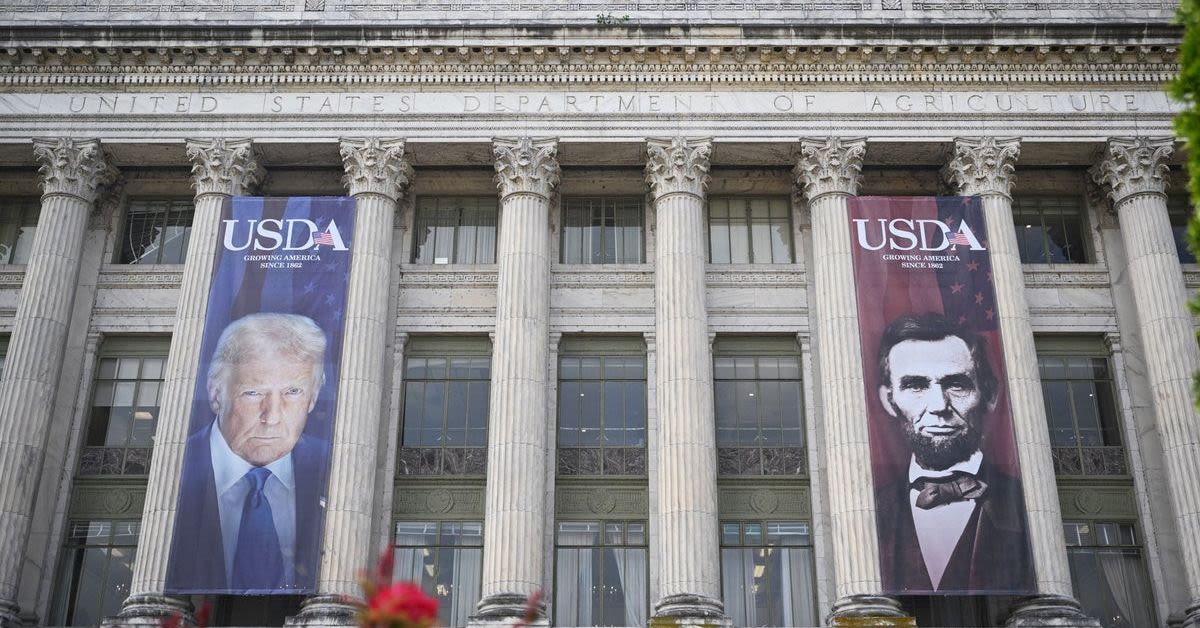
President Donald Trump is seeking to close a food stamp loophole that could save Americans $100 billion over a decade.
According to Western Journal, a new rule proposed by the U.S. Department of Agriculture would nix the provision known as "Broad-Based Categorical Eligibility," under which people otherwise ineligible for food stamps can sign up anyway. There are 7.4 million people receiving food stamps through the Supplemental Nutrition Assistance Program by means of this policy.
Jonathan Ingram, the vice president of policy and research at the Foundation for Government Accountability, wrote in a New York Post opinion piece that nearly $100 billion in taxpayer money would be saved over the next 10 years if President Trump closes the loophole. "Trump is rightly moving to protect food stamps for Americans who really need them," he argued.
Ingram described how Congress passed a law in the 1980s allowing that "anyone eligible for cash welfare is eligible for food stamps as well." The Clinton administration later said states could determine "what qualifies as a benefit under cash welfare," leading many to unreasonably widen the definition of "benefits." In some states, applicants are simply handed a "taxpayer-funded brochure, pamphlet or flyer," which is then defined as a "benefit" sufficient for food stamps.
"The administration acknowledged the scam, but didnt stop it an early sign of Democrats near-religious belief in welfare expansion for its own sake," Ingram noted. The Obama administration even marketed "Broad-Based Categorical Eligibility" as a means to increase participation in food stamps. Officials told states to "benefit families hurt by the economic crisis."
Ingram cited figures showing 5.4 million people in households with too many assets to qualify for SNAP, plus another 2 million in households with too much income. He noted that food stamps increase grocery prices for everyone else, while some 15 percent of misspent SNAP money is spent by non-citizens. His column also said the ineligible group has included "literal millionaires and people with Ferraris and Lamborghinis."
"So much for the original goal of this policy to save taxpayer money: Democrats have corrupted it to pave the way toward welfare for all," Ingram added. "Trump is closing the loophole, preventing states from redefining benefits and restoring congressional intent."
The Agriculture Department has described the same problem in stark terms. In the text of the proposed rule, the USDA said current eligibility standards mean that even households with $1 million in wealth but no income could technically receive food stamps. A USDA spokesperson told CBS News, "Broad-based categorical eligibility has bloated the welfare rolls for decades."
The spokesperson said, "It has allowed states to take shortcuts, error rates to balloon, and those households with income and assets far above federal limits access to a benefit meant for the neediest among us." "Correcting this loophole is long overdue," the spokesperson said. According to the USDA, 46 states were using broad-based eligibility policies as of the end of 2025, and 41 of those states applied no asset limits at all.
White House spokeswoman Allison Schuster said the administration wants to ensure that SNAP serves only "eligible Americans who need it most." "Rather than throwing money at a broken system, the Trump Administration will continue to stop fraudsters stealing from these important programs, as well as take effective, cost-saving steps to make life more affordable for all Americans," she told CBS News. The proposed rule would restrict automatic eligibility to households receiving qualifying cash assistance under Temporary Assistance for Needy Families, rather than allowing a pamphlet or a phone number to open the door.
Ingram wrote that in Delaware, food-stamp applicants are referred to a pregnancy prevention hotline, and in Colorado the application includes a notice of taxpayer-funded services. "At no point are food-stamp applicants receiving anything more than information, or even just an online link," he wrote. The USDA estimates the change would reduce federal SNAP spending by about $44.6 billion between fiscal years 2027 and 2031.
Login