
In 2022, YouTube's then-CEO Susan Wojcicki asked to meet USAID Administrator Samantha Power, Just the News reports.
"Susan would like to request a meeting with Administrator Power to discuss a range of critical issues of mutual interest including: access to information globally; combating misinformation and disinformation globally, as well as YouTube's positive economic, social, and civic impact, in democracies, as well as in closed and illiberal societies in across the world," the April 2022 email from Wojcicki's government affairs chief said. "She'd also love to discuss how we might work together on these shared values."
For most Americans, "illiberal" sounds like bureaucratic jargon. Inside the Biden administration, the newly released files show, it became a code word for a campaign against President Trump-style populist conservatives abroad.
The targets ranged from Brazil's Bolsonaro family to El Salvador's Nayib Bukele and Hungary's Viktor Orban. An extraordinary cache of documents released by the Trump administration on the old website of the now-defunct U.S. Agency for International Development lays out how the effort worked.
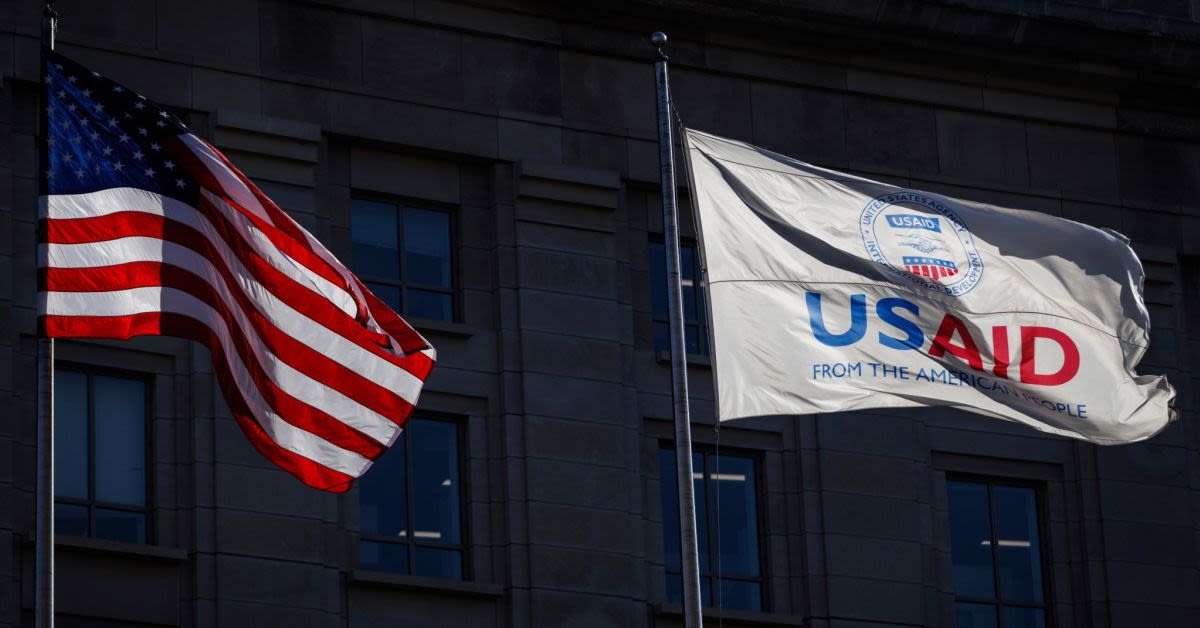
The agency's own current site now says something went badly off course. "Under previous administrations, USAID was weaponized to advance a radical agenda fundamentally at odds with American values. In the interest of transparency and accountability, we are publishing files, memos, and internal communications detailing how the agency operated."
That record may help explain the fight over shutting the agency down and moving its authority to the State Department in July of 2025. At the time, Secretary of State Marco Rubio said, "USAID had decades and a near-infinite taxpayer budget to advance American influence, promote economic development worldwide, and allow billions to stand on their own two feet. Beyond creating a globe-spanning NGO industrial complex at taxpayer expense, USAID has little to show since the end of the Cold War."
An October 2022 presentation to USAID directors showed "Liberal democracies in decline: 34 in 2021, 13% of the world's population," and identified "21st century threats" as "creeping authoritarianism" and "transnational influencers." In that latter category, the agency listed "Usual Suspects + Brazil, India, El Salvador, Hungary."
USAID's mission, the memos stated, was to counter global leaders with populist rhetoric similar to that of President Trump, such as Bolsonaro or Bukele, and strong conservative leadership of the kind associated with India's Narendra Modi and Orban, using taxpayer money routed through partners in foreign countries. Even India, a long-standing democracy, was listed internally among countries the Biden administration lamented were "backsliding" from liberalism, the memos show.
One proposal came from the Global Disinformation Index, a British group whose work has been so controversial that the Trump State Department later denied some of its members visas. The GDI plan targeting Zambia, Moldova and Armenia admitted that truth or falsity was not the test for content it intended to suppress.
"We consider disinformation in the context of 'adversarial narratives' (as opposed to a 'true/false' binary); 'adversarial narratives' are used by disinformation actors to inflame social tensions, and to exploit and amplify the perceived grievances of individuals, groups and institutions," the proposal stated. "In this way, disinformation actors seek to delegitimize governments, principles, practices, and policies."
GDI's strategy leaned on USAID's ties to Big Tech. "USAID has indicated that its growing relationships with the large online platforms, including Alphabet and Meta, offer an opportunity to take action in these three countries based on the data that GDI's MMRs produce," the memo said. The goal, the memo stated, was to defund, down-rank and deplatform voices that did not fit GDI's preferred narrative.
Wojcicki's outreach was not an isolated episode. A draft plan for a September 2022 USAID strategy meeting with Meta included adjusting the Facebook algorithm in El Salvador and a plan to "engage the migrant diaspora" in Guatemala.
The memos also show how the agency viewed elections. A country analysis described President Trump-allied conservative Jair Bolsonaro's 2022 loss to socialist Luiz Inacio Lula da Silva as a "good development" and added, "Lula presidency is likely to move Brazil back toward a higher level of liberal democracy."
The files suggest USAID took YouTube up on the offer of closer engagement. An August 2022 email chain titled "Synergies with YouTube" indicated the company had offered money and services for agency projects.
"As promised, please find attached Internews' pitch for an RDMA regional program that YouTube can contribute funding towards," the email stated. "I'm not sure that RDMA has reviewed it yet, so please let's hold off conversations with them until they officially share, but I understand that time is a concern here, and I wanted you to take a look."
Power, who led USAID from May 2021 to January 2025, has condemned the "reckless release" of "cherry-picked files" for "partisan purposes" and said the documents do not back up "their false, sweeping claims of fraud and abuse." The files, however, show a foreign-aid bureaucracy that enlisted Big Tech and treated "illiberal" as a label for conservative leaders it intended to counter.
Login