
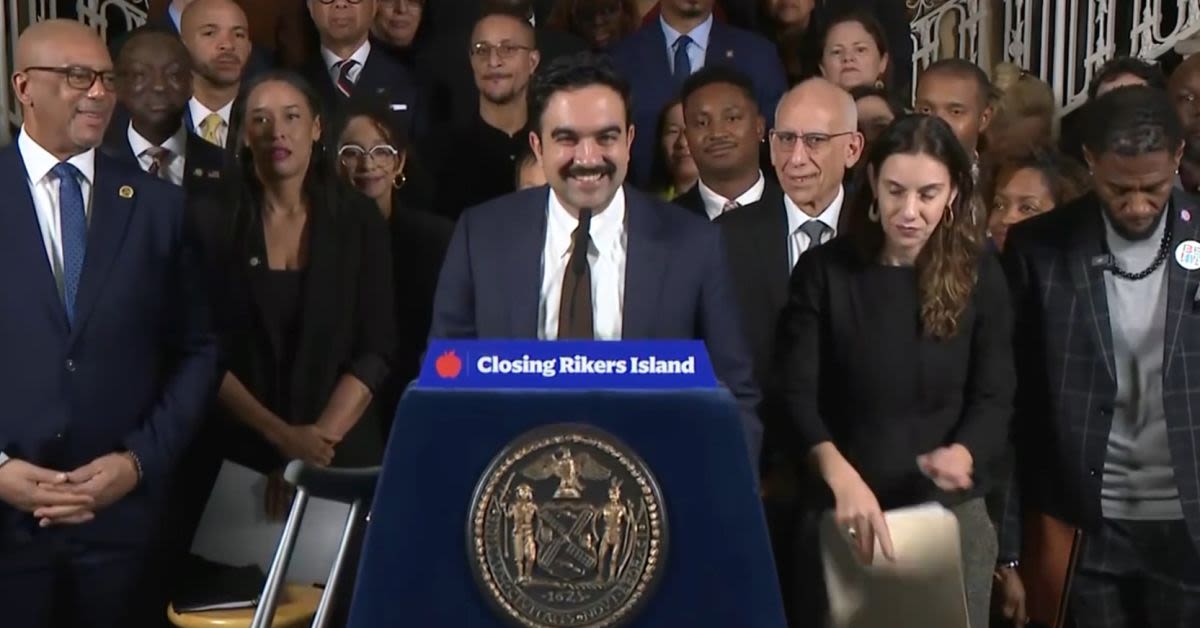
New York City Mayor Zohran Mamdani wants taxpayers to pay hundreds more families to take in relatives fresh out of jail.
The proposal is buried in Mamdani's 88-page Close Rikers Strategic Plan, his blueprint for shutting down the notorious Rikers Island jail complex. It would sharply expand a little-known city initiative called the Kinship Reentry Housing Program.
Under the plan, the program would grow from 50 households to 300 families. The city would spend $3.55 million in the first year and $7.1 million every year after that.
The program is run by the nonprofit Osborne Association. It currently pays participating relatives $500 a month for up to a year to help cover the cost of housing someone returning from Rikers or a state prison.
It is not yet clear how much families would receive under the expansion. The plan pitches the program as far more than a check.
"This program provides a stable home for people returning to community from Rikers or prison, including 100 people with diagnoses of serious mental illness, substance use disorder or other complex behavior health needs," the plan says. "It provides direct financial assistance, financial management services, clinical therapeutic support, peer navigation and other wraparound resources."
Critics have zeroed in on who could qualify. Public descriptions of the program and the plan list no categorical exclusions for people convicted of murder, rape or other violent felonies, The Gateway Pundit noted.
That raises the prospect that families housing violent offenders could collect monthly payments on the taxpayers' dime. Republicans on the City Council are furious.
"New Yorkers are paying for crime twice first for the offense and then again to pay for these programs," said Queens Councilwoman Joann Ariola. "Where are we even getting this money from?"
Ariola said the city keeps pleading poverty. "This city is crying broke every budget cycle, but we seem to have no problem pulling millions out of the air for programs like this," she added.
Council Minority Leader David Carr of Staten Island was just as harsh. "This seems like another reckless use of taxpayer money on a social experiment that could go horribly wrong," he said. "In Mamdani's New York, crime really does pay."
The skepticism crossed party lines. "Only in New York City do we come up with a program that pays families to take in their own relatives coming out of jail," said Democratic Councilman Phil Wong of Queens.
"Maybe if some of these families had been more involved in their lives in the first place, they wouldn't have ended up behind bars, but now taxpayers are expected to foot the bill?" Wong added.
Supporters point to the program's track record. It has served more than 250 families since it launched under former Mayor Bill de Blasio, and the city says 94% of participants who completed it reported better financial stability.
The plan also says just two participants landed back in jail while in the program. Ninety percent reported "better family relationships."
The housing payments are one piece of a much larger overhaul. Mamdani wants to push the legally mandated Rikers closure back five years and shrink the jail population from about 6,600 to roughly 4,500, which will require more diversion and fewer people held before trial.
The price tag for replacing Rikers keeps climbing. The four smaller borough jails were originally budgeted at $8.2 billion, but delays and rising construction costs are expected to push the bill to at least $16 billion.
Login