
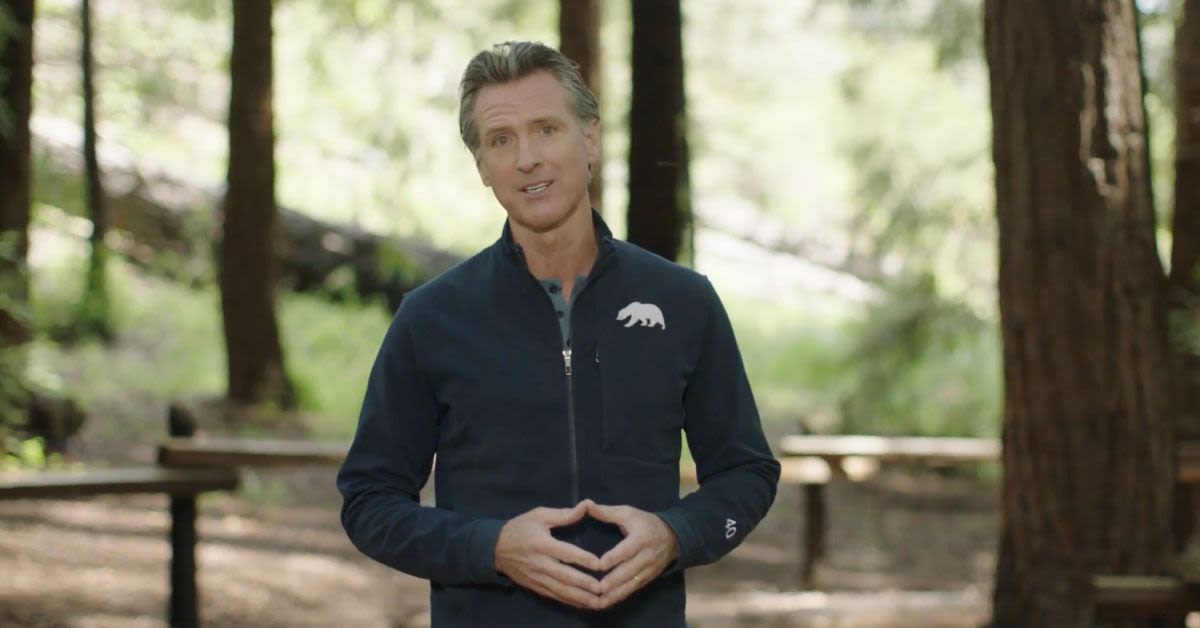
District attorneys from half of California's 58 counties have joined a lawsuit challenging Gov. Gavin Newsom's decision to grant clemency to 548 death row inmates.
The prosecutors are joined by victims' families and law enforcement groups in the legal fight against the term-limited Democrat. Many of the district attorneys publicly condemned the lame-duck move soon after Newsom announced it.
The 58-page petition was filed by former Sacramento County District Attorney Anne Marie Schubert. She now leads the Criminal Justice Legal Foundation, which is spearheading the case on behalf of 29 district attorneys and the families of more than two dozen victims.
"Only this Court can stop the Governor's disregard of the law his abuse of power," Schubert wrote. She argued that Newsom's "eleventh-hour decision to grant commutation en masse intentionally disregarded the statutorily required notice to the victims of these heinous crimes and the prosecutors who obtained those convictions and penalties."
Among the petitioners is Marc Klaas, whose 12-year-old daughter, Polly, was kidnapped at knifepoint from a slumber party and murdered in 1993. Her killer, Richard Allen Davis, has been on death row since 1996.
Other families in the case include those of 8-year-old Gabriel Fernandez and several fallen law enforcement officers. The families of five U.S. Forest Service firefighters killed battling the Esperanza Fire in 2006 have also signed on.
"Given what so many of these families have been through for so long, the impact in this case is exceptionally severe," Schubert wrote. "The Governor's assurance that the perpetrators will never be released is obviously cruelly false."
The clemency decision has drawn the attention of the White House. President Trump, Attorney General Todd Blanche and FBI Director Kash Patel were expected to meet with some of the victims' families.
"Governor Newsom is failing these innocent victims and their families by refusing to carry out justice against these heinous murderers," White House spokeswoman Lauren Bis said. "He is playing politics with public safety."
Newsom has defended his decision on moral grounds. In an open letter to Californians, he wrote that the state "cannot morally kill" the hundreds of people on its death row.
"I take this action because I firmly believe that state-sanctioned killing is incompatible with California's values, undermines the foundations of our legal system, and diminishes each of us," he wrote. Newsom also acknowledged that the inmates "caused indescribable suffering to victims, their families, communities, and our state as a whole."
California has not carried out an execution in 20 years, despite having the nation's largest death row. Gov.-elect Xavier Becerra is expected to continue the state's moratorium on executions.
Critics, including Orange County District Attorney Todd Spitzer, warn that the move could put condemned inmates on a path toward further leniency. Spitzer has filed his own separate petition.
Before the clemency takes effect, the California Supreme Court is expected to review at least 382 of the inmates who have multiple felony convictions. Schubert's filing argues that more inmates may meet the review criteria and that Newsom may have relied on incomplete records.
Some legal experts believe the challenge faces an uphill battle. "Newsom has broad authority as governor to commute sentences and issue pardons," said Neama Rahmani, a former federal prosecutor. "It may be controversial, but there is little prosecutors and victims can do to prevent it."
Rahmani said California's victims' rights law, which requires notice of certain clemency decisions, may not apply because no formal clemency applications were filed. Schubert anticipated that argument in her petition.
"If the statutory sunshine process can be defeated merely by the absence of a formal application, the worst abuses would be unregulated," she wrote. "That would be backwards and an absurd result."
Schubert also argued that thousands of jurors and hundreds of judges set aside their personal views to apply the law. "Governor Newsom decided his personal views should override all those who actually participated in the process, followed and applied the law," she wrote.
Newsom had never granted clemency to a death row inmate before this decision, according to the Death Penalty Information Center. No California governor had commuted a death sentence since Ronald Reagan did so in 1967, Fox News reported. Newsom's office did not immediately respond to a request for comment on the lawsuit.
Login