
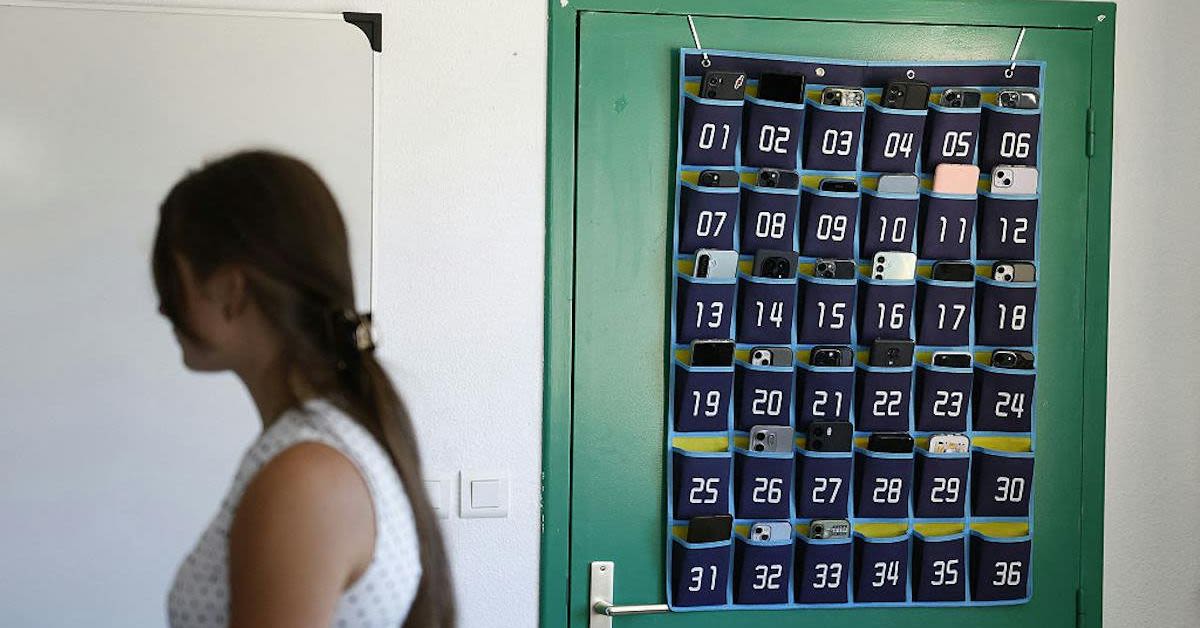
Locking up students' phones for the whole school day is finally showing up where it counts most: in their test scores.
A new nationwide study from Harvard University's Center for Education Policy Research found that students at schools with strict cellphone bans gained the equivalent of one to two extra weeks of learning each year. The findings were released this week and quickly drew national attention, as the Daily Wire reported.
Researchers examined test scores from about 3.3 million students in third through 10th grade at 4,600 schools. They compared academic growth at schools that kept phones off-limits all day with growth at similar schools that did not.
The biggest gains came at schools that required students to seal their phones in lockable pouches until dismissal. Students there saw modest but steady improvements in both math and reading.
Researchers estimated those gains reversed roughly half of the annual learning losses students suffered in the years before the COVID-19 pandemic. The improvements began in the first year of a ban and kept going for as long as three years.
"The earlier studies on cellphone bans have been dismissed as implying small impacts, and in-school cellphone use has been ruled out as playing a big role in the decline," Thomas Kane, a Harvard education professor and co-author of the study, told The New York Times. "But we think that's mistaken."
The findings land as states and school districts move aggressively to restrict smartphones. Forty-six states have enacted school cellphone bans or restrictions, though the rules vary widely.
Some schools lock devices away for the entire day. Others let phones stay in backpacks or allow them at lunch and between classes.
Less restrictive policies also appeared to produce gains, but researchers expressed less confidence in those results. They also cautioned that phone limits alone are unlikely to reverse the broader slide in American student achievement.
A separate national study published earlier this year found phone bans had close to zero overall effect on standardized test scores, with some positive results in high school math. That research looked at average school scores, while the Harvard team tracked individual students over time using the NWEA testing system. The earlier study has been peer-reviewed, while the Harvard analysis has not, NPR reported.
Brian Jacob, a University of Michigan professor who co-authored the earlier study, said the new findings were broadly consistent with his team's work. He cautioned against reading too much into small gains but said their cumulative effect could become meaningful if they last.
American student achievement began slipping around 2013, years before the pandemic shut down classrooms. Researchers have pointed to several possible causes, including chronic absenteeism, changes in school accountability rules and the spread of smartphones.
That spread was dramatic. Fewer than one in four teenagers had access to a smartphone in 2011, according to the researchers, but roughly 95% did by 2018.
Kane argued the fix is cheap, estimating lockable pouches cost about $25 per student. By comparison, the center calculated that paying an average teacher for an extra week of school would run about $2,080.
Still, collecting phones will not eliminate every distraction. School-issued laptops can open the door to social media and messaging, and phone use at home may still affect students' sleep, mental health and focus on homework.
Teachers have also reported that students without phones spend more time talking with classmates, playing and joining classroom discussions. Whether those benefits lead to lasting gains in well-being and achievement will take more research.
Login