
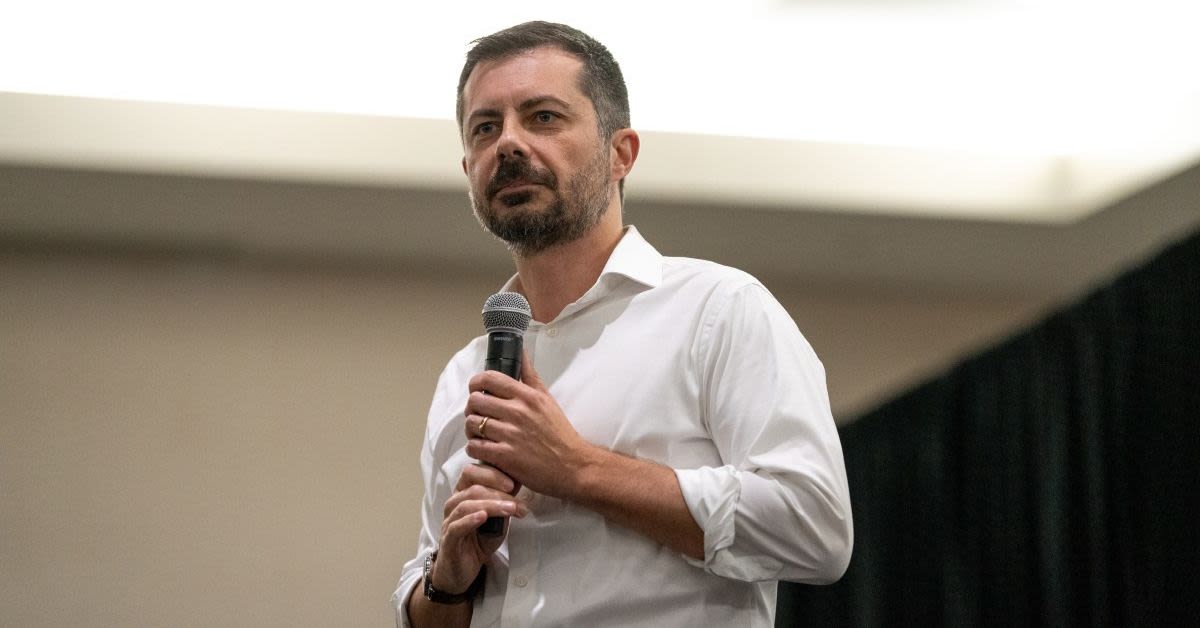
One of the Democratic Party's most prominent voices is breaking ranks on an issue many progressives still treat as a core promise.
Former Transportation Secretary Pete Buttigieg has distanced himself from his party's common push for broad student loan forgiveness, saying Democrats have pushed the issue too far, according to Newsweek. He made the remarks in an interview on the "Pod Save America" podcast.
Buttigieg said Democrats had "overtorqued" their approach to student loans and questioned the fairness of asking Americans who did not attend college to help shoulder the cost of relief for those who did. He framed his position as one he has held for years.
"In the 2020 campaign, I definitely staked out some positions that I still believe in that weren't always kind of popular in the party," Buttigieg said during the interview. "One thing is, I think ... we really overtorqued on the student loan thing," he said. "As a party, I have a very hard time explaining to my relatives in Michigan who did not go to college why they should be paying for people who do."
Buttigieg made clear that his disagreement is not with making college more affordable, but with retroactively eliminating debt for essentially everyone who borrowed. He emphasized preventing students from piling up large debts in the first place.
"I believe there are ways to make sure that you come out of college debt-free," he said. "I believe college should be more affordable. I don't believe in like a magic wand to fix that for everybody who borrowed money."
The comments carry extra weight because Buttigieg served in the administration of former President Joe Biden, whose Education Department pursued expansive student debt relief. The Supreme Court struck down Biden's original plan for up to $10,000 or $20,000 in cancellation for eligible borrowers in 2023, but his administration continued pursuing targeted relief through existing federal programs.
Student loan policy could become a significant point of debate for Democrats as they prepare to take control of both chambers of Congress in January following their midterm victories. According to the latest Federal Student Aid data, 42.3 million recipients held more than $1.7 trillion in outstanding federal student loans, and more than 9.3 million were in default.
Democrats do not currently have a single party-wide proposal to cancel student debt across the board. One approach has focused instead on eliminating or sharply reducing interest, such as the Student Loan Interest Elimination Act introduced by Rep. Joe Courtney of Connecticut and Sen. Peter Welch of Vermont.
Democrats have also sought larger Pell Grants and changes to federal borrowing restrictions enacted under Republican control. More than 30 Democratic lawmakers also recently pressed Education Secretary Linda McMahon over problems borrowers have reported with repayment plan transitions and payment calculations. Financial experts were split on Buttigieg's comments.
"Student loan forgiveness has always raised a legitimate fairness question. How do you explain canceling someone's college debt to a plumber who skipped college. Or a family that sacrificed for years to pay theirs off?" said Michael Ryan, a finance expert and the founder of MichaelRyanMoney.com.
"But there's another side. Some borrowers have made payments for years, accumulated enormous interest, and barely touched their original balance. That's a problem worth fixing," Ryan added.
Kevin Thompson, the CEO of 9i Capital Group, predicted a backlash. "I don't think his comments will go over well with the large number of young people who decidedly voted blue during the midterms. I feel he is oversimplifying the massive amount of corruption that went on within the higher education system, as so many kids were essentially scammed out of an education," he said.
Alex Beene, a financial literacy instructor at the University of Tennessee at Martin, pointed to a possible middle ground. "Some lawmakers have proposed potentially capping interest rates on student debt, an idea that may find support from this administration which has signaled willingness in the past to put limits on interest rates to help Americans struggling financially," he said.
Ryan argued the real fix lies upstream. "In my financial planner mind, I'd rather see us fix the loan system that's creating these problems in the first place," he said. He added that he wished politicians "could disagree about the details without everyone treating it like a family divorce."
Login