
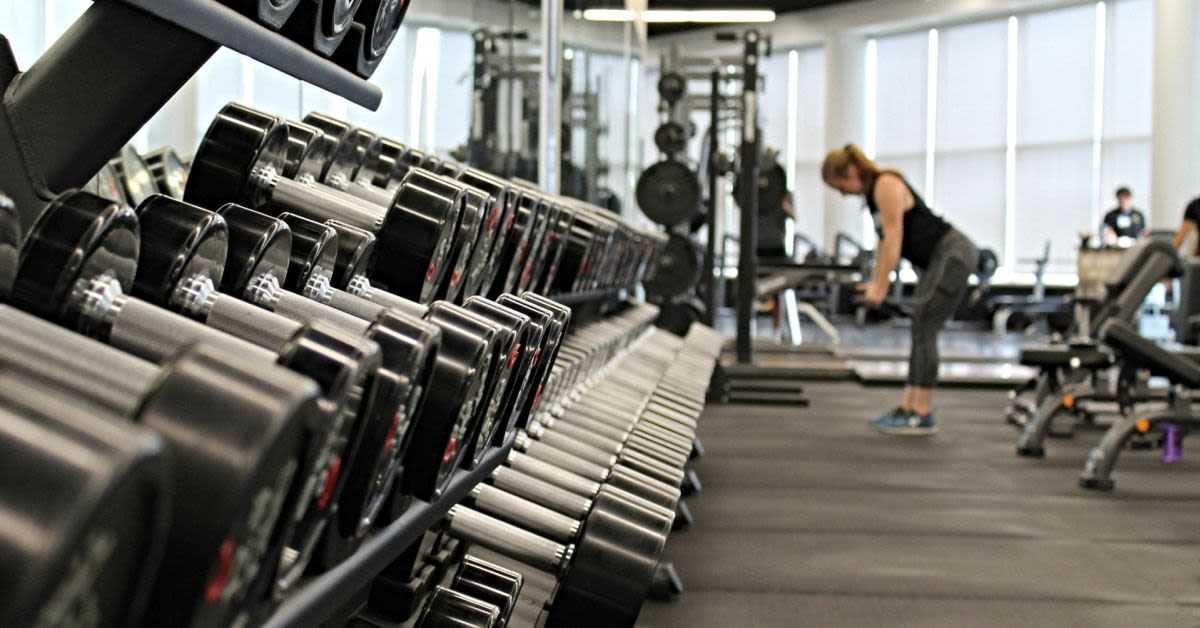
A University of Michigan professor has found an unlikely threat to democracy hiding in plain sight, and it may be sitting in your gym bag.
Ava Purkiss, an associate professor of Women's and Gender Studies, drew sharp backlash online after suggesting that the push for physical fitness can become a tool of fascism. She made the remarks on NPR's Code Switch podcast in an episode titled "Why Fascists Love 'Fitness,'" which also featured commentator Hasan Piker and historian Natalia Mehlman Petrzela.
"When the state or a powerful institution or a powerful person is pushing fitness, it can seem harmless. It can seem anodyne. It can seem maybe even, like, a positive good," she told host Gene Demby.
She then explained why she sees a darker side. "So fitness has been and continues to be used to determine who is hardworking and who is lazy that's racialized," Purkiss said.
She added that fitness helps decide "Who has self-restraint and who is greedy and insatiable, who can contribute to the national progress through sacrifice of their body and who takes from the nation by getting fat off the government." That sorting, in her view, is where the danger lies.
"So when we can use fitness as a proxy to do that sort of separation, it can be a tool of soft fascism, maybe even actual fascism," Purkiss said. The comments resurfaced after the New York Post highlighted them.
The Post noted that NPR removed Purkiss's remark "That's racialized" from the version of the interview posted on its website. A video clip, however, captured her saying it.
According to the Organization of American Historians, Purkiss is a historian whose work centers on the human body. "Her research interests are united by a commitment to the study of the material bodyhow it moves, the ways it feels, the structures that impair it, and the forces that enable its flourishing," the organization's website states.
"Much of her scholarship lies at the intersection of race, gender, and health," the profile continues. It adds that her first book, "Fit Citizens: A History of Black Women's Exercise from Post-Reconstruction to Postwar America," "explores how African American women used physical exercise to express both literal and figurative 'fitness' for citizenship."
"Her work places Black women squarely within the history of American fitness culture and challenges assumptions about Black women's mobility, physicality, and corporality," the site says. Her second major project, it notes, surveys "both anti-Black and Black feminist gynecology in the twentieth century." Many Americans who exercise regularly were not persuaded by her argument.
"This is so flippin' nuts I don't know where to start. I'm a 6 time Marathoner who still puts in mileage every week. It is crazy to tell people not to work out," one social media user wrote.
That user also pointed to the benefits of staying active with age. "Especially when you are older, regular exercise makes your whole life better," the post continued.
Another critic was even more blunt. "That is absolutely insane. Being fit or unfit has nothing to do with any sort of 'racialized' proxy for anything," the user wrote.
"Fitness is a tool for general health, capability, work ethic, fortitude, and temperance. Someone slap both of these people," the post added.
The professor's comments land at a time when the President's administration has made health a central priority through the Make America Healthy Again movement. Health and Human Services Secretary Robert F. Kennedy Jr. has urged Americans to "eat real food" and stay active.
White House officials have also unveiled revised dietary guidelines running through 2030. The guidelines promote a diet of protein, dairy, healthy fats, fruits, vegetables and whole grains.
At the Pentagon, Secretary of War Pete Hegseth has pushed tougher physical standards for the armed forces, according to Breitbart News. In announcing the changes, he asked whether Americans would want their own children serving alongside "fat or unfit or under trained troops."
For Hegseth, the answer was obvious. "The answer is not just 'no,' it's 'hell no,'" he said.
Login