
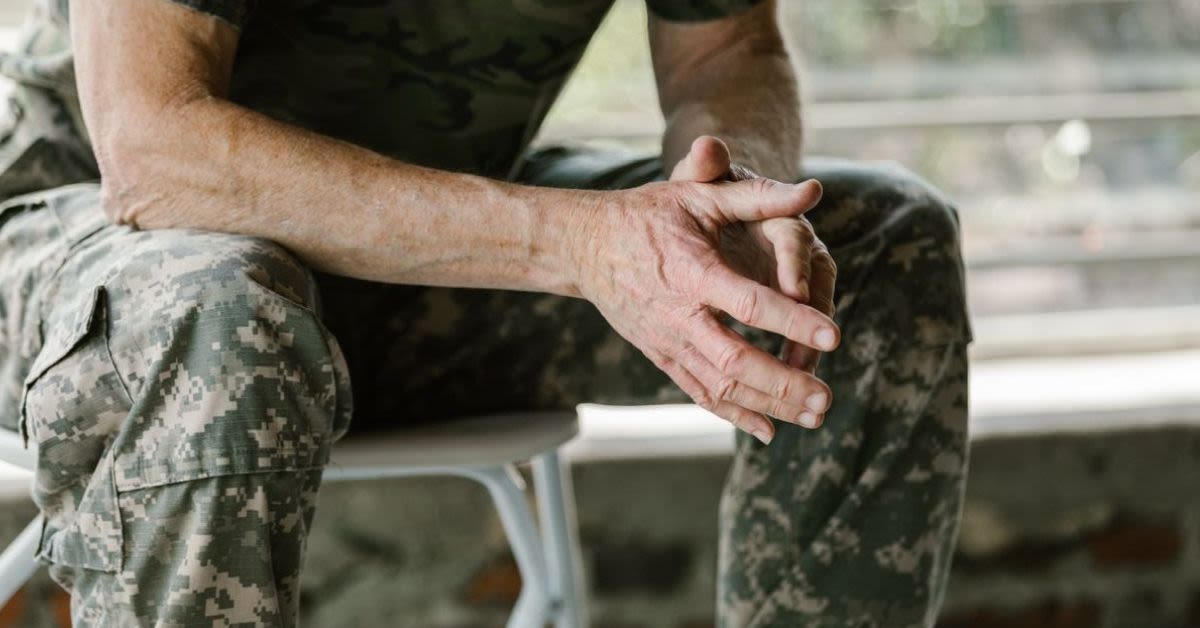
A Canadian combat veteran says he phoned his government for help after two tours in Afghanistan, and the answer he got left him shaken.
Multiple veterans who served in Afghanistan say officials urged them to consider Canada's medical assistance in dying program, according to a Daily Mail report highlighted by The Western Journal. Their accounts have renewed scrutiny of a program that has grown dramatically since it was first approved.
Canada legalized assisted dying in 2016, initially limiting it to people whose death was "reasonably foreseeable." The program has expanded steadily since then, and critics now call Canada the world leader in euthanasia, a label attributed to VOZ.
According to The Post Millennial, 16,499 people died through the program in 2024. That figure accounts for roughly one in 20 deaths in the country.
David Baltzer served two tours in Afghanistan and struggled to readjust to civilian life. When his benefits were cut, he called Veterans Affairs Canada seeking an explanation, according to the Daily Mail.
After working his way through the bureaucracy, Baltzer reached a caseworker who raised the subject of dying. "He looked at my file and said, 'I can see the therapy you've done. It doesn't seem like much has helped. I'd like you to keep an open mind and think about this. Have you ever given any thought to medical assistance in dying?'" he said.
Catherine Christensen, a lawyer who represents veterans, summed up the outrage. "You've got physically healthy young men asking for help, and the help offered is death," she said.
Baltzer said the call sent him into a spiral. "I started questioning my value. I had a really bad attitude and was engaging in anti-social behavior. Not even thinking about consequences, but thinking about things in the moment and just doing them."
The Manitoba resident said that when he later raised the incident, his complaint went nowhere. "I said, 'You didn't help me at all, and in fact, you offered me medically-assisted suicide.' And it just went blank. No one said anything. It just got swept under the rug."
Tony Jenkins of Nova Scotia said he was offered death twice. He insisted he had never been suicidal when the subject first came up.
"I was shocked. I'm like, no, I've never been suicidal. She kept saying, you know, 'Are you sure? Are you sure you're not suicidal?' She's like, 'Well, if you are, I can help you.'"
At his lowest point, Jenkins asked a nurse about assisted suicide during a phone call. "She said, 'When you're ready, you call this number again, and we just book the slot, and that's it.' It was two phone calls, and then you could book a death appointment," he said.
"It was as easy as ordering a pizza," he added, noting that the nurse told him she had helped more than 400 people die. "She was very nonchalant, as if she was discussing a dentist appointment," he said.
That casual tone, Jenkins said, was what convinced him something was badly wrong. "When I realized it was so easy, literally two phone calls, and you could be killed the next day, I thought to myself, this isn't right," he said.
Christensen said many veterans who were offered assisted death are afraid to come forward. She explained that they worry about what the system could do to them in return.
"They fear that if they dare complain, their Veterans Affairs benefits will be cut off. Or, at the very least, cut off long enough for it to hurt, and then all of a sudden they'll be reinstated," she said.
Corben McGown of New Brunswick was 22 when he turned to Veterans Affairs Canada for help. Assisted suicide, he said, was high on the list of options presented to him.
"It was brought up almost as though I qualified for it. They knew about my situation at the time because I had been quite open about my suicidal thoughts," he said. "I was stunned. It was a lot to take in. I was looking for help not to die."
Christine Gauthier, a veteran from Quebec, described a similar exchange. While complaining that the system had failed to meet her needs, she told a counselor, "I really can't keep going on like this. This is ridiculous. I keep injuring myself. I just can't take it anymore."
"And [the caseworker] blurted out: 'Well, if you really feel you can't keep going on like this and you can't take it anymore, you know you have the right to die,'" she said. Her reply captured the anger many veterans now feel.
"I was shocked. I said, 'I can't believe you're telling me I have the right to die, but you're not going to give me the equipment I need to live.'"
The cases have prompted legal action, and McGown's lawsuit alleges a caseworker raised assisted dying during a mental health consultation, according to the International Business Times. Veterans Affairs Canada has said its staff are instructed never to raise the program with veterans, yet the stories from Manitoba, Nova Scotia, New Brunswick and Quebec suggest the problem reached far beyond a single phone call.
Login