
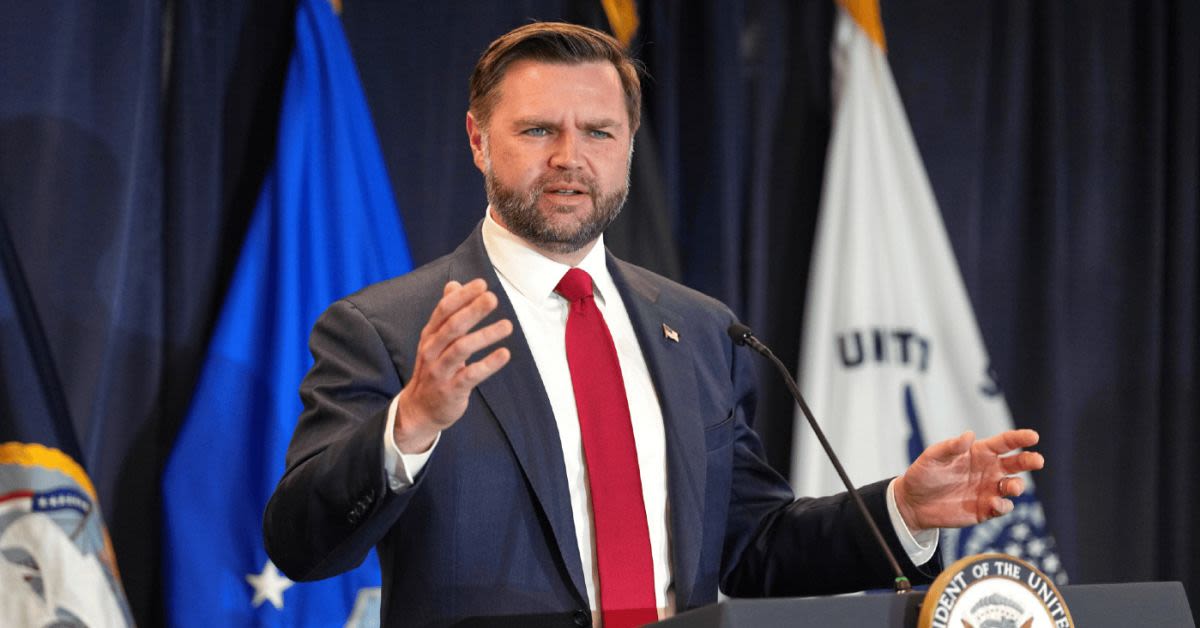
The vice president is weighing a personal and political choice that could reshape the next Republican race.
Vice President JD Vance, viewed only a few months ago as the de facto successor to President Donald Trump, is seriously considering not running for president in 2028. Advisers and allies describe him as torn between his own ambitions, a MAGA coalition coming apart beneath him, and the demands of a young family, according to CNN, as reported by the Daily Mail.
Vance's hesitation is over whether any Republican can win in 2028 in the climate Trump has created. Allies describe the war with Iran as the single greatest obstacle to his ambitions, and some say his future depends on whether Trump can end an unpopular conflict quickly without further eroding public trust in the White House.
"If they don't end the war in Iran, no Republican has a shot," one Vance ally told the outlet. People close to the vice president say he has set no timeline for the decision, and a White House bid remains firmly on the table, with other allies adamant that he is more likely to run than not.
"I wouldn't be surprised by any decision he makes," one person close to Vance said, noting that the vice president is 42 and young enough to sit out a hostile cycle and come back later. The birth of his fourth child this summer had already fueled speculation inside the West Wing that he would put a presidential run on hold.
Terry Schilling, who runs the influential social conservative group the American Principles Project, told CNN it would be a mistake for Vance to forgo a run out of political expediency, and said he would be surprised if the vice president stayed out. Vance's political future became especially uncertain after November 3, when voters stripped away Republican control of the House and Senate.
Vance spoke out the next morning by writing on X that "The reason we lost is the war." Inside the administration, some officials viewed the post as a way for Vance to distance himself from an unpopular war.
Two people familiar with Trump's private comments said the president was "pissed off" that his vice president did not defend the decision to strike, according to CNN. A White House official claimed that Trump was briefed before the message went out and had no issues with it.
By Thursday the president had stripped Vance of the Iran negotiations he once handed him, instructing him on Truth Social to focus his attention on corruption, even as diplomatic talks resumed. Trump has made no commitment to endorsing his own vice president, telling "60 Minutes" that he would "probably, not necessarily" make one.
Vance has said publicly he expects the president's backing if he runs. Florida Governor Ron DeSantis, Texas Senator Ted Cruz and Georgia Governor Brian Kemp have already moved to claim the 2028 opening.
The Rockbridge Network, a close-knit group of donors aligned with Vance, met in Houston this week to begin regrouping while it waits for his decision. For now, the vice president has left both paths open.
Login