
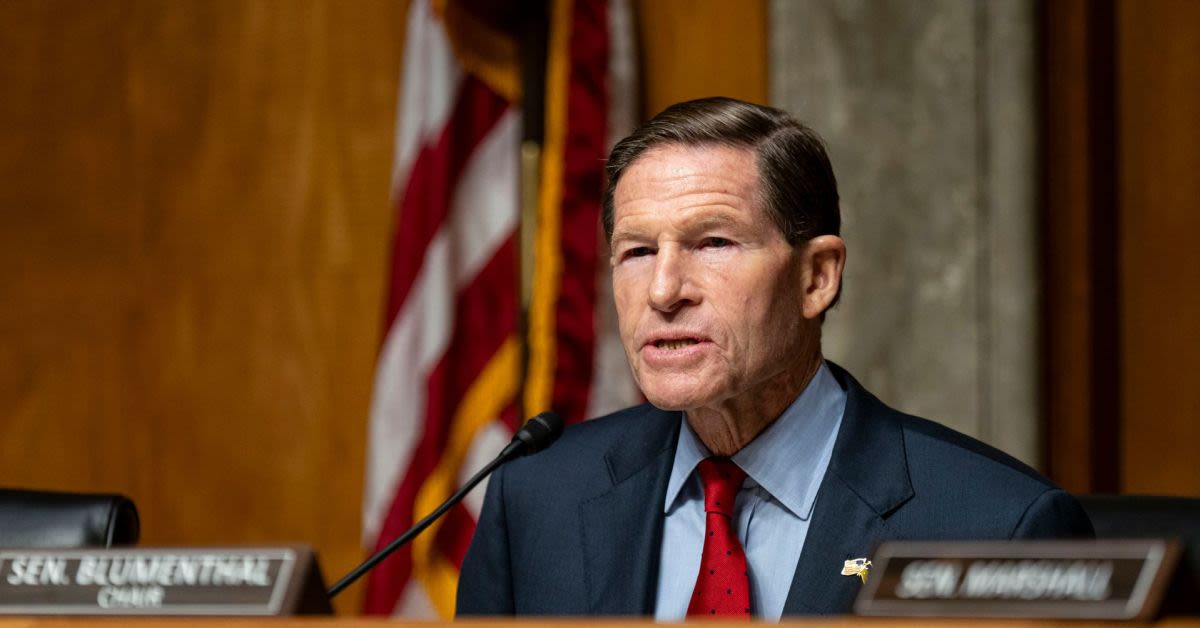
A federal prosecutor has sent a formal warning to a Democratic member of the Senate about how he has used his office.
As reported by WND, Aaron Reitz, the U.S. Attorney for the Southern District of Texas, has delivered that warning to Sen. Dick Blumenthal, a Connecticut Democrat. The letter is a preservation notice and a caution about possible legal consequences, not a court order.
After the election, @SenBlumenthal & his allies think they can intimidate Americans for their constitutionally protected associations w/ President Trump, Reitz said. Congress is not a weapon to be wielded against the American people. Im taking the first step to stop this abuse of power, he added.
The midterm elections gave Democrats enough seats that the party is expected to hold the majority in the coming Congress. The warning to Blumenthal said the moment had already arrived to put his recent statements on the record.
In recent weeks, you have threatened citizens for associating themselves with the president and other public officials. Yet the freedom to engage in association for the advancement of beliefs and ideas is an inseparable aspect of our Constitution and way of life, Blumenthal was told. It is also extraordinary for an elected official to intimidate citizens for engaging in philanthropic practices that will benefit our nation for generations.
The letter is notice of your obligation to preserve all documents, communications, and other electronically stored information relevant to your intent to deprive citizens of their core constitutional rights in violation of federal law. You are obligated to preserve all potentially relevant evidence related to your efforts to suppress associational activities it continued.
A failure by Blumenthal to follow those instructions would carry significant legal consequences, the letter said. The prosecutor cited statutes regarding conspiracy against rights and deprivation of rights under color of law.
Blumenthal responded with a claim that those he is targeting are appropriate subjects for congressional oversight. He has signaled that he intends to keep going.
The report noted that Blumenthal has been leading a multi-month campaign targeting private donors to President Trumps White House ballroom project, a privately funded renovation of roughly $330 million. In letters to tech executives, corporations, and individuals, including previously undisclosed donors, the senator has demanded records on solicitation, amounts, any agreements, lobbying contacts, and related communications.
He has also indicated plans to use subpoena power once Democrats are in the majority in Congress. President Trump has called such tactics by Democrats extortionist.
Reitzs letter frames Blumenthals actions as an attempt to chill First Amendment freedom of association by using congressional investigative power against private citizens and companies simply for supporting the president or participating in a philanthropic project, the report said. The U.S. attorneys move puts a criminal statute, rather than a congressional press release, at the center of the dispute.
The letter arrived amid a broader clash over how far incoming majority Democrats may go in investigating the administration and its supporters. House member Robert Garcia, a California Democrat, bluntly told Republicans to lawyer up.
It was Will Scharf, counsel to the president, who had responded to Garcias threats. We are monitoring the abusive and capricious threats that are now proliferating from Democrat legislators who seek to abuse the legislative process to intimidate and to interfere with the lawful functioning of government, the letter said.
Recent public statements underscore these concerns, the letter continued. You and your congressional colleagues have asserted that they will issue subpoenas to harass, threaten, and deter dedicated members of the Administration from further service, it said.
The Supreme Court has ruled that investigations done solely for the personal aggrandizement of the investigators or to punish those investigated are indefensible. That standard is the one Scharf invoked against a purely punitive inquiry.
Scharf said, Congressional investigations must further a legitimate legislative task; Congress cannot employ them to exercise powers of criminal prosecution assigned to the Executive and the Judiciary. He was drawing a line between oversight and a criminal case.
Reitzs notice does not itself decide whether Blumenthal broke the law, and it does not come from a judge. It does require the senator to keep the records, and it leaves him to explain why a donor inquiry should be treated as ordinary oversight rather than, as the prosecutor wrote, an attempt to punish protected association.
Login