
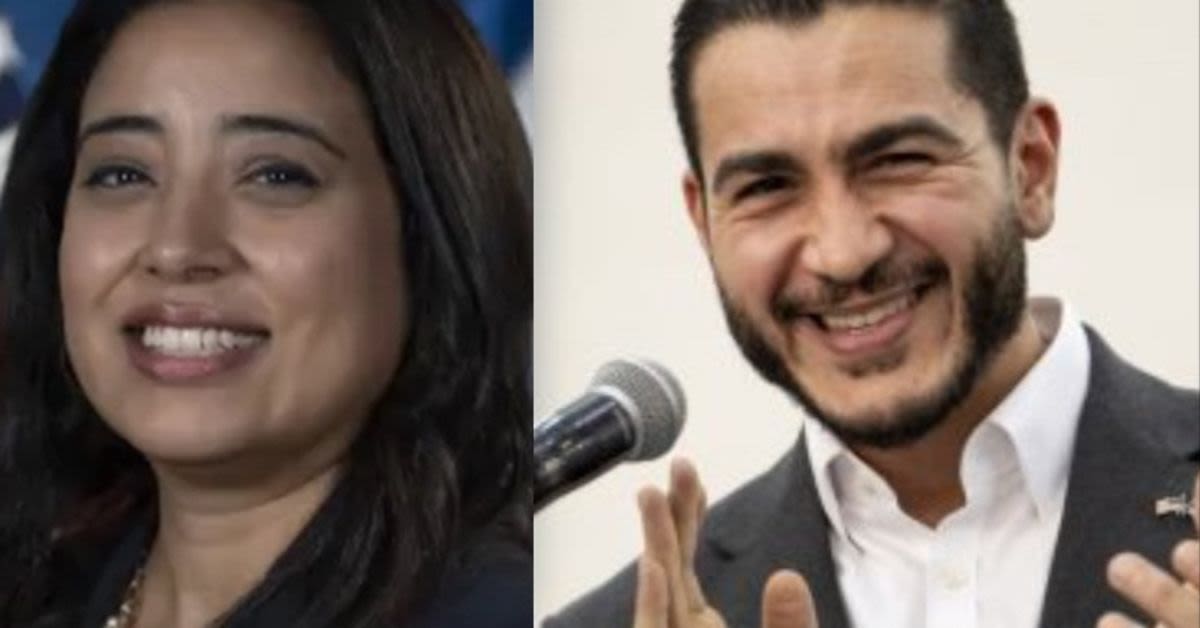
Michigan senator-elect Abdul El-Sayed, who campaigned as an uncompromising foe of Big Pharma while falsely branding his Republican opponent a pharmaceutical lobbyist, has now selected a former Big Pharma lobbyist to lead his Senate transition operation.
El-Sayed has tapped Brenda Abdelall, an Egyptian-American attorney who previously worked at the elite law firm Sidley Austin, to direct his transition team. According to The Washington Free Beacon, figures on the left quickly celebrated the move, highlighting her service at President Joe Bidens Department of Homeland Security and on Vice President Kamala Harriss 2024 presidential campaign.
Former Bernie Sanders adviser Matt Duss hailed Abdelall as a "great pick" who will help El-Sayed "build a strong Senate team." Yet the choice risks alienating the progressive activists who rallied behind El-Sayeds promises of "Medicare for All" and sweeping health care reform.
Public records show Abdelall was a registered lobbyist at Sidley Austin from 2007 to 2010, where she represented Bayer Healthcare, a subsidiary of German pharmaceutical conglomerate Bayer, and Talecris Biotherapeutics, a major producer of plasma-derived drugs. Lobbying filings submitted to Congress indicate she worked on behalf of these firms at the height of the national debate over health care and drug pricing.
Abdelall, who has already drawn criticism for claiming that "Zionists" are "controlling" American politics, also promoted herself as a specialist in pharmaceutical compliance and regulation. Her LinkedIn profile states that she drafted compliance programs for "large pharmaceutical manufacturers" and "represented pharmaceutical, biological, and medical device manufacturers in legislative and regulatory matters."
During Abdelalls tenure, Bayer Healthcare and Talecris paid Sidley Austin a combined $8.1 million, according to federal records. Disclosures show she lobbied the Department of Health and Human Services and the Centers for Medicare and Medicaid Services on "Medicare reimbursement," diabetes medications, and "Medicaid and Health Care reform," including the Affordable Care Act.
Major pharmaceutical companies can derive up to half of their U.S. revenue from Medicare and, to a lesser extent, Medicaid and the Department of Veterans Affairs. For advocates of health care reform, forcing these corporations to lower the prices they charge Medicare has long been a central objective.
El-Sayeds embrace of a former industry lobbyist stands in stark contrast to his campaign slogan, "money out of politics, money in your pocket, Medicare for All." An epidemiologist who refers to himself as a medical doctor despite never having treated patients, El-Sayed vowed to crack down on drugmakers use of "legal means" to extend patents, accusing them of exploiting the system to keep prices artificially high.
"I think we all agree Big Pharma is a big problem," El-Sayed declared on the campaign trail. He repeatedly cast himself as a populist reformer determined to break the influence of pharmaceutical money in Washington.
At the same time, El-Sayed relentlessly attacked his Republican opponent, former congressman Mike Rogers, as a "Big Pharma sellout." He aired television ads that falsely claimed Rogers had worked as a pharmaceutical lobbyist after leaving Congress, only withdrawing them after Rogers, who has never lobbied for drug companies, threatened legal action over the misrepresentation.
El-Sayed also tried to paint Rogers as out of touch by criticizing him for owning a home in Florida. Yet El-Sayed himself owns property in a "luxury" housing development in the United Arab Emirates, undercutting his attempts to posture as a man of the people.
Abdelalls corporate record further complicates El-Sayeds anti-industry narrative. While she was working on behalf of Bayer Healthcare in 2008, the company agreed to pay the Department of Justice $98 million to resolve allegations that it paid kickbacks to diabetes drug suppliers and induced them to submit fraudulent Medicare claims.
Talecris, another of Abdelalls clients, invested heavily in efforts to "extend the commercial life" of its products through aggressive patent litigation. That strategy mirrors the very practices El-Sayed denounced during his campaign as emblematic of Big Pharmas abuse of the patent system to shield profits and block competition.
Like most major drugmakers, Bayer and Talecris did not lobby to defeat Obamacare outright but instead sought favorable terms from Congress and the Obama administration. Their goal was to secure regulatory and financial advantages within the new law, protecting industry profits while Democrats in Washington expanded federal control over health care.
Despite the apparent clash between El-Sayeds rhetoric and Abdelalls professional history, the two appear closely aligned on foreign policy, particularly regarding Israel. Both have taken positions sharply critical of the Jewish state, placing them on the far-left fringe of the Democratic Partys foreign policy spectrum.
Like El-Sayed, Abdelall is a staunch critic of Israel and claimed in 2002 that "Zionists" were "controlling" American politics, the Free Beacon reported. During the campaign, El-Sayed asserted that Israel pushed President Donald Trump into war with Iran, disputed that Israel is an ally of the United States, and even equated it with Iran, the worlds leading state sponsor of terrorism.
These positions raise serious questions about the ideological direction El-Sayed will take in the Senate, particularly on U.S.-Israel relations and Middle East policy. They also highlight a broader pattern in which progressive Democrats rail against corporate power and foreign influence while quietly surrounding themselves with insiders who have profited from both.
For voters who took El-Sayeds anti-Big Pharma crusade at face value, the elevation of a former Bayer and Talecris lobbyist to oversee his transition is likely to fuel skepticism about his authenticity. El-Sayed's transition team and Abdelall did not respond to requests for comment.
Login