
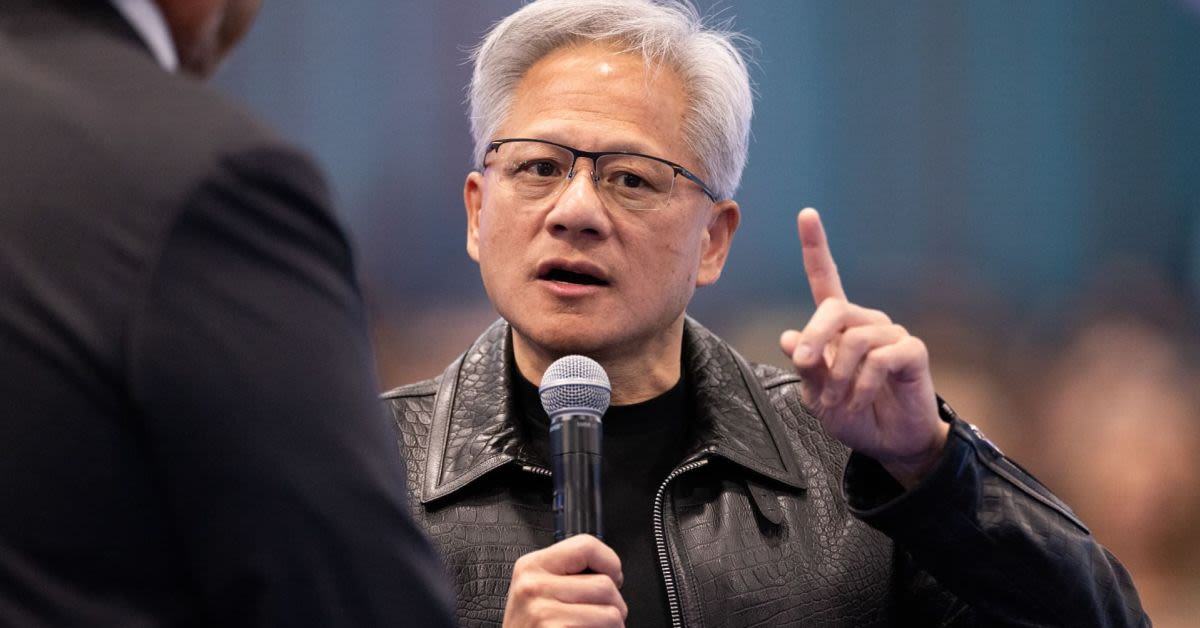
Nvidia chief executive Jensen Huang has admitted to an extramarital affair and now faces an independent board investigation into his relationship with a woman U.S. intelligence reportedly regards as a Chinese spy.
According to RedState, Huang has apologized for being unfaithful to his wife after reports surfaced about his relationship with Alice Huang, a Megaspeed executive whom U.S. intelligence officials have allegedly identified as a Chinese intelligence asset. The companys board has launched an independent probe into the matter but has allowed Huang to remain in his role while the investigation proceeds, insisting it has no reason to believe that national security or corporate secrets were compromised, even as it stresses that American national and economic security must come first.
Nvidia had previously claimed that Huangs dealings with Alice Huang were limited to routine business contacts and that no sensitive company or national-security information was shared. That official line now sits uneasily beside the unfolding scandal, and the sequence of events should give anyone concerned with national security and technological dominance serious pause.
Nvidia is not a marginal player in the digital economy; it is the beating heart of modern artificial intelligence and advanced computing. Its chips drive data centers, research institutions, defense systems, and the consumer devices that Americans rely on every day, making any hint of vulnerability at the top of the company a matter of public concern rather than mere corporate gossip.
The Financial Times recently underscored the gravity of the situation, noting: Breaking news: Nvidias chief executive Jensen Huang has admitted having an affair two days after the FT reported his alleged romantic relationship with a woman the US intelligence community believes was working as a spy for China. When the leader of a firm with that kind of reach develops a personal relationship with someone U.S. officials link to Chinese intelligence, the potential for trouble is not hypothetical but glaringly obvious.
Beijings record of targeting Western technology companies for information, leverage, and strategic advantage is well documented. Export controls on advanced chips exist precisely to keep critical capabilities out of the hands of a strategic rival, yet Huang has publicly advocated easing some of those restrictions, a stance that now invites sharper scrutiny in light of his personal entanglement.
A close personal connection to an individual under intelligence scrutiny creates precisely the kind of opening that hostile services are trained to exploit. Even if no classified or proprietary material changed hands, the risk of subtle influence, soft pressure, or incremental leakage of competitive insight is difficult to dismiss in an era of relentless espionage and economic warfare.
Outside observers have already flagged the implications for Nvidias role in sensitive government work. As one commentator put it, @CollinRugg The whole Chinese spy thing is a WAY more serious problem for the company. Not exactly going to be trusted with any military work with that type of stuff going on.
The stakes extend far beyond classified Pentagon contracts or export-control debates. Nvidias technology underpins the computers, servers, and networks that process private information for millions of Americans, including medical records, financial data, personal communications, and corporate strategies.
A security breach or compromised executive at a company with Nvidias technological footprint could have cascading effects, even if there is currently no evidence that customers personal information has been exposed. Ordinary citizens who never attend a shareholder meeting still depend on the integrity of the hardware and systems that quietly run their homes, workplaces, hospitals, and banks.
Corporate statements emphasize that Huang is cooperating fully and that the board continues to express confidence in his leadership. Such assurances are predictable in a crisis, but they do not eliminate the need for a genuinely independent and exhaustive review of every interaction, every meeting, and every channel of communication involving the executive and the alleged Chinese asset.
The same outside voice that warned about military contracts reiterated the broader concern: @CollinRugg The whole Chinese spy thing is a WAY more serious problem for the company. Not exactly going to be trusted with any military work with that type of stuff going on. For a firm whose products are increasingly central to defense, intelligence, and critical infrastructure, trust is not a public-relations slogan; it is a strategic necessity.
Congress has already requested a closed-door briefing on the matter, a step that acknowledges the national-security dimension of what some might prefer to dismiss as a private scandal. That request is reasonable but insufficient, and lawmakers should press ahead with formal committee hearings and consider codifying stricter national-security oversight for executives at companies producing dual-use technologies that can serve both civilian and military ends.
The personal side of this story is, in many ways, the simplest: Huang has acknowledged his infidelity and taken responsibility for the damage to his family, a matter that properly belongs between him, his wife, and their loved ones. The public interest lies not in moral voyeurism but in determining whether a relationship of this kind created vulnerabilities for a company that sits at the heart of American technological strength, because apologies can address the first concern, but only rigorous investigation can address the second.
Technology firms today operate in a fiercely competitive and often adversarial global environment where personal judgment at the top can carry consequences far beyond any single executives reputation. When those consequences touch both national security and the everyday security of citizens information, the response must be sober, comprehensive, and stripped of the wishful thinking that too often shields powerful figures from accountability.
The boards inquiry is a necessary first step, but it cannot be the last word if serious gaps in oversight or judgment are uncovered. What ultimately matters is not the carefully crafted statements issued in the midst of a scandal, but whether this episode prompts real safeguards to ensure that Americas technological crown jewels are not left vulnerable to foreign influenceor to the private recklessness of those entrusted with guarding them.
Login