
State Rep. Brian Harrison is urging Texas Gov. Greg Abbott to immediately convene an emergency legislative session to restore separation of powers and rein in sweeping gubernatorial emergency authorities before a newly elected Democratic governor takes office.
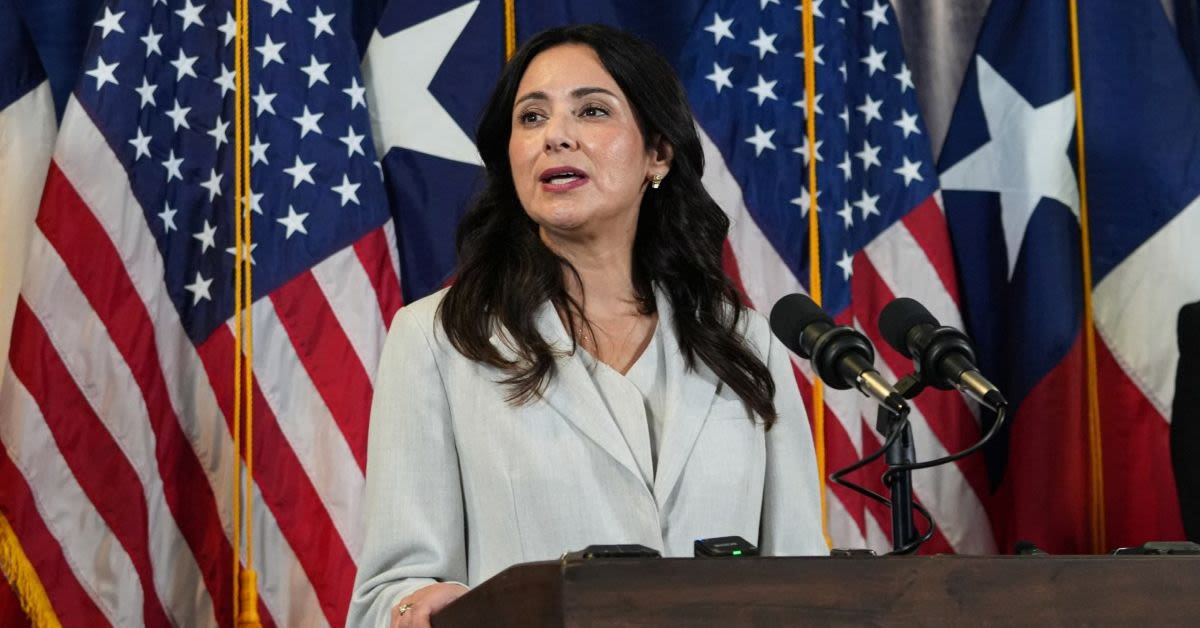
According to Just The News, Harrison, a Republican from Waxahachie, is warning that the clock is ticking after a blue tsunami on Election Day handed Democrats control of every statewide office, the Texas House, and the leadership of the Texas Senate. The state constitution gives only the governor the power to call a special session, and Harrison argues that Republicans, who still technically hold the reins of government until mid-January, have a narrow window to act before Governor-elect Hinojosa is sworn in.
New Democratic officeholders will not assume power until the middle of January, a delay Harrison says leaves Republicans with both the authority and the obligation to act decisively. We still have total power in Texas and must act like it, he said, stressing that the GOP-controlled Legislature and Abbott have roughly 10 weeks to restore separation of powers and limit the emergency powers that Governor-Elect Hinojosa is set to inherit, which would allow her to destroy liberty in Texas by executive fiat.
With only a slim Republican edge remaining in the Texas Senate, passing substantive reforms will be difficult, but Harrison insists the effort is essential to prevent unilateral rule by executive order. Hinojosa is widely expected to rescind many of Abbotts directives and could aggressively pursue a progressive agenda through executive action if current emergency powers remain intact.
At the center of the dispute is the states 1975-era Disaster Declaration Act, recently amended by the Legislature but still broad enough to have enabled Abbott to impose far-reaching COVID-19 restrictions. Abbott repeatedly cited the law to justify lockdowns and other pandemic mandates, prompting a wave of lawsuits from within his own party and from citizens who saw the measures as a direct assault on constitutional liberties.
In one high-profile case, five Republican lawmakers and 2,000 plaintiffs challenged a $295 million contract between the state and a New York firm to implement contact tracing and what critics called a mass surveillance program, arguing it violated the Texas Constitution, The Center Square previously reported. Other Republicans and business owners also went to court, contending that the 1975 statute itself was unconstitutional and that Abbott had no authority to shutter businesses, impose capacity limits, or dictate that religious services be conducted online.
Under Abbotts pandemic orders, many businesses were effectively closed or severely restricted for roughly six months, a period that fueled deep resentment among conservatives who viewed the measures as executive overreach, The Center Square reported. One of the most visible resisters was Dallas salon owner Shelley Luther, who refused to close her shop, was jailed for defying the governors orders, and ultimately became a symbol of pushback against lockdowns.
The Texas Supreme Court intervened in Luthers case, ordering her release and later unanimously tossing out a contempt order against her. She subsequently ran for office, was elected to the Texas House, and just won reelection, underscoring how anger over pandemic restrictions continues to animate grassroots conservatives.
Against that backdrop, Harrison is pressing for structural reform, insisting that no single official should ever again wield such unchecked authority. No governor, Republican or Democrat, should have unchecked emergency powers, he said, adding, Now that Texas has elected a Democrat governor, the urgency is undeniable and inaction is intolerable. Never-ending emergency powers are antithetical to representative government and render people powerless.
He further warned that concentrating lawmaking and enforcement in the hands of one executive is incompatible with the American system of checks and balances. Legislative bodies allowing a single executive branch official to both write and enforce laws is the biggest threat to our constitutional system of divided government and should be opposed irrespective of which political party runs the executive branch," Harrison said.
To address the problem, Harrison is urging the Legislature to pass his previously filed bill, HB 911, which is designed to sharply curtail emergency powers. The measure would bar a governor from suspending or rewriting statutes, automatically terminate emergency orders after 30 days unless the Legislature ratifies them, and prohibit any governor from reissuing orders that have expired or been rejected by lawmakers.
HB 911 would also require that any emergency directives be narrowly tailored and subject to expedited judicial review, ensuring that courts can quickly check abuses. Harrison argues that without such reforms, the incoming Democratic governor will be able to govern by decree on everything from public health to criminal law.
If Abbott refuses to call a special session, Harrison warns that Hinojosa will inherit the powers of a dictator. Due to the absurd (and almost certainly unconstitutional) Texas emergency powers laws, he said, she will literally have the power to modify laws, ignore laws, or create and enforce laws including criminal laws on a whim.
On Thursday, Hinojosa attempted to project a moderate image by announcing a bipartisan transition team and pledging to work with Republicans, The Center Square reported. Conservatives like Harrison, however, remain skeptical that bipartisan rhetoric will restrain a Democratic administration armed with expansive emergency authority and backed by a newly empowered progressive base.
Harrison, a long-time advocate of limited government and fiscal restraint, has repeatedly pressed Abbott over the years to summon lawmakers back to Austin to tackle a broad range of conservative priorities. Among his demands have been measures to put Texas on a path to eliminate property taxes, immediately cut taxes, bar local property tax increases without voter approval, rein in what he calls excessive state spending, ban taxpayer-funded lobbying, and end corporate welfare, including subsidies for data centers.
Under Abbott, Texas has awarded billions of dollars in grants and tax breaks to large corporations, The Center Square reported, a practice that has drawn increasing criticism from the right as well as the left. Eleven years ago, Abbott signed a law granting $3 billion in tax cuts to data centers, a decision Hinojosa highlighted during her campaign as emblematic of corporate favoritism, even as Texans across the political spectrum have voiced strong opposition to data center construction and argued that Abbotts later directives were too little, too late, The Center Square reported.
Harrison has also urged Abbott to convene an emergency session to stop funding DEI and liberal Hollywood, targeting both ideological and corporate beneficiaries of state largesse. Last year, Abbott signed a bill championed by thenLt. Gov. Dan Patrick that allocated $2.5 billion in taxpayer funds to Hollywood productions filming in Texas, despite public opposition; Patrick himself was ousted by voters on Tuesday.
In addition, Harrison has called for a special session to ban Sharia law and to pass several measures addressing birth tourism, reflecting broader conservative concerns about cultural cohesion and immigration-related loopholes. In 2023 alone, he requested that a dozen separate issues be added to a special session Abbott had already called, underscoring his frustration with what he sees as half-measures from state leadership.
Abbott has consistently declined to summon special sessions solely in response to Harrisons appeals, even as grassroots conservatives have grown more vocal about executive overreach and cultural issues. In 2023, however, Abbott did add emergency powers reform and a ban on COVID-vaccine mandates to a special session agenda, both items Harrison had demanded, though the vaccine mandate ban that ultimately passed notably excluded students in private, nursing, or medical schools, a carve-out Harrison had urged lawmakers to avoid.
With Democrats now poised to control the executive branch, Harrisons warnings about unchecked emergency authority have taken on new urgency for conservatives who remember the lockdown era and fear an even more aggressive use of state power under a progressive administration. Whether Abbott will finally heed those calls and allow the Legislature to clip the wings of the office he currently occupiesbefore handing it to a Democratremains the central question hanging over Texas politics in the weeks ahead.
Login