
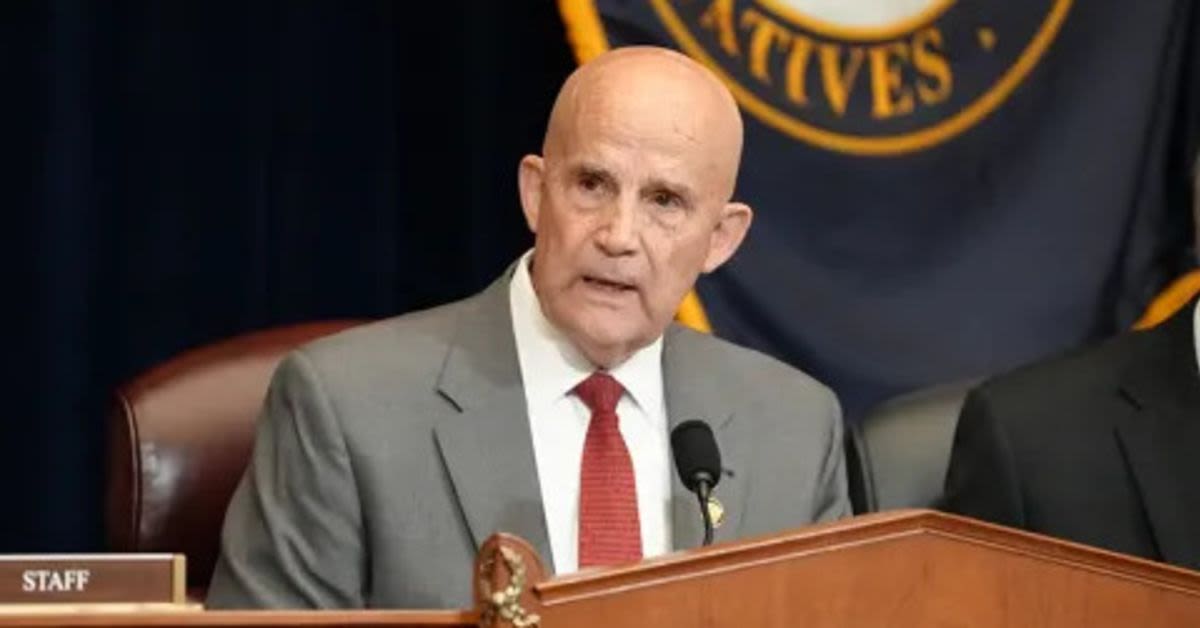
Rep. Keith Self, R-Texas, is pressing his party to move swiftly on President Donald Trumps agenda before Democrats assume control of the House of Representatives in January, warning that Republicans have only a narrow window to secure key conservative priorities on elections, spending, and the national debt.
According to Newsmax, the newly reelected congressman framed the coming weeks as a final opportunity for the GOP majority to lock in Trump-era policies before a more liberal House majority attempts to dismantle them.
He acknowledged that the scope of what can be achieved in the lame-duck session remains uncertain, but insisted that Republicans have both the mandate and the momentum to act decisively.
Congress is scheduled to return to Washington next week for a compressed year-end session, with deadlines looming on government funding and other must-pass legislation.
Self argued that Republicans cannot afford to drift through that period or surrender the initiative to Democrats who, in his view, are poised to expand federal power and weaken election safeguards.
"Well, that's an open question, but we certainly have a lot of impetus to do so," Self said when asked how much the GOP could realistically accomplish before ceding the gavel.
"We need to codify as many of the president's EOs as we can.
We need to pass the SAVE America Act through a Senate now while we can."
At the heart of Selfs legislative push is the SAVE America Act, a measure that reflects long-standing conservative concerns about election integrity and the sanctity of the ballot box.
A House Republican legislative summary notes that the bill would require proof of U.S. citizenship when registering to vote and mandate photo identification for participation in federal elections, reforms that Democrats have generally opposed as voter suppression but that conservatives view as basic safeguards.
The House has already approved the SAVE America Act on a narrow 218-213 vote, underscoring the partisan divide over how to secure elections in an era of widespread distrust in the electoral process.
For Self and many on the right, codifying such protections before Democrats assume control is essential to preventing future attempts to loosen voting standards, expand mail-in balloting, or weaken verification requirements.
Beyond election law, Self is urging Republicans to lock in government funding levels that will constrain the incoming Democratic majoritys ability to expand spending and reshape federal priorities.
"We need to fund the government deep into the next year so that we're not looking at Democrat cuts.
There are things we must get done," Self said, signaling his desire to deny Democrats the leverage that comes with early-year budget fights.
He also highlighted the looming debt ceiling as a critical battleground in the fight over fiscal responsibility and the size of government.
"We've got to look at the debt ceiling increase, because if the Democrats get in, they will just blow that out of the water.
So we've got things we must get done, and I encourage us all to work together to get these important things done before we lose the majority."
Under a funding law signed in September, federal agencies are financed only through Dec. 11, creating a hard deadline for lawmakers to avert a partial government shutdown.
Selfs comments reflect a broader conservative concern that Democrats, once in control, will use spending bills and debt-limit negotiations to push expansive social programs, climate initiatives, and regulatory schemes that would be difficult to unwind.
Self also pushed back against media narratives and Democratic talking points suggesting that Texas Republicans suffered a sweeping defeat in the midterm elections.
"Well, let's be careful here.
We lost one seat in the congressional delegation.
We went from 25 to 24.
So it was not a wipeout at the congressional level," he said, drawing a sharp distinction between congressional outcomes and some of the partys statewide setbacks.
His remarks come as House Republicans grapple with their own internal leadership contest, a struggle that will shape how the party responds to Democratic control and prepares for the next electoral cycle.
The race has largely centered on Majority Leader Steve Scalise, R-La., and Judiciary Committee Chairman Jim Jordan, R-Ohio, two prominent conservatives with differing styles and bases of support within the conference.
Complicating the picture is the decision by Speaker Mike Johnson, R-La., to step aside and not seek the minority leaders post once Republicans relinquish the majority.
"First of all, I want to give kudos to Speaker Johnson.
He did the honorable thing.
He's a man of great character," Self said, offering a pointed contrast to the perception of power-clinging leadership often associated with Washington politics.
Self declined to publicly endorse any candidate in the leadership race, emphasizing that he is still in the process of speaking with those seeking top posts.
"Now, I've not finished all of my conversations with the people that are running for office.
I don't think we are going to wholesale throw out the leadership and move to new leadership," he said, suggesting a preference for continuity tempered by selective change.
He expressed confidence that the eventual leadership team will be capable of uniting conservatives and steering the conference through a challenging period in the minority.
"But I think that we will have a strong leadership base across the board because we've got some really fine people, both incumbents and challengers, running for office," he said, underscoring his belief that the GOP still has a deep bench of talent despite recent electoral disappointments.
Looking further ahead, Self argued that Republicans must sharpen their message and more effectively communicate their record if they hope to regain power in future cycles.
"But we've got to tighten our message, hone our message," he said, acknowledging that policy achievements alone are not enough if voters do not clearly understand what conservatives stand for and how their agenda improves everyday life.
He also tied Republican prospects to how Democrats choose to wield their new authority, warning that an aggressive progressive agenda could backfire.
"If they overreach, then I think 28 will be a very good year for the Republicans," he said, reflecting a long-standing conservative belief that the lefts tendency toward expansive government and cultural radicalism ultimately alienates mainstream voters.
Selfs focus on codifying Trumps executive orders, fortifying election laws, and preemptively shaping the fiscal landscape reflects a broader conservative strategy to limit the damage a Democratic House can inflict.
By locking in statutory protections and long-term funding, Republicans hope to make it more difficult for Democrats to reverse course on border security, deregulation, energy policy, and other Trump-era initiatives that have been fiercely opposed by the left.
The emphasis on voter identification and proof of citizenship speaks to a core Republican concern that lax election rules invite fraud, dilute the votes of lawful citizens, and erode public trust in democratic institutions.
While Democrats often frame such measures as discriminatory, conservatives argue that they are no more burdensome than everyday requirements for identification in banking, travel, or employment, and that they are indispensable to preserving the integrity of the ballot.
On fiscal matters, Selfs warnings about the debt ceiling and spending levels highlight a persistent divide between the parties over the proper scope of federal power and the long-term consequences of runaway borrowing.
Republicans like Self fear that once Democrats control the House, they will push for expansive entitlement expansions, Green New Deal-style programs, and other costly initiatives that deepen dependence on Washington and saddle future generations with unsustainable debt.
The internal leadership contest, meanwhile, underscores the challenge facing Republicans as they attempt to balance grassroots demands for aggressive opposition with the practical realities of governing from the minority.
Selfs praise for Johnsons character and his reluctance to wholesale throw out the leadership suggest a desire for stability and experience, even as many conservatives clamor for a more confrontational posture toward the Biden administration and its allies in Congress.
As Republicans regroup after the midterms, Selfs comments offer a roadmap for how many on the right believe the party should navigate the immediate transition and prepare for the next major electoral test.
He is urging colleagues to use every remaining day of their majority to entrench conservative gains, defend election integrity, and restrain the growth of government, while simultaneously refining a message that can win back disillusioned voters in the years ahead.
Whether the GOP can execute that strategy in the compressed timeframe before January remains uncertain, especially amid internal leadership jockeying and unified Democratic opposition.
Yet Selfs insistence that "we've got things we must get done" captures the sense of urgency among conservatives who see this lame-duck session as a final chance to secure Trumps legacy, protect constitutional principles, and set the stage for what they hope will be a Republican resurgence if Democrats, as he warns, choose to overreach.
Login