
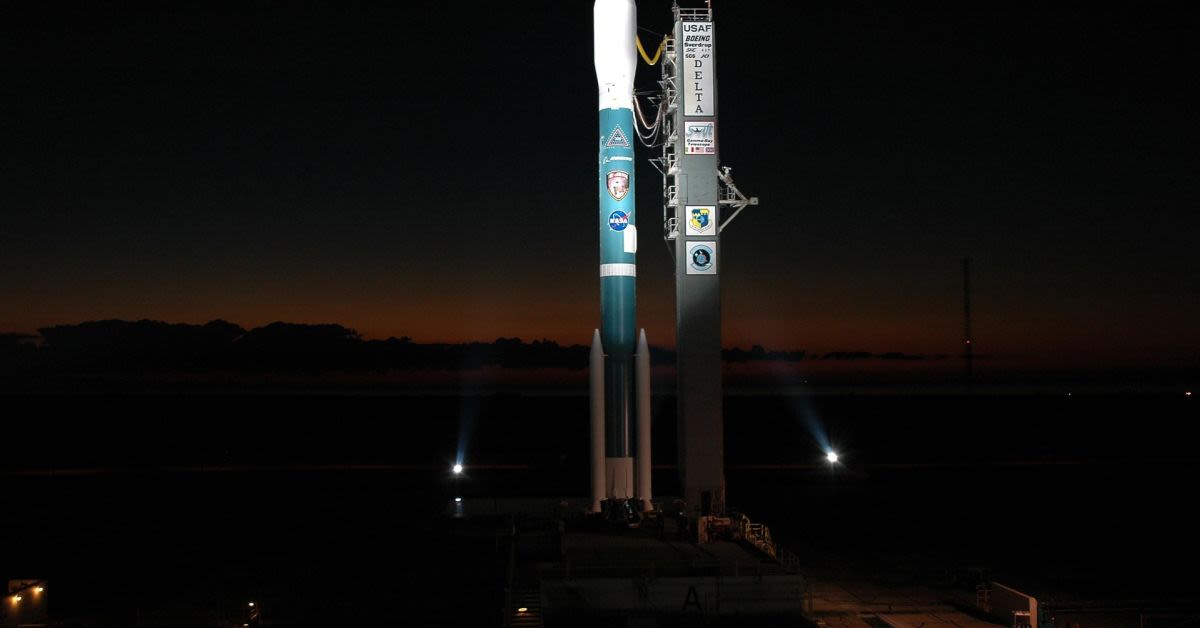
An aging NASA telescope is now in its final descent toward Earth, with federal officials predicting an uncontrolled reentry within hours and only a slim but real risk to people on the ground.
According to CBS News, NASA announced Monday that the Swift Observatory, a 1-ton space telescope launched nearly two decades ago, is expected to fall back to Earth on Wednesday after a failed private-sector rescue attempt left it spiraling ever lower. Most of the spacecraft will disintegrate in the atmosphere, but mission scientist Brad Cenko warned that several components made of ultra-dense tungsten, along with some mirror elements, could survive the fiery plunge and reach the surface.
"As of Monday, the U.S. Space Force predicted that the roughly 3,200-pound spacecraft will re-enter the atmosphere at approximately 3:30 a.m. EST, Nov. 4, with an uncertainty of 11 hours," NASA said on Monday. Any surviving debris is most likely to splash down in the ocean, but broad regions of Africa, Australia, India, Southeast Asia, and Central and South America lie within the potential reentry corridor, and the U.S. Space Force is closely tracking the satellites decaying orbit.
In a statement on Monday, NASA said the "risk of harm coming to anyone on Earth is unlikely" roughly 1 in 2,100, a level of risk that would be considered unacceptable in many private industries but is routinely tolerated in government-run space operations. "NASA and Space Force will continue to monitor the re-entry and update predictions," the agency said, underscoring how dependent even Americas premier civilian space agency has become on the military for basic tracking and safety functions.
Swifts impending destruction has left its science team both grieving and grateful, reflecting on a mission that far outlived its original expectations and delivered a trove of data about the most violent events in the cosmos. The telescope launched on Nov. 20, 2004, with a mandate to hunt gamma-ray bursts and supernovascataclysmic explosions that reveal fundamental truths about the universe but also remind humanity of its smallness in a vast creation.
"We've known this day would come since before Swift was launched. At least in low-Earth orbit, what goes up must come down. And that end is catastrophic," said Pennsylvania State University's John Nousek, an astronomer who led the control team, capturing the sober reality that every low-orbit spacecraft eventually becomes space junk. Intense solar activity in recent years hastened that fate, increasing atmospheric drag and pulling the observatory down faster than engineers had anticipated.
In a nod to the growing role of private enterprise in space, NASA contracted Katalyst Space a year ago to attempt a last-minute rescue, a market-based approach that conservatives have long argued can reduce costs and spur innovation. But the companys three-armed robotic vehicle, named Link, encountered technical problems after its July launch and never got closer than 7 to 9 miles from the telescope before itself plunging back to Earth in September, a reminder that even promising commercial solutions carry risk and require rigorous oversight.
After the rescue effort was abandoned, Swift briefly resumed operations, continuing to detect gamma-ray bursts and other extreme high-energy phenomena until its orbit decayed too far for stable observations. By late October, controllers shut down its systems, ending a mission that had become a workhorse for astronomers worldwide and a quiet testament to American engineering and scientific leadership.
Its final record is formidable: more than 2,000 gamma-ray bursts and 1,400 exploding stars, along with numerous comets, asteroids, and black holes shredding nearby stars. The telescopes defining advantage was its ability to pivot rapidlyhence the name Swifttoward sudden cosmic eruptions, acting as a kind of celestial first responder.
Shawn Domagal-Goldman, Astrophysics Division director at NASA, told "CBS Mornings" in June that nothing pinpoints gamma-ray bursts like the Swift Observatory. "A nuclear weapon going off doesn't even compare to the magnitude of energy that comes out of these things and it's literally the biggest explosions in the universe," Domagal-Goldman said, a comparison that underscores both the staggering power of these events and the importance of understanding them in an age of advanced weaponry and global insecurity.
NASA long treated Swift as an early-warning system for the Hubble and James Webb space telescopes and other observatories that would swing into action after its alerts, providing deeper, more detailed follow-up studies. Scientists are now wrestling with how to replace that capability, even as budget pressures and shifting political priorities in Washington raise questions about whether future missions will receive the same level of support.
"Our fervent hope is that the lessons learned by the successes of Swift can be applied to new generations of space missions to accelerate our discoveries about the universe," Nousek said in an email. As Swift falls back to Earth, the debate over how best to balance government stewardship, private innovation, fiscal responsibility, and Americas role as a leader in space will only grow more urgent, even as the telescopes legacy continues to shape the next generation of missions.
Login