
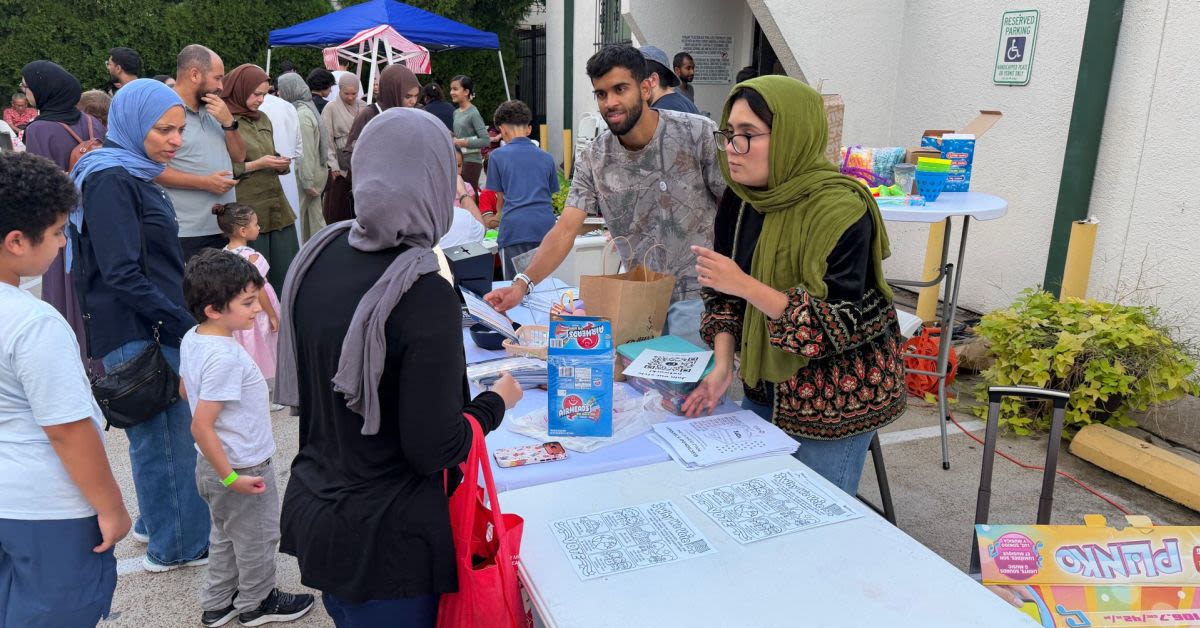
Islamist organizers are increasingly leveraging mosque networks and religious authority to drive Muslim voter turnout for Democratic candidates in key battleground states such as Michigan and Texas, raising fresh concerns about sectarian bloc politics and its impact on Americas constitutional order.
According to Breitbart, prominent clerics and activists are openly urging Muslims to vote as a unified political bloc, explicitly aligning their religious identity with the Democratic Partys electoral fortunes.
You need to vote for candidates that represent your interests and our interests especially in the battle states of Texas and Michigan, declared Yasir Qadhi, a Texas-based cleric widely regarded as a leading figure in the Muslim Brotherhood-aligned faction that dominates many U.S. mosques. His message, delivered via X on October 29, framed participation in the 2026 elections not merely as a civic option, but as a binding obligation rooted in faith and ethnicity.
Qadhi told his followers, It is our ethnic duty, it is our civic duty, it is our religious duty to go and support those candidates and choose those that represent the best of our interests We are undergoing perhaps the most important election season, perhaps of our entire lifetimes, and it is imperative that we, as Muslims of this country, as American Muslims, we avail ourselves to the same rights, the same privileges, the same sense of civic engagement and civic duty as everybody else. He then pressed the point further, adding: And so, today, tomorrow, pray jumma [midday prayer, usually at a mosque] and go to vote for the ummah, invoking the Arabic term for the global Islamic community, which in Islamist political thought often carries explicitly political and transnational implications.
The push is not limited to local races, as Muslim activists increasingly see an opportunity to secure higher office, including a potential Senate seat in 2026. On November 1, activist Wajahat Ali posted on X: If, God forbid, Abdul [Mohamed El-Sayed] loses, this will be a watershed moment in Democratic politics. The fire will rise. Its over. People will be radicalized against corporate, pro-Israel Dems. There will be a reckoning. If, when, he wins, it will be a watershed moment. And that reckoning will still come.
Ethnic and religious bloc politics are not new in the United States, but they had largely receded for decades as immigration slowed and class-based economic debates took center stage.
In the early 1900s, figures such as Boston Mayor Michael Curley mobilized Irish immigrants and Irish-Americans against entrenched political machines, while Irish voters in New York, Chicago, and other cities often organized as cohesive ethnic blocs, frequently with the support of Catholic clergy. Those machines, however, gradually weakened after Congress sharply curtailed immigration in 1924, and the national political conversation shifted toward a left-right economic divide embodied by the Democratic and Republican Parties.
That equilibrium began to unravel after immigration was reopened and expanded in the 1970s, and especially after 1990, when Congress welcomed a massive inflow of new arrivals. Since then, economic-class politics have been supplementedand in many cases overshadowedby fierce disputes over religion, civic values, abortion, environmental policy, racial preferences, transgender ideology, and, increasingly, the social and economic consequences of mass migration. The result has been a return to identity-based politics in many urban centers, where ethnic and religious coalitions now compete for power, patronage, and policy concessions.
The revival of identity politics is particularly visible in cities such as Los Angeles, Minneapolis, and Boston, where large immigrant populations have reshaped local coalitions. In Boston, Democratic Mayor Michelle Wu presides over a diversity alliance of Democrats, immigrants, and various minority groups that often advances policies critics say favor activist constituencies and bureaucratic expansion at the expense of working- and middle-class Americans.
Similar dynamics are emerging elsewhere, as progressive leaders rely on tightly organized ethnic and religious blocs to secure narrow victories in low-turnout elections.
Within this broader trend, the rapid growth of the Muslim population since 2001 has produced a new cadre of Islamic activists and candidates who see themselves as both religious leaders and political brokers. Nationwide, the influx has created a sizable voting bloc that progressive strategists hope to integrate into a broader Red/Green coalition, pairing hard-left economic and cultural agendas with Islamist-leaning constituencies on foreign policy and identity issues.
The beneficiaries include figures such as Zohran Mamdani, the Mayor of New York, who has capitalized on high Muslim turnout in heavily immigrant neighborhoods to consolidate power and advance a progressive platform.
The strategic value of the Muslim vote is magnified in low-turnout contests and tightly contested districts, where a disciplined bloc can swing outcomes with relatively small numbers. Muslims, often mobilized through mosques and community organizations, tend to vote at higher rates than the general population when properly organized, giving their leaders disproportionate leverage in primaries and off-year elections.
In 2025, New York magazine highlighted the effect of this mobilization, noting: Theres one block [in New York] that was 75 percent Trump last November and this time Mamdani won it with a plurality because all the Pakistani Muslims in the neighborhood voted for [Mamdani].
This level of turnout is not accidental; it is rooted in a religious framework that fuses social, civic, and political life under the authority of mosques and clerics. Islam, particularly in its more politicized forms, envisions the mosque as a central institution not only for worship but for community governance and public action, making it a powerful tool for electoral mobilization.
When clerics present voting for specific ideological outcomes as a religious duty, the line between faith and partisan politics becomes increasingly blurred, raising questions about the long-term implications for assimilation and constitutional norms.
Looking ahead to the 2026 elections, Muslim organizations appear poised to wield significant influence, especially in close races where a few thousand votes can decide control of Congress or key statewide offices.
The Council on American-Islamic Relations (CAIR), a well-funded group with longstanding ties to controversial Islamist networks, issued an October 30 statement urging Muslims to turn out in force: We urge every eligible Muslim voter to visit Muslims.Vote today and make a specific plan to cast their ballot. CAIR boasted that it had contacted roughly 250,000 voters in ten states via text messages, while the Muslims.Vote site claims there are approximately 2.5 million Muslim voters nationwide.
CAIRs own data suggest that this bloc is not only organized but also highly motivated by foreign policy and identity issues that place it firmly in the Democratic camp. An October 28 statement from the group cited a late-October survey of 861 Muslims, reporting that on Gaza and Iran: 89% say a candidates Gaza position is extremely or very important to their vote, 87% oppose the U.S. and Israels war on Iran, and 81% want Congress to block renewed military action against Iran.
The same statement underscored the partisan tilt of this electorate, asserting that 72% plan to support Democrats and 6% Republicans in their states November election.
Muslim clerics are reinforcing this message, framing electoral participation as a defensive necessity against politicians who challenge Islamist agendas or criticize radical elements within the community. Voting isnt everything, but it also isnt nothing, said Omar Suleiman, a Muslim cleric and a member of the Ethics Center Advisory Board at Southern Methodist University.
He added: Especially when politicians think they can score points by picking on our community. If you can, get out and vote early. Texas & Michigan, I especially mean you!
For conservatives, the rise of mosque-driven electoral machines and explicitly Islamist-aligned political blocs raises fundamental questions about assimilation, national cohesion, and the proper role of religious institutions in public life. As progressive leaders court these voters with promises on foreign policy, identity politics, and expansive government, the risk grows that American politics will fracture further along sectarian lines, undermining the shared civic culture that once bound diverse communities together.
Whether Republican leaders will respond by defending a vision of citizenship rooted in individual rights, equal treatment under the law, and a clear separation between religious authority and partisan power remains one of the most pressing questions heading into 2026.
Login